Do You Believe in Magic?

How long has it been since you believed in magic?

How many of us believe in magic?

Nearly all of us did once, at a simpler time in our lives, but I doubt many of us would still say we do.


Since I was a little boy, everyone from teachers to parents to priests have reiterated to me how silly the idea of magic is. 

As a boy, I didn’t believe them. I remember running through the woods behind my house, certain I was in a magical place.

When you’re a child, everything from the brightest star in the sky to the smallest insect in the dirt is magic. After the age of seven or eight, however, it was no longer appropriate to believe. There was no longer a Santa Clause, or an Easter Bunny. It was time to grow up.

I still remember when the Harry Potter series came out, schools all over the world were banning the books in a desperate attempt to contain the potential spread of something as demonic as witchcraft and wizardry.

By the time we reached adulthood, magic was something only the strange or the unintelligent still believed in. We were grownups now, after all, it was time to think and act like one.

We were taught to scoff at the ancient spiritual traditions all over the world. Medicine men, shamans, wuyus, mystics, oracles, priestesses, and witch doctors were all terms that became synonymous with barbarism and the uncivilised. Silly adults splashing water, singing strange songs and burning incense in honour of spirits with funny sounding names.
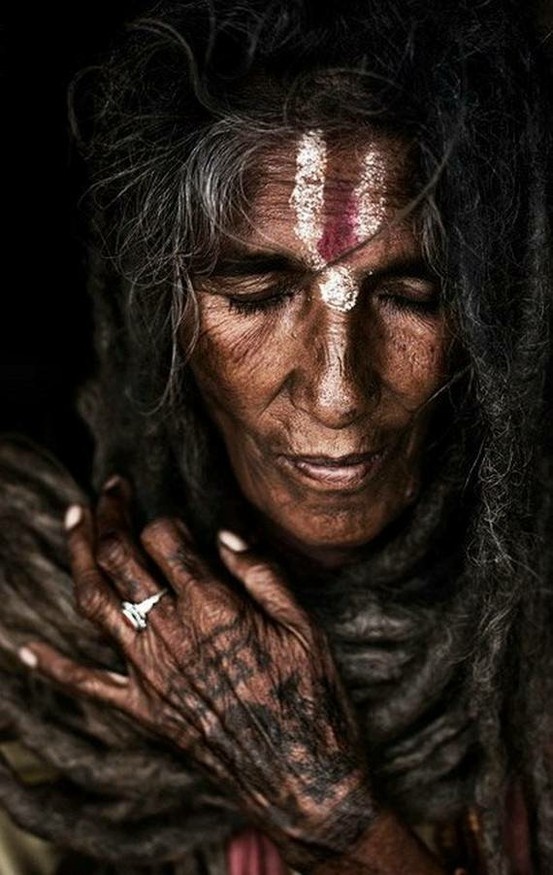
61aa8f4ca80eed9572c1ce9671977696
Some see a healer full of wisdom; others see a savage.
So, how many of us believe in magic?


Well, there’s around 2.2 billion Christians in the world, with the Americas and Europe providing the largest percentage of those who follow Christianity.

There’s an additional 1.6 billion Muslims in the world.

Add another 1 billion Hindus, 400 million who follow the traditional religion of China, and 375 million Buddhists.

All up, around 5.6 billion people make up the following of the top five religions in the world. 

That’s a lot of believers in magic.


Because really, what is the real difference between magic and religious practice?

I look at their priests and monks and see adults splashing water, singing strange songs and burning incense in honour of spirits with funny sounding names. Sound familiar?


 magic

ˈmadʒɪk/

noun
 
  1. 1.
    the power of apparently influencing events by using mysterious or supernatural forces.


What religion doesn’t claim to have that power?

Religious practitioners believe they can influence eternity by uttering suggested prayers or through the singing of hymns and mantras. Whether its going to heaven, attaining saṃsāra, or improving the quality of our next life by raising of our karma, we must first place our faith in the mysterious and supernatural in order to find salvation.

We must believe in the prayer, the chant, or the mantra. We must believe in the magic. Without our faith, there is no power behind our actions.

We’ve somehow legitimized a select few forms of magical practice and file them under the term “religion”. We’ve used the power of words to shape our perspectives and change our opinions on what is legitimate and what is not (that, and a few good old fashioned witch hunts never hurt as a deterrence).
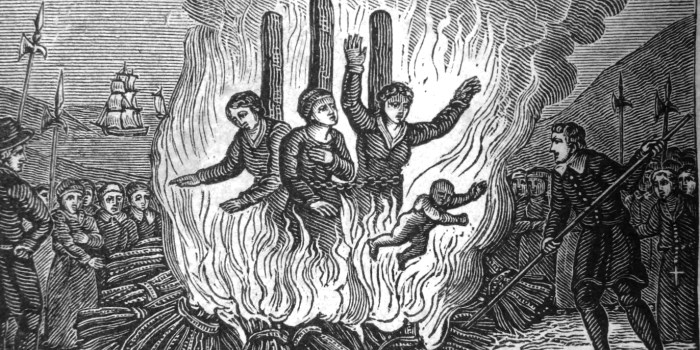


witchesguernsey
You know what they say: there’s no better way to beat the competition than by burning them alive and, for good measure, also throwing their baby into the flames.
Instead of chants, we call them hymns. Instead of incantations, we call them prayers. Instead of minor deities, we call them angels. Instead of acolytes, we call them priests – or nuns instead of priestesses. In the end, it’s all just magic.

Has anyone seen the epic wizard staff the Pope carries? Even Gandalf would blush at the sight of it. If we were in the Harry Potter universe, that bad boy would be a 72 inch wand, made from elder wood (coated in gold) with a dragon heartstring core.
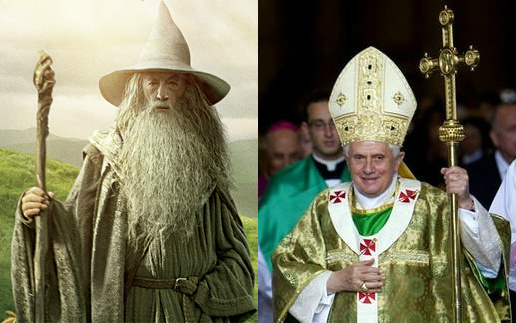


gandalf and pope
Seriously, how is the Pope NOT a wizard?
I’m not knocking religion. I think there are wonderful lessons to be learned from every religion and their texts. I’ve had profound moments reading the Bible, the Vedas, and various Buddhist teachings. I carry many of those lessons with me every day. Anything that makes us better people towards our fellow Earthlings and helps us to dive deeper into the deepest parts of ourselves, I absolutely support.

Our greatest gift as humans is the immense power of our belief; the strength of our faith. It gives power to the mind, body, and soul, that we never knew we possessed. Truly believing is the power behind our visualization and manifestation practices. There is no mountain we cannot climb as long as we keep the faith. The faith in ourselves; the faith in the universe. That is where the magic happens.


Children naturally possess the gift of magic. They possess imaginations that are limitless and a faith in the universe that is unwavering. They innately understand their own magical power – the power to manifest their own reality. They see the universe as it is: infinite, expanding, beautiful, and full of potential.

That is why I find it so hypocritical that we readily stomp on those imaginations and shatter their belief in magic, and yet we take them to mass on Christmas to perform ritualistic hymns for a deity who will burn them for eternity if they don’t follow his rules.

We turn a child’s world from one where anything is possible into a world with walls and barriers and limitations. They come to us wild, free, and full of self-belief, and we put them in shackles and convince them of their limitations.

Instead of teaching our children how to fit into boxes, maybe it’s time we learn from them how to live outside of them.

Maybe instead of teaching them religion, we let them teach us how to believe in magic again.

Be good to each other,

~ MG.


Photos:

Gandalf: MTV.com
The Pope: Wikipedia
Burning at the Stake: breitbartunmasked.com
Medicine Woman: pinterest.com
Featured Image: dreamatico.com


Why We’re All Artists:

Have you ever had a moment when you’ve observe genius and you were instantly inspired?

That was your inner artist showing itself.

Have you ever had THE moment? I think we all have, at some point in our lives. The moment we observe genius and we’re lifted into action on the wings of inspiration.

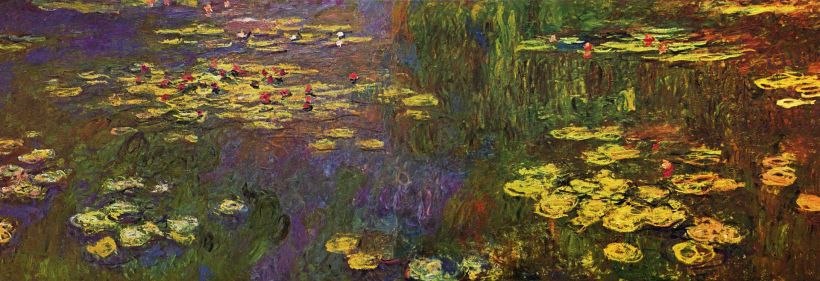
It might have been the first time we set our eyes on Claude Monet’s “Water Lilies.” For some of us, it was the first time we heard the angelic voice of Freddie Mercury singing “Somebody to Love.” It could have been the first time we read a poem by Sylvia Plath, the first Steven Spielberg film we watched, or the first time we saw Meryl Streep on the big screen.

Regardless of what the moment looked like, that was your inner artist showing itself.


Claude_Monet_038
“Water Lilies” (1920-1926) by Claude Monet.

I’ve had many such moments in my life, but I remember the first time with absolute clarity.


When I was growing up, hockey didn’t appeal to me much. It was very un-Canadian of me, I know. I hated getting up before sunrise in the middle of winter to skate in an arena with ice on the walls. I didn’t like how my feet would be frozen for hours after I took off my skates. I didn’t like how much it hurt when I fell on the hard ice. I decided hockey wasn’t for me.

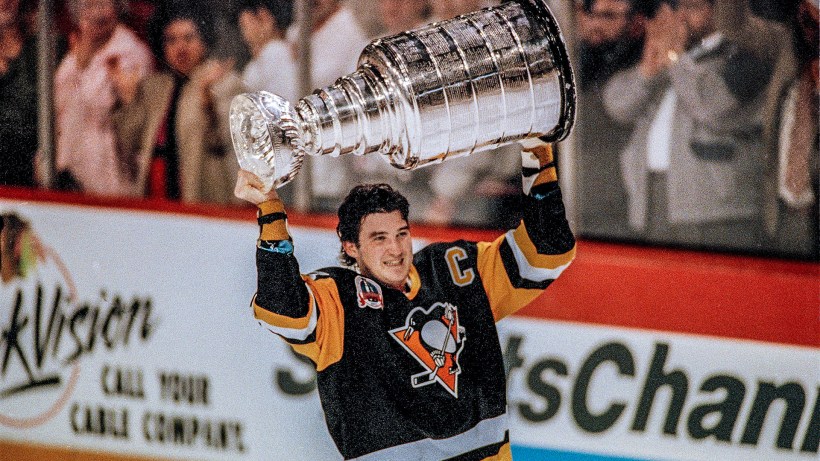
One night my family was watching hockey on T.V. A guy named Mario Lemieux was playing, and I was instantly hypnotized by him. He was a magician. His stick as his wand, he cast spells no other human could. Every time he stepped onto the ice, he created something from nothing. He made everything look effortless.

To this day, he’s still the closest thing I’ve ever seen to a unicorn. I didn’t understand it then, but I was witnessing genius in motion.


mario-lemieux-100515-ap-ftrjpg_103tl9yhb2x8wzepih4mxvrib
Super Mario: In my humble opinion, the best to ever lace ’em up. [Photo Source: http://images.performgroup.com%5D.
Needless to say, my little heart was inspired. I gave hockey another chance. Suddenly, the arena didn’t seem so cold. The broken bones didn’t take so long to heal. The frozen feet thawed a little quicker.


So why does the witnessing of genius inspire us the way it does?

Art – in all of its forms – comes from a place we’ve forgotten. It comes from the higher realms of the self; it comes from the same place as our souls. We give it many names: heaven, the cosmos, the universe, Valhalla, source, Olympus, and the list goes on.  From the moment we’re born, the deepest parts of ourselves call us to return to that place.


This is why a masterpiece inspires us. It gives us a glimpse of the divine; a glimpse of the divine within all of us. For it is only when we see God in another that we come to realize that God is in ourselves. We stop seeing ourselves as separate from the universe around us, and start seeing the cosmos as a part of ourselves.

space
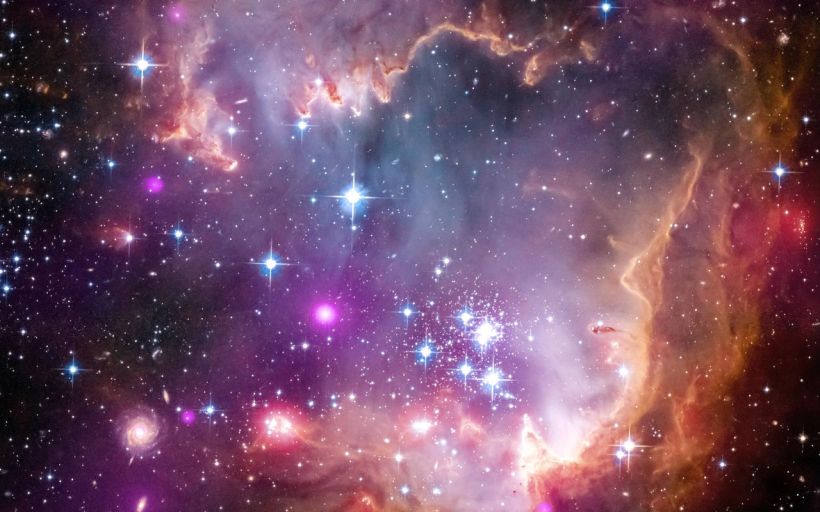
“Taken Under the ‘Wing’ of the Small Magellanic Cloud” : I know this looks fake, but it’s not. This is a photo taken by NASA of a small cloud galaxy that orbits the Milky Way. It is a small fraction of the universe you are a part of. It is a small fraction of you. [Photo Source: NASA – http://www.jpl.nasa.gov/spaceimages/wallpaper.php?id=PIA16884 ].

That is why it lifts our hearts when we express ourselves with creation. Our soul sings when we dance and paint because, for a moment, we are opening ourselves up to the higher realms that we came from. For a moment we remember that we are Gods.


You don’t have to paint the Mona Lisa, or write Romeo and Juliet to find that place. It doesn’t have to be a masterpiece. The most intimate parts of ourselves don’t care for acclamation or praise. Our souls only long for us to remember who we are; to remember the divine perfection in all of us.

A soul – personified as the artist – is in each of us.

It is why Michelangelo spent over four years painting the Sistine Chapel.

It is why Mario Lemieux  spent tens of thousands of hours on frozen ponds.

It is the reason that I write.


Art is the language of our soul and the artist is the one who speaks it. So take some time to create something, big or small. Paint a self portrait, build a tree house, or write a ballad. Take a dance or yoga class. Write a song, or learn an instrument. Find a way to express the soul trapped inside of you. Remind yourself of that feeling you get when you open yourself up to the heavens.

Remind yourself of your own divinity.

Because you are as infinite and as sacred as the stars we look upon.

Be good to each other,

~MG.


On The Art of Doing:

Sometimes when I sit down and the words don’t come, it’s important that I force myself to just start writing. The only cure for writer’s block, curiously enough, seems to be actually writing.

Funny how that works.

I don’t worry about mistakes, or if things don’t quite make sense. I just sit down and write whatever comes to mind. It’s called free writing.

Before you know it, the words are flowing through you. You are no longer a writer, or the master of your own words. You’ve become, in many ways, a conduit. You’ve become a hollow conductor by which creativity and creation can direct its magic through.

You’re just a corpse carrying a soul, after all.


The more I think about it, the more I think that the mentality behind free writing is applicable to life. Not only is it applicable, its the essential mindset behind having a fulfilled life.

How many of us have that vision of our greater self in our heads, and yet we sit around waiting for that perfect idea or plan to formulate before we take a leap of faith on ourselves?

The idea of the exact right timing, or the perfect storm of situational circumstance is just a form of resistance that we create in order to stay comfortable.

It’s the bubble we blow to keep ourselves safe. Safe but unfulfilled.


We would love to film the documentary that would change the world, we just need to find the right camera, or get the funding, or find the right time to get away from the office for long enough to do it.

We would love to start that new business venture, but we’re just not sure our idea is different or trendy enough to really catch on. We’re not sure if we’re ready for such a financial or personal commitment. We’re not sure if we have the expertise to make it work.

We would love to write the next New York Times best selling novel, but we’re not sure if we can find the time between work, school, or the kids to sit down and write. We’re not sure if our storylines are all that new and exciting, or if we even have a storyline to start with. We’re not sure if we’re proficient enough in the rules of writing, or in the language itself.


This little stamp could be yours! All yours!

We would love to get out of our line of work and try something new, but we’re just not sure if we’re too old of a dog to learn new tricks. We’re not sure if we have the time and patience to go back to school, or take a training course in the evenings. We’re not sure about the money.

We would love to get married to that man of our dreams, but we’re just not sure if the timing is all that great. We would love to settle down with our fair Juliet, but how do we really know if we’re ready to face the difficulty of a relationship?


And yet some of the best documentaries I’ve seen have been filmed on little hand-held camcorders, or used footage that was entirely borrowed from other sources. But they just made it work, piece by piece, little by little.

Walt Disney couldn’t get a job as a newspaper cartoonist, but didn’t stop drawing. He drew and drew and drew. He made cartoons until the source of creation breathed life into them. He had no more entrepreneurial talent than you do, and yet look what his simple idea created. 

Rockefeller wasn’t born a multimillionaire. He wasn’t handed a massive company or inheritance. But he knew he was born to sell. So he sold. He sold candy door to door and did odd jobs wherever he could.

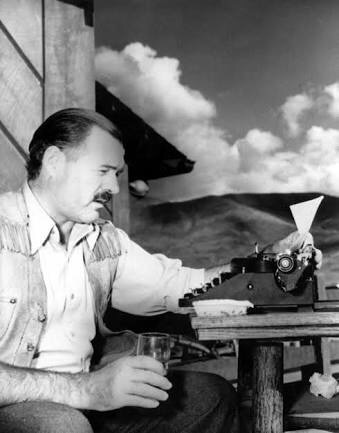
Hemingway didn’t come from a long ling of writers. He didn’t attend a prestigious university and earn an English degree. But he wrote. He also drank a lot, sure, but he wrote. He wrote words and he wrote them often.

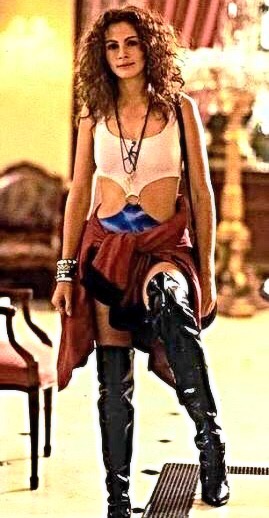
So, what made Michelangelo a painter? What made Steve Jobs an entrepreneur? What made Bo Jackson an athlete? What made Hemingway a writer? What made Julia Roberts (or was it Sandra Bullock?) in Pretty Woman a prostitute?


Definitely Julia Roberts….right?

All of these people made money doing these things, but that wasn’t what made them who they were.

Michelangelo was a painter because he painted. He loved to paint and he did it with all of his waking moments.

Bo Jackson played. He went out every single day and he played. Half the time the sport didn’t even matter to him, he just played it.

Julia Roberts’ character was a hooker because she hooked (hookered?).

Hemingway was a writer because he wrote. He was also a drinker, because he loved to get pants-shitting drunk.


Doing the things he did, and doing them well.

You get the point.

Do you think Steven Pressfield considered himself a writer only after writing The Legend of Bagger Vance?
Or was he a writer for the nearly two decades of writing he did before his first professional gig?


There’s never going to be that perfect moment to do something, or someone, you love.

You’re never going to be fully equipped to do it.

You’ll never be expert enough in your own mind.

But you will always have that little voice that calls you to do the thing that makes you who you are.

And by listening to that calling every single day, you’re already a writer, or a painter, or a hooker.

And you’ll find you’re pretty fucking awesome at it. So do it.

Be good to each other,

~MG

On Friendship:

Who are our true friends?

Daylight was breaking on the horizon.

The lake was so still that the sun’s reflection was a perfect mirror image; it looked like the morning had two suns rising at the same time.

Our chairs were still firmly entrenched around the fire. Our toes were still stuck in the sand.

Our once roaring fire had been reduced to barely-smoking ashes, but not one of us had noticed. It had been a warm evening and we had been distracted.

For the past hour or so, two of our friends had been engaged in a heated exchange of words. I say “heated” in the traditional sense, as this is a pretty common and socially accepted practice amongst my group of friends.

The five of us that were not involved pulled up a chair and listened to the insults being traded. As always, we served as the referees, judges of style, and the crowd – all at the same time.

It wasn’t Canada Day, but there was certainly some fireworks that night/early morning.

CANADA DAY 20080701 TOPIX
Canada Day celebrations. Note: This is NOT what happened on the night/morning in question. [Source: THE CANADIAN PRESS/ Sean Kilpatrick].

The battle had ended with the sunrise, and both combatants had felt they had gotten the better of their opponent.

One of the word warriors got up and headed back to the cottage, presumably to grab himself an ice cold James Ready for breakfast.

The other gladiator sat in silence, with a very strange grin on his face.

We took the bait. We asked him why he was smiling.

He told us he had an ace up his sleeve the entire time in case his victory was ever in question. He said it was lucky for his opponent that he hadn’t felt the need to use it.

We huddled around. We wanted to know what his secret weapon had been.

He leaned in a whispered and few words to us. He howled with laughter into the morning air.

A few of us released nervous laughs. Others just exchanged looks of shock. Maybe it was the hangover setting in, but some of us looked sick. I couldn’t help but ask:

Was this too far, even for us? Did we even have a “too far”?


12752092_10100593220768848_1802005210_o
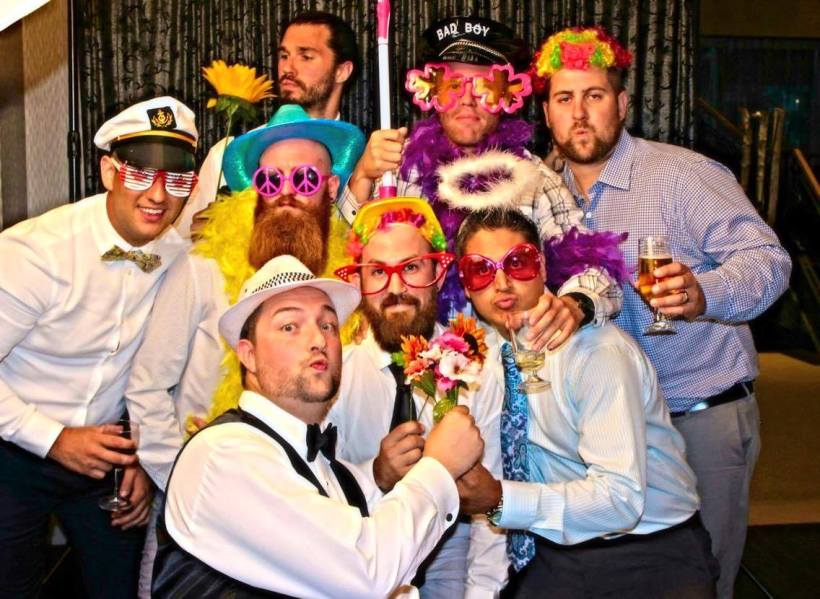
Does a group like this even have a “too far” ?

Growing up with these guys, I used to wonder if we were even actually friends.

How could people who claimed to love one another – even to like one another – constantly go at it the way we did.

At first I presumed it was some sort of struggle of machoism; putting each other down to get to the top.

I later took comfort in the belief that it was a natural occurrence within a team, a sort of humbling system to ensure no single ego rose above the interests of the group.

But here we are, some of us twenty years later, and we’re still very much the same.


Like most of us, my biggest problem in understanding friendship was my definition of a friend.

I had confused acquaintances, schoolmates, and co-workers  as my friends. I had confused people that I co-existed with, with people I flourished with.

It wasn’t until I realised the key element of a friendship that I truly understood why my group of friends had stuck together as long as it had.


This is because a true friendship is for the sake of friendship itself.

You are required to give no more to the relationship than your friendship, and expect nothing more in return.

As soon as the friendship is based upon other intentions or motives, it ceases to be a friendship at all.


Take your high school experience, for example. Some of the people you considered your friends you considered them so only because they were a part of your social group.

The intention of the relationship was founded on the motive of maintaining cohesion and harmony in your group of friends – not on the friendship itself.

Odds are you no longer maintain a relationship with those people.


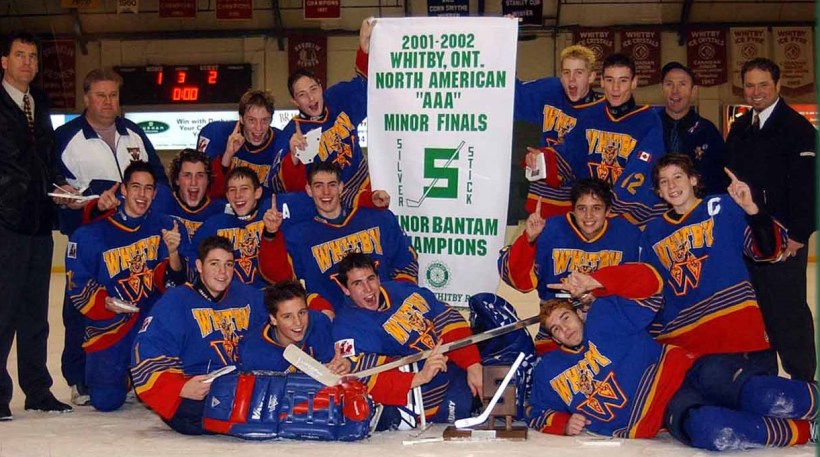
We had a team of practically the same 17-18 guys every season for a decade, and yet only 8 or 9 of us are still close. Some were friends for the sake of the team, the ones who stayed close were friends for the sake of friendship.

It’s not to say we don’t love them. I’m personally fond of all of the guys I played with. Our relationship simply wasn’t built on something that lasts. It served a lesser purpose.


North American Silver Stick Champions
Whitby Minor Bantam AAA – 2001-02: Several of us are still thick as thieves, others have drifted out of our lives.

When there is no expectation in a friendship other than the friendship itself, we attain a certain freedom.

We don’t have to fall into line, wear certain clothes, or perform desired functions. We’re accepted exactly how we are.

We don’t have to be someone we’re not.

We don’t have to hide.

Friends see us exactly as we are, and they love us for it.


This is why my group of friends could constantly joke about each other’s idiosyncrasies, faults, habits, and mistakes, without anyone getting too bent out of shape about it.

We all inherently knew that the group wasn’t trying to change us as people. The group was confirming our own humanity.

We were telling each other that who we were was good enough. We were laughing at each other’s faults because they were normal; our mistakes were human.

We forced each other to look in the mirror, and be perfectly okay with what we saw.


Does anything truly exist if no one is witness to its existence?

Friendship is both the confirmation of our existenc

– exactly how we are – and the complete acceptance of it.


12721833_10100593220738908_644989005_n
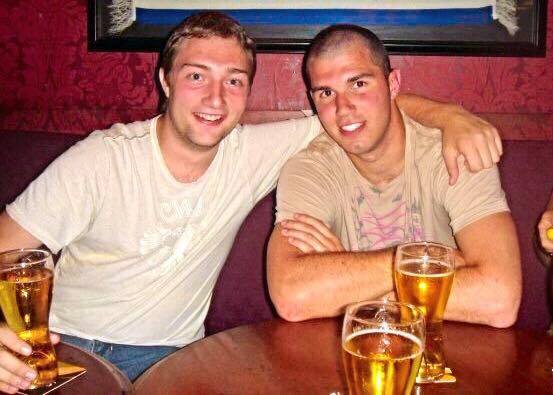
Friendship is deep conversation at a dingy pub table – liquid courage is accepted but not required.

True friendships are an integral part of a happy life.

Not only because we – as humans – are social creatures, but friendships help us to understand ourselves and the world around us.

Instead of living in those big beautiful brains of ours, we can talk with someone deeply without fear of judgement.

We can express our fears of things like death, inadequacy, flying, or clowns. Through these connections we learn our fears are perfectly normal and, more often than not, we work through these fears together.

We can hear each other’s ideas on the afterlife, on happiness, on love. We can help each other to grow.


This is why the greatest lovers are those who founded their relationship upon strong friendships.

It is why you so often hear couples in their 90’s call one another their best friend.


34706poster
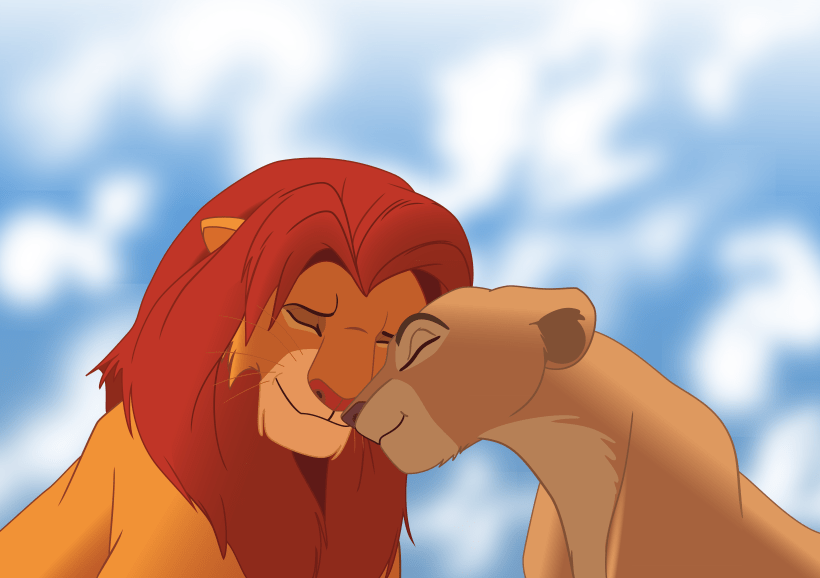
We should have known these two would end up together. [Source: The Lion King].

Beginning a relationship around lust is the same as beginning a friendship with the person from your social group in high school.

It’s the same as a friendship based on a professional connection.

It is the same as a friendship based on money, popularity, protection, or benefits of any kind.

They all serve ends that can be obtained.

You can attain harmony of the social group; you can attain the pleasures of the flesh; you can attain that promotion, you can attain the acceptance of a gang.

If the friendship – or relationship – is based on desires that can be attained, they are doomed.

The relationship ceases to meaningfully exist once it serves its purpose. 

A friendship, on the other hand, will always have the friendship to aspire to.

It is something that will last forever.

Any true friendship will.

Be good to each other,

– MG.


On Going Through the Motions:

In meditation, there’s a few different reasons as to why the mantra is used.

Some sects of Buddhism or Hinduism believe that muttering certain words manifests change. The words plant a little seed in the plan of the universe which is then nurtured by our positive deeds, good intentions, and dedication to our practice.

Other sects believe that the mantra is a set of arbitrary words used to numb the mind.

This is because when we take any word, and say it over and over and over and over again, it loses all meaning.

When the word eventually fades into the realm of meaninglessness, we are essentially muttering nothing at all. We have short circuited our way to an empty mind. A quiet mind.

A mind content in its meaninglessness.


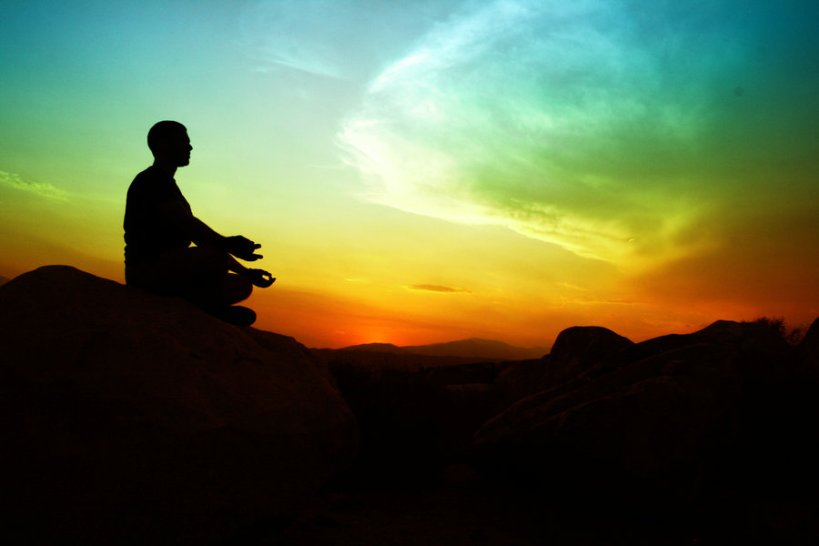
entrevo-keypersonofinfluence-get-started-meditation
[ Source: http://www.keypersonofinfluence.com ] .
An integral element of turning a word or a mantra meaningless is that there must not and can not be anything behind the words. We have to say the words without putting any feeling behind it.

We may have originally known the intention of our mantra, and we may have started our chants with intense purpose and sincerity, but somewhere along the way we must lose that intent and meaning in order for words, and their meaning, to fade into oblivion.


This is exactly what happens in life when we go through the motions.

We get up every day and follow the same routine. Go to the same job, to perform the same functions, with the same faces surrounding us, who are also performing their own monotonous functions.

Too many of us call this life. Too many of us call this living.

Like the mantras that lose all meaning, along the way we’ve lost what’s behind our words and our actions.

We’re performing the action of living, without actually possessing the intent to live.

We’re just saying the words over and over and over again. Our actions are for the sake of action.

And in this way our lives become meaningless.


We confuse the action itself as being the crucial element of life, when in reality it is the intention behind our actions that matters the most.

Life isn’t about the vacation or the trip, it’s about why we’re going, what we’re getting from it, or what we’re running from.

It isn’t about the code we live by, it’s about why we’ve chosen that path. It’s about discovering the fears and the pressures that have convinced us to live life a certain way, and it’s about choosing – for your own reasons – to find a different code to follow.

It’s not about the corner office job, but why we get up and work there every day.

Once you lose the intention behind the action, it becomes meaningless.


One should therefore not rely on mere words, but everywhere search for the intention behind them.” Buddhist Scriptures.

And that goes for anything in life.

You can be a brilliant poet, painter, athlete, lover, worker, or mother, but if the intention behind it isn’t pure or has been forgotten, then your actions cease to have meaning.

Your actions become a mantra.

Your boss, your partner, your children, and your team mates will all begin to feel the insincerity behind those meaningless actions.


Life is never about the choices we make.

It’s about why we make those choices. It’s about those tiny moments of integrity, when we know we’ve made an unpopular choice but have stayed true to ourselves.

It’s about being fearless in the face of external pressures or socially constructed fears.


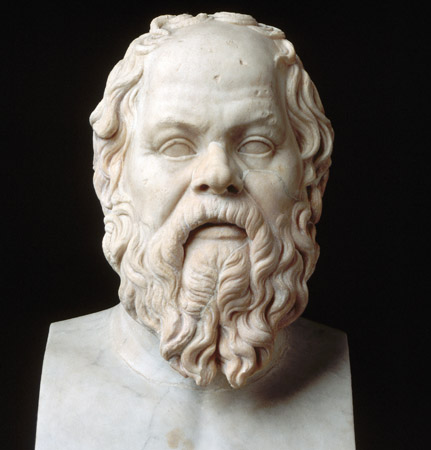
Portrait Herm of
Socrates : One of My Favourite Examples of a Man Unconcerned With Social Fears or Pressures.

Life is the fire, intention is the oxygen that gives it strength and beauty.

So breathe some fresh air into your life.


Take some time to reflect on why you’re doing everything in your life. Look at everything you do today as a choice, and question the intention behind that choice.

That is where your power comes from.

You have the choice and the power to live life how you want to live it.

Don’t let any person or misplaced fear take that away from you.

Don’t go through the motions.

Live your life with conscious intention.

And you’ll be living a meaningful life again.

Be good to each other,

– MG.

On Attachment:

Why are we so afraid of attachment?

“Don’t do it,” my cousin warned. “Don’t get attached.”

I laughed at him. He obviously didn’t have to worry about that.

But my laugh didn’t seem to convince him.

“You have no idea who she is – she could be crazy.” His warnings continued.

Valid point, I thought. I hardly knew her.


I had met her only a week previous, on the night of her birthday.

The mood was festive. Her sister was visiting and her friends were with her. The weather was perfect. Anyone could be a pleasure to be around in such a perfect setting.


“You could get hurt.”

I hated to admit it, but that one struck a chord.

He’s right, I thought, I could get hurt.


But sometimes we can’t shake the feeling that it doesn’t matter.

Sometimes we just can’t shake the feeling that we’ve found someone that we want to be attached to.

So when did we start to correlate suffering with attachment?


It’s a thought that sort of worked it’s way into the western mentality from its distant origins in the east.

The idea of dis-attachment is nothing new. Various Buddhist and Hindu sects have always determined attachment to be a major source of human suffering.

Attachment is the origin, the root of suffering; hence it is the cause of suffering.” The Dalai Lama at Harvard, 1988.

A very superficial understanding of the concept has worked its way into our psyche.

We see attachment as a bad thing.

It means opening up to the chance of losing something.

It means being vulnerable.

It means falling in love with a person who could take that love away from us at any time.

It means getting hurt.

But how much truth is there to this simple understanding of attachment?


I look around me, and I see that attachment makes up the very foundation of life.

On a purely molecular level, hydrogen molecules attach themselves to oxygen to form water – the elixir which makes life possible.

The biological attachment of man to woman creates life, and the attachment of a mother to her child is what allows that child to survive infancy – as her mother cares for the child out of that attachment.

The tides of our oceans are intricately attached to the gravitational pull of our moon, which in turn is attached to the pull of the earth, which spins happily in its attachment to the sun and our solar system.

The bloom of the African lilly is forever attached to the spring for the perfect conditions, the bees for its pollination, and the sun for it’s nurturing kiss.

In an infinitely interconnected universe, attachment is creation.

Attachment is life.


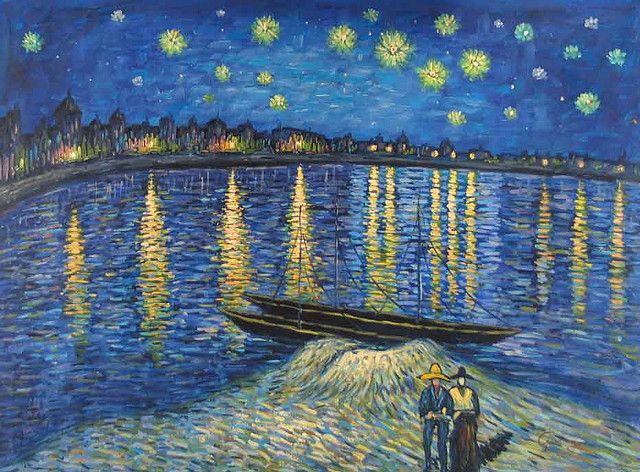
08e2929ba8f63e95f13c89b8c8b28afa
Starlight over the Rhone Near Arles [1888] by Vincent Van Gogh.
And yet attachment can be a dangerous thing.

It is when our attachments are based on reliance that it has a high propensity to cause suffering.

It is when we fill the void inside of ourselves with attachment that those attachments gain the power to hurt us.

It is when we attach ourselves to the love of others rather than the love of ourselves that our attachments become toxic.

It is when we attach ourselves to the acceptance of our peers rather than ourselves that our characters become weak and dependant.


Someone close to me always says that you have to fill your own cup. It is when our attachments fill our cups that they become dangerous, because at any moment we may lose them.

This leads to cycles of loss and gain, unbalanced relationships of power and reliance, and, for the most part, pain.

That is the lesson of the west, the lesson of the Buddhists and the Hindus. We mustn’t attach ourselves to sources of love and happiness that we should be getting from our own heart and souls.


But fearing attachments because we may lose them is only weakness.

It is a fear of loss.

It is a fear of being hurt.

It is a fear of not being worthy.


But we are worthy of love.

We are worthy of acceptance.

We are worthy of real, committed relationships.


Allowing ourselves to become attached is one of the greatest forms of vulnerability that we can demonstrate to each other.

The more attachments we have, the more we’ll lose.

The more we’ll suffer.

But that pain is the price we pay to live life to the fullest.

To avoid pain and live life in solitude is the life of a monk.

It is the absence of vulnerability, and it is the absence of the awe and wonder our indulgence in this human experience provides us.

It is human to be vulnerable.

It is human to attach.


The vulnerability that we demonstrate in attaching ourselves to another forces us to dive deeper into ourselves.

It is an essential journey into finding out all the intricate details about ourselves – the good, the (not so) bad, and the things we need to work on that we would have never noticed otherwise.


But finally, it teaches us acceptance.

It teaches us to accept ourselves as perfect just the way we are.

It teaches us to accept another as just as perfect.

It teaches us to accept that we may lose that person or thing at any moment, and that’s okay.

In fact, it makes that person or that thing even more valuable and beautiful because we may lose them tomorrow.

In the acceptance of eventual loss we find appreciation.

We find gratitude.


We’re not perfect. We never will be.

We will struggle to reach that higher place of existence for the rest of our lives.

But we can learn to be happy by ourselves.

We can learn to love and accept ourselves.

And along the way, when we get that undeniable feeling that we’ve found someone we want to attach ourselves to, we’ll be absolutely fearless when we do it.

Be good to each other,

– MG.

On Goodbyes:

Goodbyes are a beautiful thing.

I’ve never been the best with goodbyes; I don’t think many of us are.

It might be why I’ve come to dislike airports as much as I do. If you’re in an airport, you’re saying goodbye to someone, or something, in some way or another.


Part of me wonders why we put ourselves through these types of feelings.

And here I am, in another airport. I’m looking around and watching the goodbyes everywhere. Sisters holding each other tightly in an embrace. A father holds his little boy who is crying because he’s leaving. Lovers hold hands until that final, desperate moment.


The older I get, the more I realize that every goodbye could be the last we have with that person.

And yet I realized today that it’s for that reason exactly that goodbyes are a beautiful thing.


In a little over an hour waiting to board my plane, a million memories of the person I had just said goodbye to flooded my mind.

I felt a strong appreciation for all of the times I was lucky enough to spend with her. I laughed aloud at the many good memories, and replayed with understanding and compassion the uncomfortable ones. I found myself momentarily regretting all of the times I wasn’t completely present in the moment with her.


The experiences with our loved ones are special because we have to, at some time or another, say goodbye to them. With this in mind, each moment becomes a singular treasure to be cherished and appreciated.


I used to want to live forever. I wanted my friends and family to live forever. I wanted to stay close to home. I didn’t want to say goodbye.

But what would relationships be worth if we were not doomed to one day say goodbye?


So spend time with those you love. Connect with them on the deepest levels. Laugh off the perceived issues and embrace the great times.

Stay completely present, because one day you’ll say goodbye.

And that’s a beautiful thing.

Be good to each other,

– MG.

On Death:

What is it about death that actually scares us?

When I was growing up, I always took great delight in the autumn season. I’m not sure if it was because my birthday was coming up, hockey season was around the corner, or simply because of the beauty of the Canadian wilderness in fall.

The ordinarily green landscapes would be stroked orange, red, and yellow by the paint brushes of the gods. Fields full of grass became oceans of amber. Bronze sunsets would tint the city gold and set the sky ablaze.

And yet, everything around me was dying.

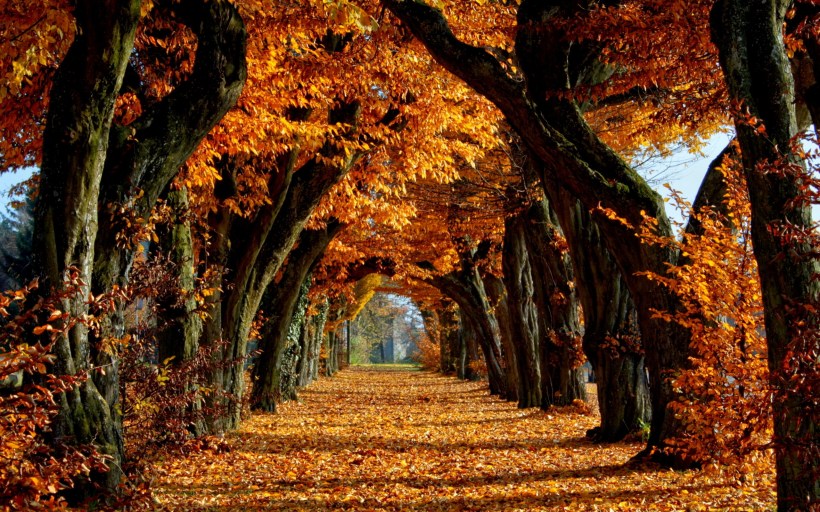
Autumn
A Canadian Autumn [Source: canadianmusichalloffame.ca]

It’s curious to think that I don’t know of a single person who has wept for fallen leaves, or wilting flowers, or dying grass. We innately understand this is the way of things. We know that spring will come, and the cycle of life (and death) will renew itself.


Why then, do we fear death? Why do we see our own death as the end of the straight line we’ve travelled since birth? Why is it so uniformly regarded as something negative?

Whether we’re afraid of what comes next, or dying painfully, or just the thought of our lives ending, it’s the ultimate boogeyman in the human experience.

Even the Romans, as battle hardened and fearless as they were, refrained from uttering the word “death.” By doing this, they gave power to the very word.

Death is certainly a part of life, and is certainly inevitable. It comes for us all. Does this give it power over us?

Of course not. We do not fear sunsets and sunrises, we do not fear the passage of time, we do not fear breathing. Yet these things are all inevitable. Inevitability doesn’t give something strength, but fear does.


The fear of death is death’s only weapon against us. Like the monster under our bed, it grows in ferocity and size as long as it remains the great unknown. In tackling the fears that surround death, we free ourselves from its grasp.

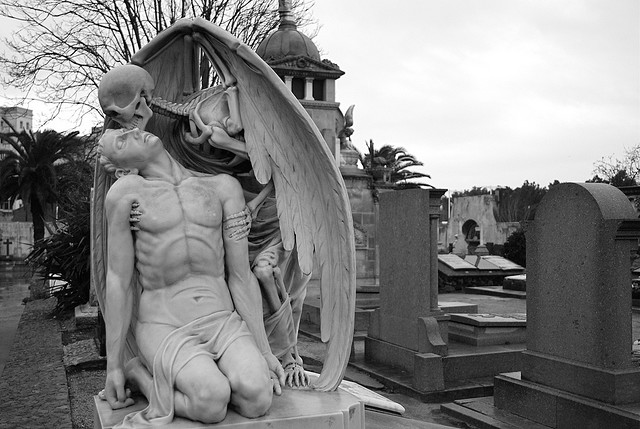
kiss of death poblenou barcelona 3
The Kiss of Death statue in the Graveyard of Poblenou, Barcelona, Spain. [Source: http://www.kuriositas.com]

Why, exactly, do we fear death?

(1) We fear death because we don’t know when it may come.

We fear the idea of dying young. 

I think of Jimi Hendrix, Alexander the Great, Amy Winehouse, Frédéric Chopin, John Keats, Tupac, and Tutankhamun. They all died at extremely young ages. Yet I would be willing to bet they lived lives more rich and full of experience than many of us rotting away in a cubicle.

On the grand scale of time and space, the difference between living 30 years and 80 isn’t even a blip on the map. Whether we die old or young we’re only here for an infinitesimal period of time, a period of time we cannot control.

We only have the power to make those years count.


(2) We fear death because we don’t know what comes next.

If I’m being perfectly honest, I usually have no idea what day of the week it is without ample reminders. Every day is a surprise. I’m at peace with the fact I generally have no idea what’s coming next.

We didn’t know what came next when we escaped the womb and came into this world kicking and screaming. We didn’t know what came next when we shipped off to university.

Sure, there was a little nervous energy, but we were generally excited about that great unknown. It was all new and beautiful.

Life can change in an instant, and that’s exactly what death is – life changing in an instant.

Whether death is the start of a new life or the end of an old cycle, change is never something to be feared.

It is only our concern with what may come in the future, or what happened in the past, that binds us to the wheel of life and death. By remembering that the present moment is the only moment, we free ourselves from that ever spinning wheel.


(3) We fear death might hurt.

I think I can speak for all of us by saying life usually hurts. Breaking bones was a price of playing the sport I loved, for example, and I broke pretty much everything above my waist – twice.

We’re riddled with coughs and colds and aches and pains and pimples and gas. We battle the seasons; we’re freezing in the winters and choking on smog in the summers. The suffering of life is unavoidable.

It seems a bit absurd to worry about the suffering of death, when our suffering is constant and unrelenting in the life we’re living. As far as we know, death is a release from our daily human suffering. Death is the absence of pain.

I’ve seen many people and animals suffer in life – but have never seen one struggle in death.


Nothing can be grievous which occurs but once; is it reasonable to fear for so long a time something which lasts so short a time?” – Michel de Montaigne, How We Weep and Laugh at the Same Thing.


I often wonder if a rose would be as beautiful if it were perpetually in bloom, or if we would cherish the springs if there was no winter. Life isn’t beautiful because it is long, or painless, or safe.

Life is beautiful for the simple fact that we are mortal. Death is what makes life a special gift. Every moment can be our last. For this reason, everything we touch, smell, hear, taste, and see is magical.

Death is our constant reminder to appreciate this life that we’ve been given.

Appreciate the people around us, the things that we have, and the healthy bodies we’ve been given.

Memento mori.

Be good to each other,

– MG.


On Judgement:

The only way of truly knowing anyone or anything, is to get to know them.

The rain was splattering heavily against the bus window. I couldn’t hear it over the pod cast I was listening to, but the visuals were just as calming.

The bus was unusually crowded for the time of day, and I happened to be one of the few people without a person wedged into the seat beside me.

But alas, my personal freedom was not meant to be.

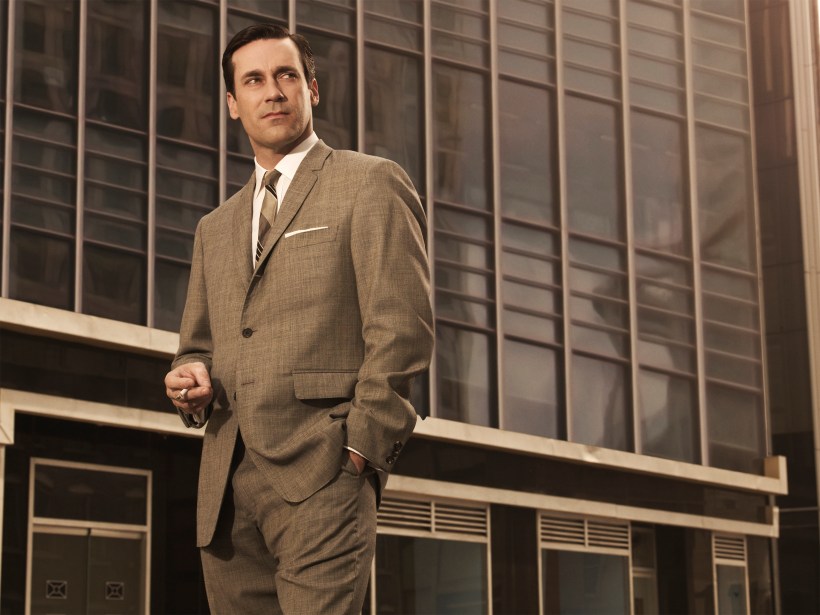
An elderly gentlemen stepped onto the bus, closed his umbrella, and shook it dry. He dusted off the sleeves and fixed the cuffs of his brown suit that he could have stolen from the set of Mad Men.

7-62.jpg
Mad Men: An accurate depiction of the old man’s suit.

He spotted the seat next to me and made his leisurely advance toward it.

As he walked toward me, a million suggestions about him flooded my head before he got to my seat. Out of touch. Senile. Grumpy. Bitter. Lonely.

In short, I believed from the moment I saw him that he had nothing in common with me.

I tried to smile at him when our eyes met, but the scowl on his face appeared to be a permanent fixture. Cranky old man, I thought to myself.

He wiggled in his seat as though he was jostling for position. I tried to show him with my body language that I couldn’t move over any more than I already was. We weren’t off to the best start.

I tried to keep my gaze outside of the window, but the man kept fidgeting. I tried to ignore him, but I couldn’t.


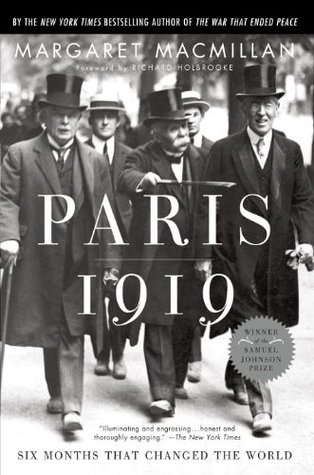
I eventually checked to see what he was doing. He was pulling out a book. I was surprised to see it was Paris 1919 by Margaret MacMillan (…..Canadian!).

26348
Paris 1919: Six Months That Changed the World by Margaret MacMillan

The nerd in me couldn’t help but remove my headphones and tell the man that was my favourite book from all of my undergraduate history studies. As I began a one-way conversation about some of my favourite points, he looked at me almost bewildered.

I instantly recognized that look of surprise, and that’s when it hit me.

He had judged me in the same way I had judged him.

I thought of how I must have looked to him when he first saw me. I was in gym gear, with long hair, a beard, drinking a shake, and with my headphones on.

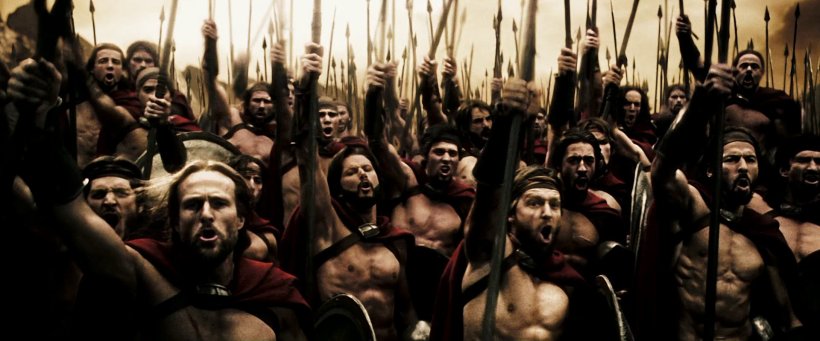
I look at myself sometimes and think I look more like I belong at the battle of Thermopylae than I do in a law classroom. It was comical to imagine how he saw me.

spartans-what-is-your-profession
A scene from the movie 300: “Spartans, what is your profession?”

To him, I was probably just a young punk who knew it all. I was probably listening to hip-hop or whatever “kids these days” find appealing. I was probably off to “do my exercises” so that I could better “chase all the girls.” I probably even smoked those “marijuana cigarettes.”

And who could blame him? With how I looked, it might have been a stretch for him to guess that I was actually listening to a podcast on the third Punic War, heading for a quick workout so I wouldn’t go stir crazy studying for law exams.


We talked about the book and our favourite personalities of the first world war. Our talks on the first world war quickly became talks about the second. We talked about our relatives who lived through it.

He found out I was a Canadian, and told me about his travels to Ottawa and Toronto. We talked about my travels in Australia.

It also turned out he was a professor of History. We compared our favourite Roman generals. We talked of famous victories and disastrous defeats. It may be nerd speak to some, but we were connecting through a mutual passion.

When he got on the bus, I had immediately assumed that this was a man I had nothing in common with. It’s safe to conclude he had assumed the same. Yet here we were, finding common ground at every turn. He reminded me of my grandfathers, and the passion they instilled in me for life.

I almost missed my stop because we were in such deep conversation. I found I was legitimately upset to part with my new friend. We said our goodbyes and I left with a deeper faith in our connectedness as humans.

I say, sir, that you can never make an intelligent judgement without evidence.” – Malcom X, The Playboy Interview.

We say it all the time – not to judge a book by its cover – but this experience took it a step further for me. I don’t think its at all possible to judge a book by its cover.

We really have no idea who a person is until we dive into their world.

We can only judge the mask they show to us. We can judge the trends they support, but we can’t judge them.

We have no idea if it’s Beethoven or Drake playing through those headphones. And, even if we did know, what does that really tell us about a person?

The more obsessed we’ve become over our own appearances, the more judgemental we become of the appearances of others.

The only way of truly knowing anyone or anything, is to get to know them.

Imagine a world the same as ours, except the moment someone felt the need to judge someone they instead took a moment to connect with a fellow human being.

What a world that would be.

Be good to each other,

– MG.

On A Moment of Clarity:

Sometimes we’re in the right place, at the right time, with the right book.

I had finally arrived home, just ahead of the sunset. Exhausted, I dropped onto the couch with a sigh.

The rain sputtering on the window reminded me that I was sitting in wet clothes, but I was too tired to care.

Looking around the room, a book on a nearby shelf that was collecting dust caught my eye. I had bought it some time ago, on a whim of no real design, and it had sat there neglected ever since.

As we sometimes do, I flicked absent-mindedly through its pages; I landed on book number two. A certain paragraph seemed to stick out off of the page, a little further than the others.

I ran my fingers along the black lettering. It seemed to be bulging from the paper as though it was braille. I can still remember my eyes actually growing wider with a desperate gluttony as I began to hungrily devour the words presented before me:

Remember how long you have been putting this off, how many times you have been given a period of grace by the Gods and not used it. It is high time now for you to understand the universe of which you are a part, and the governor of that universe of whom you constitute an emanation: and that there is a limited circumscribed to your time – if you do not use it to clear away your clouds, it will be gone, and you will be gone, and the opportunity will not return.” Marcus Aurelius, Meditations.

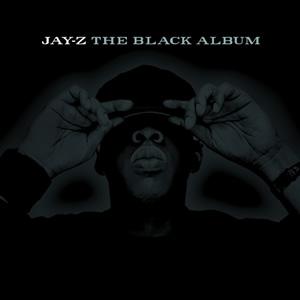
I had always heard of people having a moment of clarity, which also happens to be my favourite Jay-Z song of all time, but I had never experienced one myself.

You always hear people say that when you’re truly in love, you’ll just “know” it. The same people say if you’re unsure if you’ve ever been in love, then you haven’t.

I believe the same distinguishing factors apply for a moment of clarity. Simple words, usually so easily manipulated in order to shape an idea in your head, suddenly fall short. Clarity is a poetry that is not written or spoken. It is felt with every fibre of your being.


The Black Album by Jay-Z - which features The Black Album by Jay-Z – which features “A Moment of Clarity”

I put down the book in complete disbelief after reading that simple paragraph. I was wordless and shapeless. That simple passage had an unbelievably powerful effect.

This is the point in the story when it ceases to resemble any sort of cliché Hollywood script.

As the protagonist, I didn’t go out that day and achieve greatness. I didn’t compose a masterpiece, save a drowning puppy, or help to end the suffering of one of the millions of children in need. I didn’t change the world, and I certainly wasn’t saving it. Put me in a spandex suit and I still wasn’t Superman.


This is not me. This was not me.

I did, however, experience a moment of clarity that I will carry with me for the rest of my life; I saw things clearly and simply. Three things had suddenly become abundantly clear to me:

The first was that the universe is a system of infinitely complex and interrelated pieces. A clock with trillions of perfectly operating cogs and dials. As children of this universe, we are pieces of this puzzle. We are cogs and wheels in the clock of time and space. Each and every single one of us has a purpose. You and I have true meaning. We are each of us important.

The second was that our notion of time is an illusion. An illusion we’ve created. We’ve fabricated the idea of time as a quantity so we can count it and spend it and sell it and trade it the same way we do money and raw materials. Life is a single, uninterrupted and endless opportunity that we’ve for some reason separated into years, days, hours, minutes and seconds. When it comes to your true purpose, there is no fixed timeline or Monday deadline. It is never too late to pursue it. If we’ve wasted moments or decades, it does not change the opportunity that is our life. You can’t waste what doesn’t exist. Time doesn’t exist, but opportunity does as long as you draw breath.

The third, and most important, realization was that the universe had always been speaking to me, I just hadn’t been listening. It speaks to all of us.

The sun came up the morning you were born, and sunk that same evening. It’s done this every day of your life since.

Each sunrise does not represent the start of another day, a fragment of time the universe has no concept of. Each sunset does not represent another collection of wasted chances. The rising and setting sun is the universe’s constant reminder that nothing has changed while you slept. You fell asleep in a life of opportunity and you’ve woken up in its midst.

We need to stop thinking about the days that have passed. We need to stop thinking about the days that may or may not exist in our future. Think instead about how today, in this very moment, you can pursue your true calling. Today you can make a change, or make a difference. Today you can do anything.


You are part of this magnificently crafted clock. [Source: Nasa.gov] Hubble’s High-Definition Panoramic View of the Andromeda Galaxy: You are a tiny cog in this magnificently crafted clock. [Source: Nasa.gov]

I didn’t receive divine knowledge telling me my life’s purpose or how to pursue it that day. I was simply reminded of something I already knew. Something that, deep down, we all really know.

As miniature pieces of this wonderfully chaotic and perfect universe, we are perfectly designed for something. Every single one of us has a purpose.

We’re not too late or incapable. Those thoughts are just grey clouds in our sky as we’re chasing the sun – grey clouds that we’ve created.

So look up at the sun today. Close your eyes and let it warm your face. Let it remind you that you are basking in a perpetual moment of opportunity.

Think of the thing you’ve always wanted to do. Think of whatever it is that has always called to your soul. Then open your eyes and take that next step, big or small, in pursuing that purpose you were put on this earth for, whatever you feel it may be. You are strong enough. You are capable enough.

And you were born to do it.

Be good to each other,

– MG.