Why We’re All Artists:

Have you ever had a moment when you’ve observe genius and you were instantly inspired?

That was your inner artist showing itself.

Have you ever had THE moment? I think we all have, at some point in our lives. The moment we observe genius and we’re lifted into action on the wings of inspiration.

It might have been the first time we set our eyes on Claude Monet’s “Water Lilies.” For some of us, it was the first time we heard the angelic voice of Freddie Mercury singing “Somebody to Love.” It could have been the first time we read a poem by Sylvia Plath, the first Steven Spielberg film we watched, or the first time we saw Meryl Streep on the big screen.

Regardless of what the moment looked like, that was your inner artist showing itself.
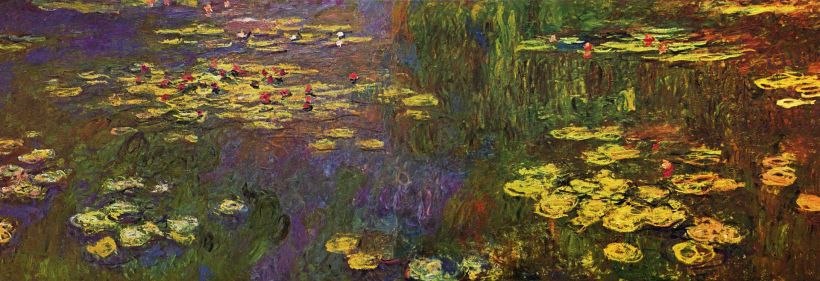


Claude_Monet_038
“Water Lilies” (1920-1926) by Claude Monet.

I’ve had many such moments in my life, but I remember the first time with absolute clarity.


When I was growing up, hockey didn’t appeal to me much. It was very un-Canadian of me, I know. I hated getting up before sunrise in the middle of winter to skate in an arena with ice on the walls. I didn’t like how my feet would be frozen for hours after I took off my skates. I didn’t like how much it hurt when I fell on the hard ice. I decided hockey wasn’t for me.

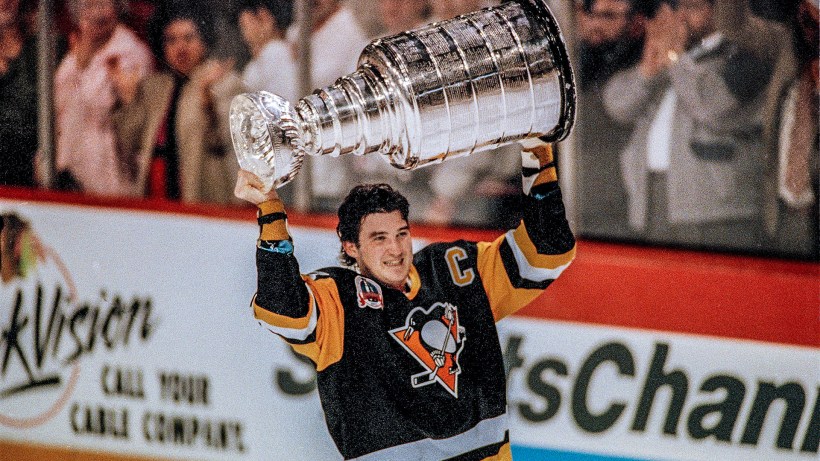
One night my family was watching hockey on T.V. A guy named Mario Lemieux was playing, and I was instantly hypnotized by him. He was a magician. His stick as his wand, he cast spells no other human could. Every time he stepped onto the ice, he created something from nothing. He made everything look effortless.

To this day, he’s still the closest thing I’ve ever seen to a unicorn. I didn’t understand it then, but I was witnessing genius in motion.


mario-lemieux-100515-ap-ftrjpg_103tl9yhb2x8wzepih4mxvrib
Super Mario: In my humble opinion, the best to ever lace ’em up. [Photo Source: http://images.performgroup.com%5D.
Needless to say, my little heart was inspired. I gave hockey another chance. Suddenly, the arena didn’t seem so cold. The broken bones didn’t take so long to heal. The frozen feet thawed a little quicker.


So why does the witnessing of genius inspire us the way it does?

Art – in all of its forms – comes from a place we’ve forgotten. It comes from the higher realms of the self; it comes from the same place as our souls. We give it many names: heaven, the cosmos, the universe, Valhalla, source, Olympus, and the list goes on.  From the moment we’re born, the deepest parts of ourselves call us to return to that place.


This is why a masterpiece inspires us. It gives us a glimpse of the divine; a glimpse of the divine within all of us. For it is only when we see God in another that we come to realize that God is in ourselves. We stop seeing ourselves as separate from the universe around us, and start seeing the cosmos as a part of ourselves.
space
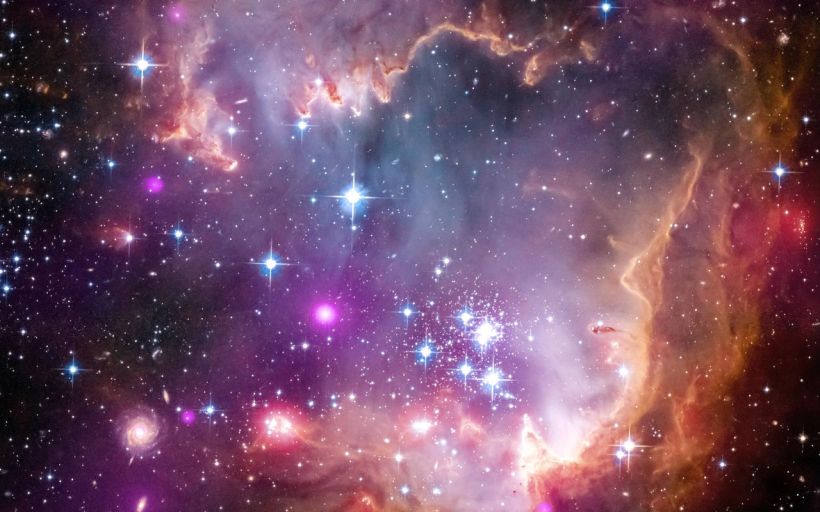
“Taken Under the ‘Wing’ of the Small Magellanic Cloud” : I know this looks fake, but it’s not. This is a photo taken by NASA of a small cloud galaxy that orbits the Milky Way. It is a small fraction of the universe you are a part of. It is a small fraction of you. [Photo Source: NASA – http://www.jpl.nasa.gov/spaceimages/wallpaper.php?id=PIA16884 ].

That is why it lifts our hearts when we express ourselves with creation. Our soul sings when we dance and paint because, for a moment, we are opening ourselves up to the higher realms that we came from. For a moment we remember that we are Gods.


You don’t have to paint the Mona Lisa, or write Romeo and Juliet to find that place. It doesn’t have to be a masterpiece. The most intimate parts of ourselves don’t care for acclamation or praise. Our souls only long for us to remember who we are; to remember the divine perfection in all of us.

A soul – personified as the artist – is in each of us.

It is why Michelangelo spent over four years painting the Sistine Chapel.

It is why Mario Lemieux  spent tens of thousands of hours on frozen ponds.

It is the reason that I write.


Art is the language of our soul and the artist is the one who speaks it. So take some time to create something, big or small. Paint a self portrait, build a tree house, or write a ballad. Take a dance or yoga class. Write a song, or learn an instrument. Find a way to express the soul trapped inside of you. Remind yourself of that feeling you get when you open yourself up to the heavens.

Remind yourself of your own divinity.

Because you are as infinite and as sacred as the stars we look upon.

Be good to each other,

~MG.


On Friendship:

Who are our true friends?

Daylight was breaking on the horizon.

The lake was so still that the sun’s reflection was a perfect mirror image; it looked like the morning had two suns rising at the same time.

Our chairs were still firmly entrenched around the fire. Our toes were still stuck in the sand.

Our once roaring fire had been reduced to barely-smoking ashes, but not one of us had noticed. It had been a warm evening and we had been distracted.

For the past hour or so, two of our friends had been engaged in a heated exchange of words. I say “heated” in the traditional sense, as this is a pretty common and socially accepted practice amongst my group of friends.

The five of us that were not involved pulled up a chair and listened to the insults being traded. As always, we served as the referees, judges of style, and the crowd – all at the same time.

It wasn’t Canada Day, but there was certainly some fireworks that night/early morning.

CANADA DAY 20080701 TOPIX
Canada Day celebrations. Note: This is NOT what happened on the night/morning in question. [Source: THE CANADIAN PRESS/ Sean Kilpatrick].

The battle had ended with the sunrise, and both combatants had felt they had gotten the better of their opponent.

One of the word warriors got up and headed back to the cottage, presumably to grab himself an ice cold James Ready for breakfast.

The other gladiator sat in silence, with a very strange grin on his face.

We took the bait. We asked him why he was smiling.

He told us he had an ace up his sleeve the entire time in case his victory was ever in question. He said it was lucky for his opponent that he hadn’t felt the need to use it.

We huddled around. We wanted to know what his secret weapon had been.

He leaned in a whispered and few words to us. He howled with laughter into the morning air.

A few of us released nervous laughs. Others just exchanged looks of shock. Maybe it was the hangover setting in, but some of us looked sick. I couldn’t help but ask:

Was this too far, even for us? Did we even have a “too far”?


12752092_10100593220768848_1802005210_o
Does a group like this even have a “too far” ?

Growing up with these guys, I used to wonder if we were even actually friends.

How could people who claimed to love one another – even to like one another – constantly go at it the way we did.

At first I presumed it was some sort of struggle of machoism; putting each other down to get to the top.

I later took comfort in the belief that it was a natural occurrence within a team, a sort of humbling system to ensure no single ego rose above the interests of the group.

But here we are, some of us twenty years later, and we’re still very much the same.


Like most of us, my biggest problem in understanding friendship was my definition of a friend.

I had confused acquaintances, schoolmates, and co-workers  as my friends. I had confused people that I co-existed with, with people I flourished with.

It wasn’t until I realised the key element of a friendship that I truly understood why my group of friends had stuck together as long as it had.


This is because a true friendship is for the sake of friendship itself.

You are required to give no more to the relationship than your friendship, and expect nothing more in return.

As soon as the friendship is based upon other intentions or motives, it ceases to be a friendship at all.


Take your high school experience, for example. Some of the people you considered your friends you considered them so only because they were a part of your social group.

The intention of the relationship was founded on the motive of maintaining cohesion and harmony in your group of friends – not on the friendship itself.

Odds are you no longer maintain a relationship with those people.


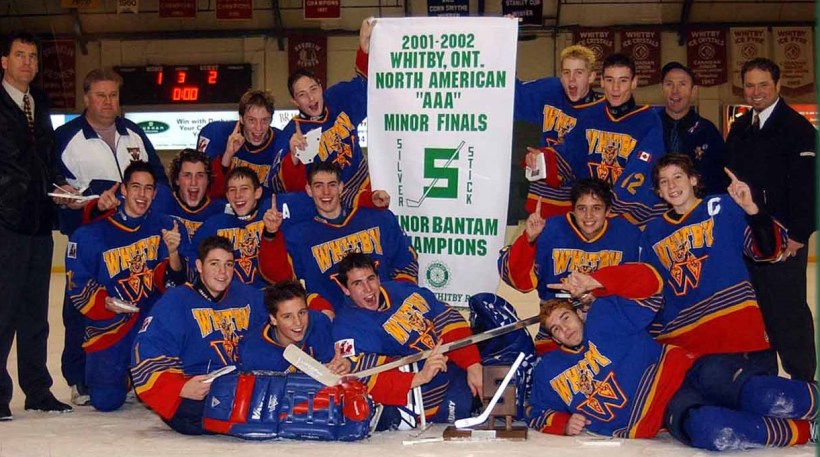
We had a team of practically the same 17-18 guys every season for a decade, and yet only 8 or 9 of us are still close. Some were friends for the sake of the team, the ones who stayed close were friends for the sake of friendship.

It’s not to say we don’t love them. I’m personally fond of all of the guys I played with. Our relationship simply wasn’t built on something that lasts. It served a lesser purpose.


North American Silver Stick Champions
Whitby Minor Bantam AAA – 2001-02: Several of us are still thick as thieves, others have drifted out of our lives.

When there is no expectation in a friendship other than the friendship itself, we attain a certain freedom.

We don’t have to fall into line, wear certain clothes, or perform desired functions. We’re accepted exactly how we are.

We don’t have to be someone we’re not.

We don’t have to hide.

Friends see us exactly as we are, and they love us for it.


This is why my group of friends could constantly joke about each other’s idiosyncrasies, faults, habits, and mistakes, without anyone getting too bent out of shape about it.

We all inherently knew that the group wasn’t trying to change us as people. The group was confirming our own humanity.

We were telling each other that who we were was good enough. We were laughing at each other’s faults because they were normal; our mistakes were human.

We forced each other to look in the mirror, and be perfectly okay with what we saw.


Does anything truly exist if no one is witness to its existence?

Friendship is both the confirmation of our existenc

– exactly how we are – and the complete acceptance of it.


12721833_10100593220738908_644989005_n
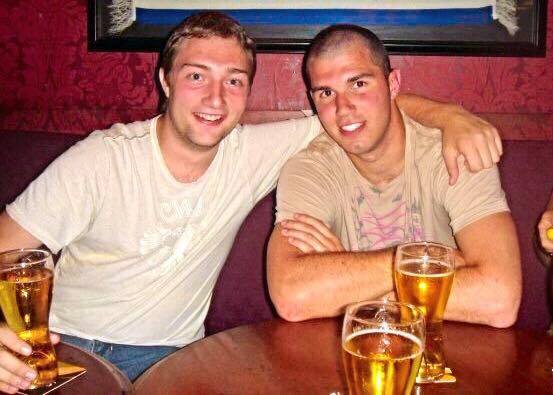
Friendship is deep conversation at a dingy pub table – liquid courage is accepted but not required.

True friendships are an integral part of a happy life.

Not only because we – as humans – are social creatures, but friendships help us to understand ourselves and the world around us.

Instead of living in those big beautiful brains of ours, we can talk with someone deeply without fear of judgement.

We can express our fears of things like death, inadequacy, flying, or clowns. Through these connections we learn our fears are perfectly normal and, more often than not, we work through these fears together.

We can hear each other’s ideas on the afterlife, on happiness, on love. We can help each other to grow.


This is why the greatest lovers are those who founded their relationship upon strong friendships.

It is why you so often hear couples in their 90’s call one another their best friend.


34706poster
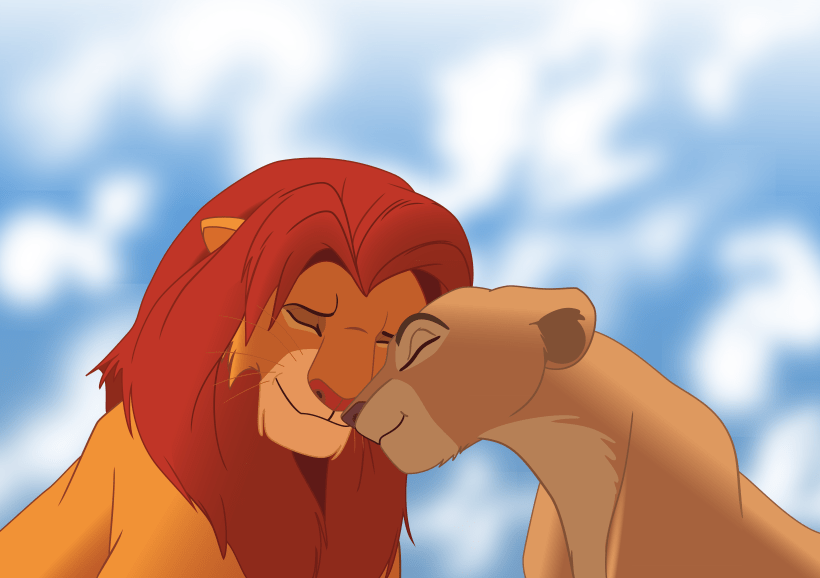
We should have known these two would end up together. [Source: The Lion King].

Beginning a relationship around lust is the same as beginning a friendship with the person from your social group in high school.

It’s the same as a friendship based on a professional connection.

It is the same as a friendship based on money, popularity, protection, or benefits of any kind.

They all serve ends that can be obtained.

You can attain harmony of the social group; you can attain the pleasures of the flesh; you can attain that promotion, you can attain the acceptance of a gang.

If the friendship – or relationship – is based on desires that can be attained, they are doomed.

The relationship ceases to meaningfully exist once it serves its purpose. 

A friendship, on the other hand, will always have the friendship to aspire to.

It is something that will last forever.

Any true friendship will.

Be good to each other,

– MG.


On Babies and Pizza:

Social conditioning is a funny thing.

It has an astounding ability to filter the way we see the world. By shaping our values and norms, it can directly affect our appreciation for the little miracles in life.

Take pizza for example.

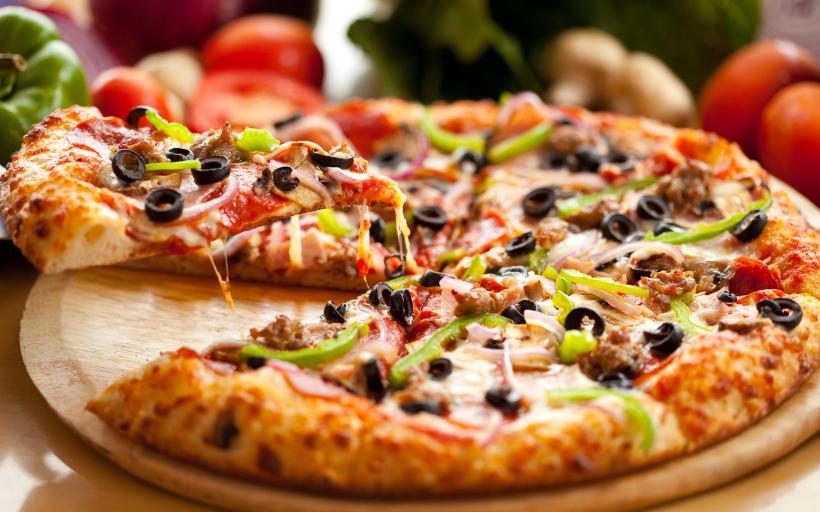
Our social conditioning has rendered the ordering of a pizza into something routine and relatively unimpressive. It’s something that is generally accepted as logistically simple. It’s become a completely unappreciated achievement of humanity.

But if someone was to do exactly the same thing – that is, get on their phone and press a few buttons – but expect a baby, it would be absolutely absurd.

Think about what goes into the making of a pizza.

photo3
Pizzaaaaaaa!

If the pizza has pepperoni on it, an animal has to give birth to another animal, which must survive childhood and reach adulthood, that animal must then be murdered, processed, shipped, and cooked before finally appearing as part of your pizza.

If it has olives on it, an olive tree had to be planted somewhere, probably the Mediterranean, had to mature enough over several years to bear fruit (is that what olives are?), be shipped across an ocean, and find its way to meet the pepperoni in a perfect union of infinitesimal coincidence in order to appear as another part of your pizza.

But you also love a bit of mozzarella. No problem. A cow must be born and raised. That cow has to first be forcefully impregnated and must carry her calf full term. In the meantime, she will be permanently chained to a milking device before having her calf taken from her at birth. This process will repeat itself until that cow can no longer get pregnant or produce milk.

The milk is then separated into curds and whey using acid and rennet. The curd sets, is drained and salted. Mozzarella is stretched and kneaded in hot water to give it that special texture a pizza lover has come to expect. It’s packaged and sent to meet it’s fate in that fiery oven with its new brothers the pepperoni and the olives.

This doesn’t take into account how the dough came to be, labour employed in the creation and cooking of the pizza and it’s elements, the delivery man, the electronic exchange of energy in monetary form, or the mind power you put into essentially manifesting a pizza by pressing buttons on a little magic box that fits in your hand.

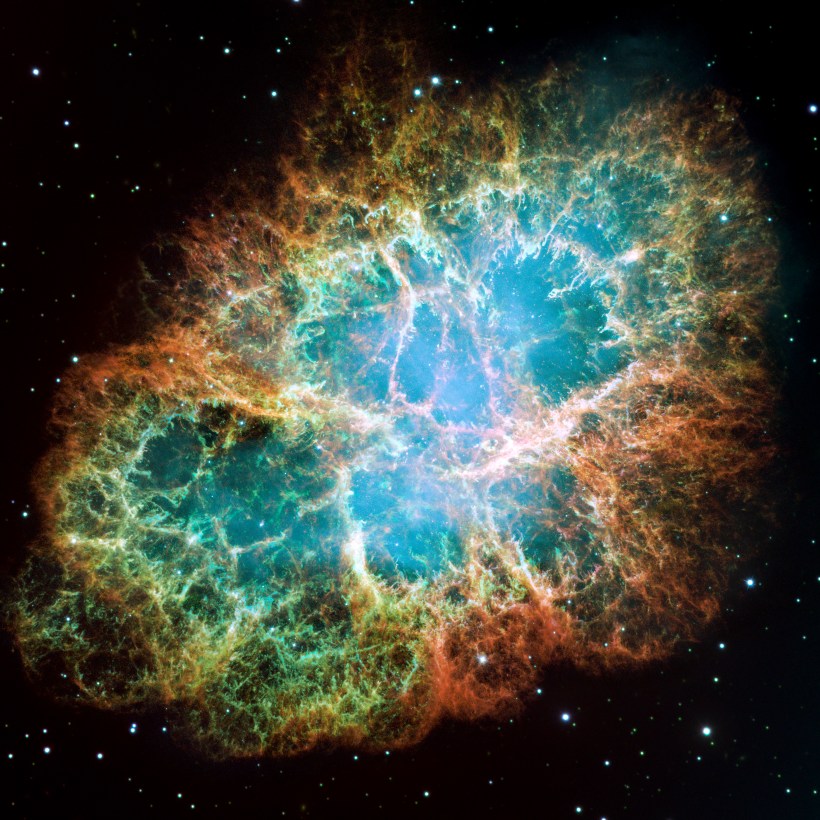
To put things into perspective, the cheese on your pizza and the pepperoni on your pizza is made up of stardust from two completely different stars. Those stars had to both be born, act as nuclear fusion plants for billions of years, burn out in a beautiful blazing supernova, and have their tiny particles spread across the universe.

Crab_Nebula
“Caught beneath the landslide / In a champagne supernova / A champagne supernova in the sky.” [Source: Wikipedia].
They joined the trillions of such like particles that formed earth, before those particles partook in a million year cycle of being born, dying, and being reborn again, before it finally ended up as part of your pizza – at the same time as the other stardust from a different star.

A baby by comparison only takes 2 humans and 9 months to make, compared to the many humans and collective decades the clockwork of pieces your pizza represents – pieces of pizza, no pun intended.

Yet the idea of ordering a baby would appear absurd, when logistically and energetically it’s much less absurd than the ordering a pizza.

This doesn’t even take into consideration the evolution of food, cooking processes, transportation efficiency, technological advancements, harvesting capabilities, and overarching factors of globalisation that were required to develop in order for the ordering of pizza to become common place.

The art of making a baby hasn’t changed since the dawn of time.

It shouldn’t have to be said, but I do not value the making of a pizza above that of a newborn child. We value a baby because it represents life in it’s most beautiful and fragile form. A new soul has come to this planet to experience it’s journey.

But it is still funny to think about.

Be good to each other,

– MG.

On Attachment:

Why are we so afraid of attachment?

“Don’t do it,” my cousin warned. “Don’t get attached.”

I laughed at him. He obviously didn’t have to worry about that.

But my laugh didn’t seem to convince him.

“You have no idea who she is – she could be crazy.” His warnings continued.

Valid point, I thought. I hardly knew her.


I had met her only a week previous, on the night of her birthday.

The mood was festive. Her sister was visiting and her friends were with her. The weather was perfect. Anyone could be a pleasure to be around in such a perfect setting.


“You could get hurt.”

I hated to admit it, but that one struck a chord.

He’s right, I thought, I could get hurt.


But sometimes we can’t shake the feeling that it doesn’t matter.

Sometimes we just can’t shake the feeling that we’ve found someone that we want to be attached to.

So when did we start to correlate suffering with attachment?


It’s a thought that sort of worked it’s way into the western mentality from its distant origins in the east.

The idea of dis-attachment is nothing new. Various Buddhist and Hindu sects have always determined attachment to be a major source of human suffering.

Attachment is the origin, the root of suffering; hence it is the cause of suffering.” The Dalai Lama at Harvard, 1988.

A very superficial understanding of the concept has worked its way into our psyche.

We see attachment as a bad thing.

It means opening up to the chance of losing something.

It means being vulnerable.

It means falling in love with a person who could take that love away from us at any time.

It means getting hurt.

But how much truth is there to this simple understanding of attachment?


I look around me, and I see that attachment makes up the very foundation of life.

On a purely molecular level, hydrogen molecules attach themselves to oxygen to form water – the elixir which makes life possible.

The biological attachment of man to woman creates life, and the attachment of a mother to her child is what allows that child to survive infancy – as her mother cares for the child out of that attachment.

The tides of our oceans are intricately attached to the gravitational pull of our moon, which in turn is attached to the pull of the earth, which spins happily in its attachment to the sun and our solar system.

The bloom of the African lilly is forever attached to the spring for the perfect conditions, the bees for its pollination, and the sun for it’s nurturing kiss.

In an infinitely interconnected universe, attachment is creation.

Attachment is life.


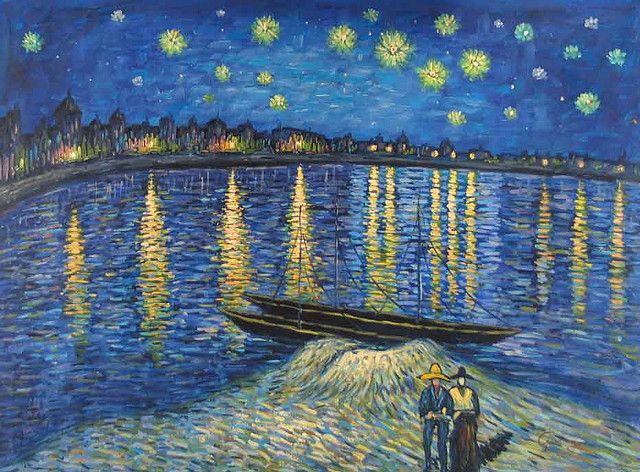
08e2929ba8f63e95f13c89b8c8b28afa
Starlight over the Rhone Near Arles [1888] by Vincent Van Gogh.
And yet attachment can be a dangerous thing.

It is when our attachments are based on reliance that it has a high propensity to cause suffering.

It is when we fill the void inside of ourselves with attachment that those attachments gain the power to hurt us.

It is when we attach ourselves to the love of others rather than the love of ourselves that our attachments become toxic.

It is when we attach ourselves to the acceptance of our peers rather than ourselves that our characters become weak and dependant.


Someone close to me always says that you have to fill your own cup. It is when our attachments fill our cups that they become dangerous, because at any moment we may lose them.

This leads to cycles of loss and gain, unbalanced relationships of power and reliance, and, for the most part, pain.

That is the lesson of the west, the lesson of the Buddhists and the Hindus. We mustn’t attach ourselves to sources of love and happiness that we should be getting from our own heart and souls.


But fearing attachments because we may lose them is only weakness.

It is a fear of loss.

It is a fear of being hurt.

It is a fear of not being worthy.


But we are worthy of love.

We are worthy of acceptance.

We are worthy of real, committed relationships.


Allowing ourselves to become attached is one of the greatest forms of vulnerability that we can demonstrate to each other.

The more attachments we have, the more we’ll lose.

The more we’ll suffer.

But that pain is the price we pay to live life to the fullest.

To avoid pain and live life in solitude is the life of a monk.

It is the absence of vulnerability, and it is the absence of the awe and wonder our indulgence in this human experience provides us.

It is human to be vulnerable.

It is human to attach.


The vulnerability that we demonstrate in attaching ourselves to another forces us to dive deeper into ourselves.

It is an essential journey into finding out all the intricate details about ourselves – the good, the (not so) bad, and the things we need to work on that we would have never noticed otherwise.


But finally, it teaches us acceptance.

It teaches us to accept ourselves as perfect just the way we are.

It teaches us to accept another as just as perfect.

It teaches us to accept that we may lose that person or thing at any moment, and that’s okay.

In fact, it makes that person or that thing even more valuable and beautiful because we may lose them tomorrow.

In the acceptance of eventual loss we find appreciation.

We find gratitude.


We’re not perfect. We never will be.

We will struggle to reach that higher place of existence for the rest of our lives.

But we can learn to be happy by ourselves.

We can learn to love and accept ourselves.

And along the way, when we get that undeniable feeling that we’ve found someone we want to attach ourselves to, we’ll be absolutely fearless when we do it.

Be good to each other,

– MG.

On Goodbyes:

Goodbyes are a beautiful thing.

I’ve never been the best with goodbyes; I don’t think many of us are.

It might be why I’ve come to dislike airports as much as I do. If you’re in an airport, you’re saying goodbye to someone, or something, in some way or another.


Part of me wonders why we put ourselves through these types of feelings.

And here I am, in another airport. I’m looking around and watching the goodbyes everywhere. Sisters holding each other tightly in an embrace. A father holds his little boy who is crying because he’s leaving. Lovers hold hands until that final, desperate moment.


The older I get, the more I realize that every goodbye could be the last we have with that person.

And yet I realized today that it’s for that reason exactly that goodbyes are a beautiful thing.


In a little over an hour waiting to board my plane, a million memories of the person I had just said goodbye to flooded my mind.

I felt a strong appreciation for all of the times I was lucky enough to spend with her. I laughed aloud at the many good memories, and replayed with understanding and compassion the uncomfortable ones. I found myself momentarily regretting all of the times I wasn’t completely present in the moment with her.


The experiences with our loved ones are special because we have to, at some time or another, say goodbye to them. With this in mind, each moment becomes a singular treasure to be cherished and appreciated.


I used to want to live forever. I wanted my friends and family to live forever. I wanted to stay close to home. I didn’t want to say goodbye.

But what would relationships be worth if we were not doomed to one day say goodbye?


So spend time with those you love. Connect with them on the deepest levels. Laugh off the perceived issues and embrace the great times.

Stay completely present, because one day you’ll say goodbye.

And that’s a beautiful thing.

Be good to each other,

– MG.

On Frustration:

How frustrating is being frustrated?

The human experience can provide many opportunities for frustration. At times it can feel like the entire world has turned its powers of gravity against us; nothing is going our way.

We struggle against this tide, and yet it grows stronger.

And yet I call them “opportunities” for frustration, because as much as they seem like inescapable issues at the time, every single one is the result of actively choosing to be frustrated by something.


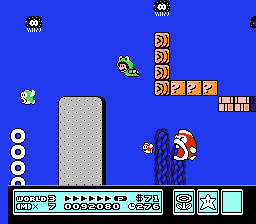
I think back to my childhood. I would be minding my own business, swimming through Super Mario Bros 3 in my frog suit, when my sisters would decide to start a conversation with me, or show me the hairstyle they gave Barbie.

Next thing I know, I’m dead and the frog suit is a thing of the past. I would immediately lash out at them, claiming they “made me die.”


Smb3_10
Super Mario Bros 3

As we grew a bit older, both sisters still provided daily doses of frustrations. One would play music that annoyed me, the other would watch television shows precisely when my show of choice was on.

We all have that guy in the gym who “distracts” us with his grunting, or the construction crew that has been working a little to long just outside our apartment window.


Just as I did with my sisters, we take these inconveniences as personal slights.

We see the guy in the gym as purposely grunting for attention, or the construction crew making noise just to bother us.

The guy who cut us off made us miss that light to make us late for work. The cop gave us that ticket to ruin our weekend.

As though I was the centre of the universe, I believed my sisters intentionally infringed on my comfort.

The fact is, people are doing their thing. They are the pilots of the spacecraft navigating their own little personal universe.


The moment I stopped taking things personally, the easier it was to let things go.

The construction crew doesn’t know we exist. The guy in the gym is in the zone. My sisters had no idea I was home from hockey, or school, or hanging out with friends. The cop was doing his job.


Things will happen to us every day, and that’s a good thing. I would feel like I had been robbed of this amazing experience we call life if every day wasn’t a complete random series of events.

But it’s how we interpret these events that matter.

We can struggle against the current, and fight it until we’re tired, frustrated, and angry at the world.

Or, we can float downstream and worry about the things we can control.

For nothing can frustrate or annoy us without our complete and explicit permission.

Be calm.

Be Zen.

Be good to each other,

-MG.


What a Time to be Alive!

What a time to be alive, indeed!

What a time to be alive!

In a time when parents no longer take responsibility for the education of their children.

A time when the children – those who will someday lead us into the future – are subjected to the cruel and inhumane punishment known as public school.

A place where the boring, limited, and inadequate lesson plans leave young scholars uninterested in learning and intellectual growth.

A place where those children who are blessed with strong spirits and who are full of passion are often reprimanded for their inability to sit and learn in such rigid settings.

A place that values the memorization of information over the learning and understanding of it.


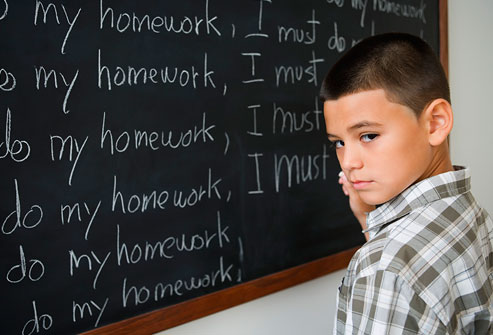
getty_rf_photo_of_boy_writing_on_blockboard
[Source: http://www.webmd.com ]

What a time to be alive!

In a time when an infinitesimal portion of the population controls the vast majority of the world’s wealth.

A time when the majority of the population lives below the poverty line.

A time when many are completely reliant on government subsidies to survive, although that welfare rarely covers the expenses of basic necessities.

A time when the middle class is consumed in a cycle of barely keeping their heads above water, being considered too rich for financial aid but barely making enough to pay the bills.

A time when lawsuits are rampant, lawyers are the destroyers of the law, and justice has been twisted into a profit driven business.

A time when alcohol abuse amongst the masses is commonplace, serving as a popular escape from the grey clouds of life.

A time when the self-indulgent elite live for material accumulation and thrive off petty gossip during their elaborately wasteful dinner parties.

A time when breakfast and lunch are eaten on the go, or neglected all together, as the daily grind demands early mornings and busy lunch hours.

Our time is more valuable than our health.


235
[Source: http://www.homeless-oftheworld.com ]

What a time to be alive!

A time when economic factors are driving farmers off of the family farms they’ve worked for generations and into the crowded cities.

A time when those in power are forced to spend wastefully on unneeded construction projects to create low-skilled jobs in order to keep the flawed economic system above its breaking point.

A time when theoretically there is a chance for the upward mobility on the social and economic ladder, but in reality many children will earn less and live worse than their parents.


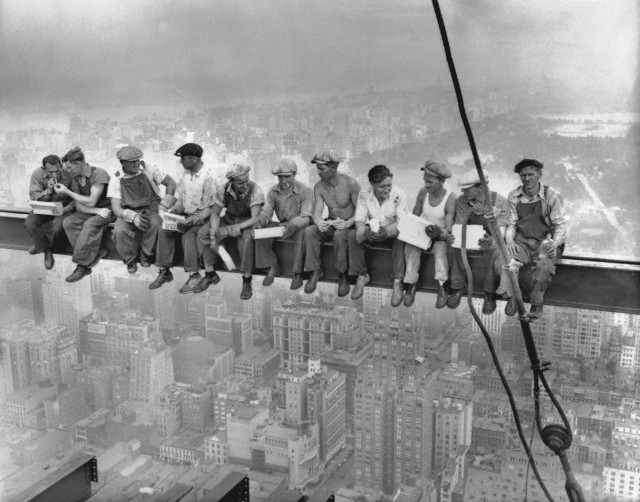
New York Construction Workers Lunching on a Crossbeam
“Lunch Atop A Skyscraper” 29 Sep 1932 — Construction workers eat their lunches atop a steel beam 800 feet above ground, at the building site of the RCA Building in Rockefeller Center. — Image by © Bettmann/CORBIS

What a time to be alive!

A time when conservatives vilify and berate religions different to their own, and who campaign against sexual orientations different to their own.

A time when the dire economic status of many people pushes them towards religions that promise salvation and riches after their death, in exchange for absolute and radical servitude during their life.

A time when the equal status of women is a hot point of argument between religions.

A time when minorities are granted superficial rights, statuses, and titles but are never truly treated as equals.

A time when the act of marriage is openly mocked, and adultery is so rampant that many people believe that no one can be faithful.

Adultery
[Source: http://www.listland.com ]

What a time to be alive!

No, I’m not talking about today.

I’ve just described the daily life of Romans during the Antonine Dynasty, nearly 2000 years ago (138-193 AD).

Those social, educational, religious, and economic issues led to the collapse of Rome.

The world crumbled into 500 years of darkness.


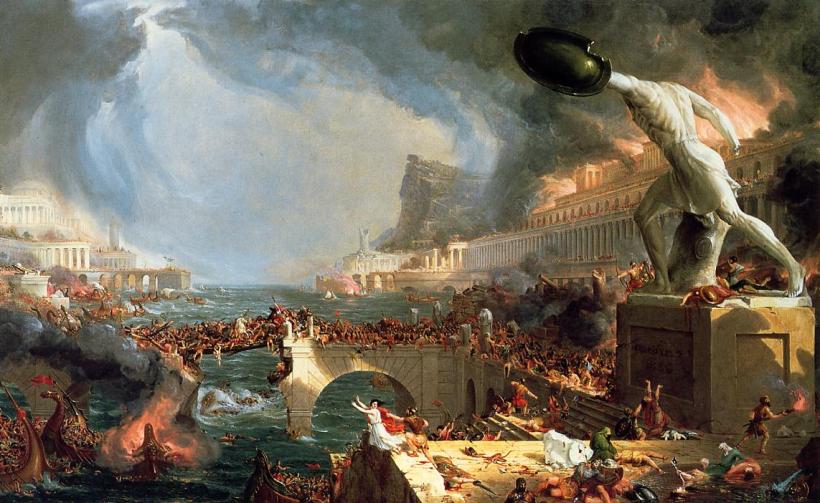
the-course-of-empire-destruction-thomas-cole-1836
Destruction [1836] by Thomas Cole.

But these issues all seem a little familiar, don’t they?

Of course they do, because they are the very same issues we struggle with today.

Are we really evolving as human beings?

Or is the path we’re walking one we’ve already walked before?


Luckily for us, we are not doomed to repeat our mistakes.

As a few warrior poets close to my heart once wrote:

There’s still time to change the road you’re on.” – Jimmy Page / Robert Plant, Stairway to Heaven.

Maybe it’s time we learn from history, rather than just repeat it.

Be good to each other,

– MG.

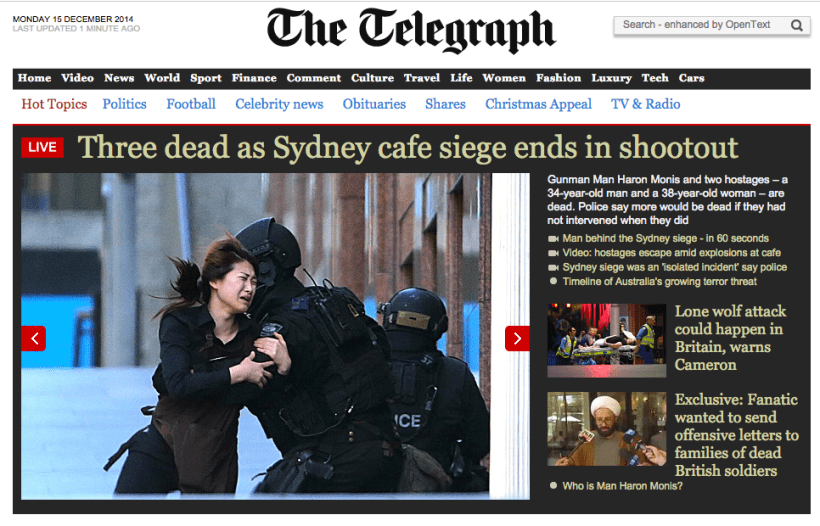
On The Sydney Siege:

A year has passed since tragedy struck Sydney; What have we learned?

Horrific events such as those which took place in Sydney a year ago, and those seen in Canadian parliament a few months before it, make it easy to lose (at least a little) faith in humanity.

 They make it is easy to generalize.

It becomes easy to blame and to point the finger.

It becomes easy to hate.


Yet as easy as it is to become less humane, it is not the reaction I witnessed in the aftermath of the Sydney siege.

I saw Australia come together as a people, no longer bound by any political, ethnic, or cultural differences.

I saw the brave men and women of Australian law enforcement sail into a storm of bullets attempting to save people they had never met.

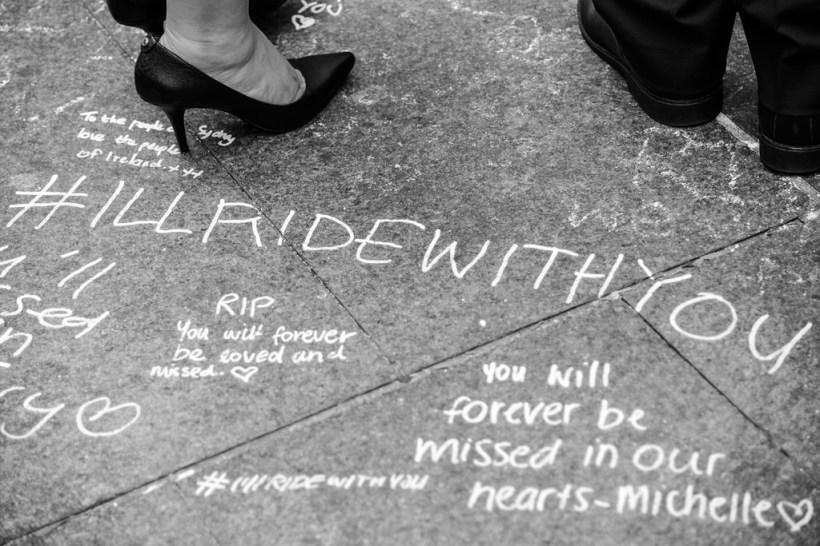
I saw people of all religions rally around the hash tag #IllRideWithYou, supporting those beginning to feel ostracized by their faith – which extremists’ constant misrepresentation has sullied with a crimson stain – to continue to freely and without fear commit themselves to their God and their religious beliefs.


16030631636_5afee6ced5_b
The warriors of love made their mark at Martin Place. [Source: http://www.photoforum.com.au ]

I saw candles lit for the safe keeping of those taken hostage, brothers and sisters we knew could be our own.

I saw a country – and a global community – in mourning for a son and daughter taken too soon. We willingly made their families’ pain our own.

I saw, if even for a moment, how beautiful humanity can be at its best.

For at least a day, I saw us no longer blinded by a veil of ignorance. We were – all around the world – simply human.

That universal empathy for the human struggle was alive in all of us. We had no idea of the races, religions, or cultural dispositions of those taken hostage. Yet we feared, hoped, and prayed for them in earnest and with a single voice.

Most importantly, that love exclusive to humans – the one which transcends space and time, life and death – beat louder than ever in how we responded. We were a singular beat in a united human heart.

It is always difficult to look past the hate, to see light in the darkness. Sydney was no different. Why is this so?


Because love isn’t as jarring as a black flag pinned against a shop window, held up by victims terrified for their lives. It isn’t as easy to sensationalize as a man driven by darkness, willing to cause pain and suffering to pursue his own deranged motives. It isn’t as loud as early morning gunshots shattering the innocence of a peaceful nation.


_79730565_79730564
The jarring image that many of us remember. [Source: http://www.bbc.com ]

But isn’t that what makes love such a special thing? It isn’t easy to find. Its rarity is what makes love precious.

We see glimmers of it in the passing smiles of strangers and in the laughter of children before it drifts away on the changing winds of the seasons.

We too often let hatred and prejudice bury love next to our slowly eroding humanity. But we didn’t on that Monday a year ago.

Instead, we came together.


What happened in Sydney was not a demonstration of the deterioration of humanity through hatred and social division.

It depicted a single lost soul who had allowed himself to be corrupted by the evils of fanaticism.

My heart aches for all of those who are mourning the loss of those we lost on this day a year ago. Yet it hurts more to think that the memory of them will be tainted by associations with the evil which manifested itself in the form of a broken man.

Instead let us remember the lessons of love that came from their deaths.

Let us remember the brave men and women who risked their lives trying to save them.

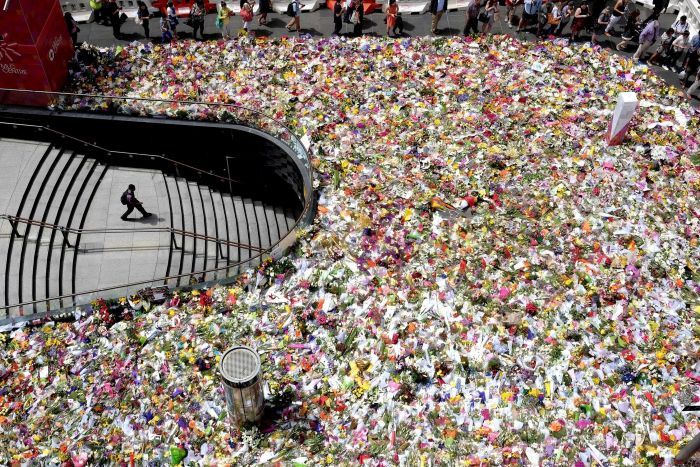
The thousands upon thousands of complete strangers who turned an entire Sydney square into a garden of Eden by filling it with beautiful flowers, paying their respects to people they had never known.


5976704-3x2-700x467
Australia turned a site of horror into a garden of beauty and love. [Source: 702 ABC Sydney: John Donegan ]

The coming together of all races and religions in astounding candlelight vigils full of love and empathy.

The memory of those lost must be remembered for what that event showed us.

It demonstrated how truly powerful love can be when we fight all the prejudices suffocating it. That is how we can honour their memory. That is how we must make sense of such mindless and depraved acts of violence.

Darkness cannot drive out darkness: only light can do that. Hate cannot drive out hate: only love can do that.” – Martin Luther King Junior, A Testament of Hope: The Essential Writings and Speeches.

We must remember the phoenix as it shines brightly in the night sky, not the pile of blackened ash from whence it came.

Love, like happiness, is not a singular end that can be obtained. It is constantly struggled for; it is a way of life.

Love is a beautiful war, and the Sydney siege showed that together we can win it.

Be good to each other,

– MG.

On Death:

What is it about death that actually scares us?

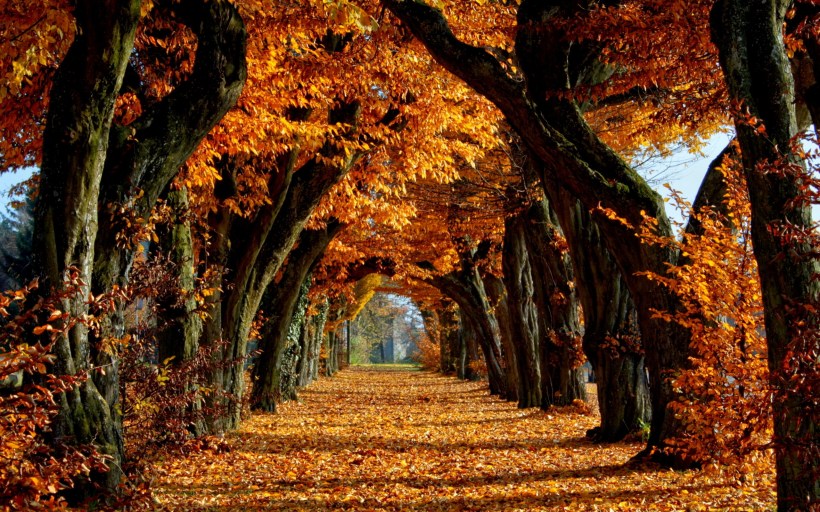
When I was growing up, I always took great delight in the autumn season. I’m not sure if it was because my birthday was coming up, hockey season was around the corner, or simply because of the beauty of the Canadian wilderness in fall.

The ordinarily green landscapes would be stroked orange, red, and yellow by the paint brushes of the gods. Fields full of grass became oceans of amber. Bronze sunsets would tint the city gold and set the sky ablaze.

And yet, everything around me was dying.

Autumn
A Canadian Autumn [Source: canadianmusichalloffame.ca]

It’s curious to think that I don’t know of a single person who has wept for fallen leaves, or wilting flowers, or dying grass. We innately understand this is the way of things. We know that spring will come, and the cycle of life (and death) will renew itself.


Why then, do we fear death? Why do we see our own death as the end of the straight line we’ve travelled since birth? Why is it so uniformly regarded as something negative?

Whether we’re afraid of what comes next, or dying painfully, or just the thought of our lives ending, it’s the ultimate boogeyman in the human experience.

Even the Romans, as battle hardened and fearless as they were, refrained from uttering the word “death.” By doing this, they gave power to the very word.

Death is certainly a part of life, and is certainly inevitable. It comes for us all. Does this give it power over us?

Of course not. We do not fear sunsets and sunrises, we do not fear the passage of time, we do not fear breathing. Yet these things are all inevitable. Inevitability doesn’t give something strength, but fear does.


The fear of death is death’s only weapon against us. Like the monster under our bed, it grows in ferocity and size as long as it remains the great unknown. In tackling the fears that surround death, we free ourselves from its grasp.

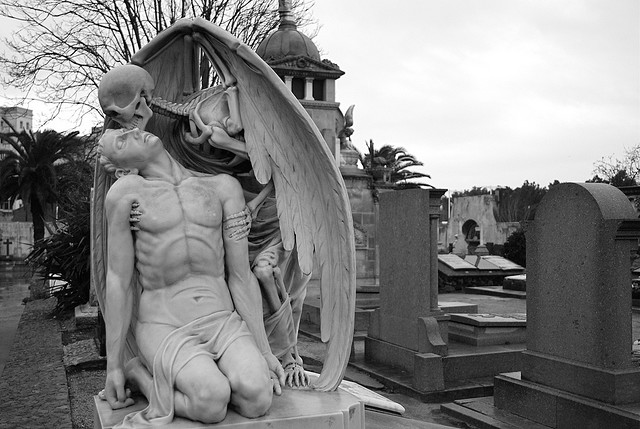
kiss of death poblenou barcelona 3
The Kiss of Death statue in the Graveyard of Poblenou, Barcelona, Spain. [Source: http://www.kuriositas.com]

Why, exactly, do we fear death?

(1) We fear death because we don’t know when it may come.

We fear the idea of dying young. 

I think of Jimi Hendrix, Alexander the Great, Amy Winehouse, Frédéric Chopin, John Keats, Tupac, and Tutankhamun. They all died at extremely young ages. Yet I would be willing to bet they lived lives more rich and full of experience than many of us rotting away in a cubicle.

On the grand scale of time and space, the difference between living 30 years and 80 isn’t even a blip on the map. Whether we die old or young we’re only here for an infinitesimal period of time, a period of time we cannot control.

We only have the power to make those years count.


(2) We fear death because we don’t know what comes next.

If I’m being perfectly honest, I usually have no idea what day of the week it is without ample reminders. Every day is a surprise. I’m at peace with the fact I generally have no idea what’s coming next.

We didn’t know what came next when we escaped the womb and came into this world kicking and screaming. We didn’t know what came next when we shipped off to university.

Sure, there was a little nervous energy, but we were generally excited about that great unknown. It was all new and beautiful.

Life can change in an instant, and that’s exactly what death is – life changing in an instant.

Whether death is the start of a new life or the end of an old cycle, change is never something to be feared.

It is only our concern with what may come in the future, or what happened in the past, that binds us to the wheel of life and death. By remembering that the present moment is the only moment, we free ourselves from that ever spinning wheel.


(3) We fear death might hurt.

I think I can speak for all of us by saying life usually hurts. Breaking bones was a price of playing the sport I loved, for example, and I broke pretty much everything above my waist – twice.

We’re riddled with coughs and colds and aches and pains and pimples and gas. We battle the seasons; we’re freezing in the winters and choking on smog in the summers. The suffering of life is unavoidable.

It seems a bit absurd to worry about the suffering of death, when our suffering is constant and unrelenting in the life we’re living. As far as we know, death is a release from our daily human suffering. Death is the absence of pain.

I’ve seen many people and animals suffer in life – but have never seen one struggle in death.


Nothing can be grievous which occurs but once; is it reasonable to fear for so long a time something which lasts so short a time?” – Michel de Montaigne, How We Weep and Laugh at the Same Thing.


I often wonder if a rose would be as beautiful if it were perpetually in bloom, or if we would cherish the springs if there was no winter. Life isn’t beautiful because it is long, or painless, or safe.

Life is beautiful for the simple fact that we are mortal. Death is what makes life a special gift. Every moment can be our last. For this reason, everything we touch, smell, hear, taste, and see is magical.

Death is our constant reminder to appreciate this life that we’ve been given.

Appreciate the people around us, the things that we have, and the healthy bodies we’ve been given.

Memento mori.

Be good to each other,

– MG.


On Judgement:

The only way of truly knowing anyone or anything, is to get to know them.

The rain was splattering heavily against the bus window. I couldn’t hear it over the pod cast I was listening to, but the visuals were just as calming.

The bus was unusually crowded for the time of day, and I happened to be one of the few people without a person wedged into the seat beside me.

But alas, my personal freedom was not meant to be.

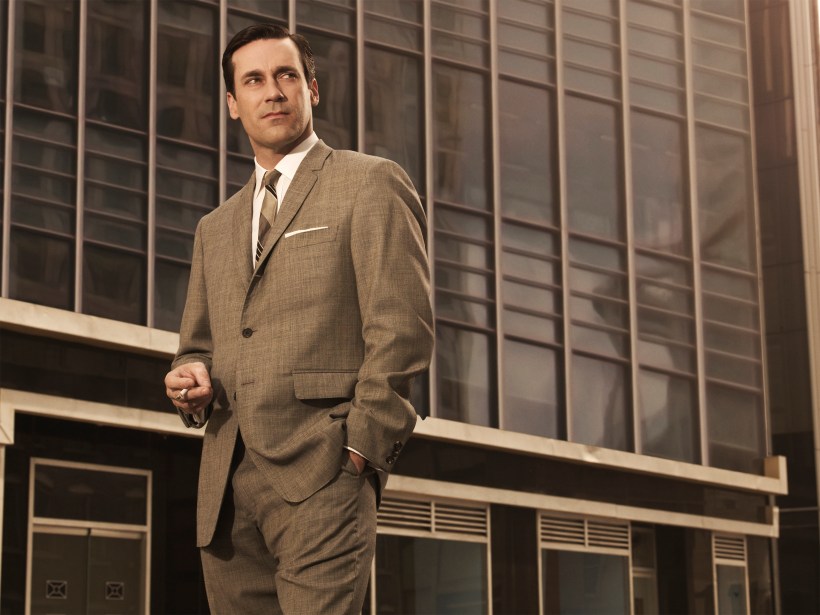
An elderly gentlemen stepped onto the bus, closed his umbrella, and shook it dry. He dusted off the sleeves and fixed the cuffs of his brown suit that he could have stolen from the set of Mad Men.

7-62.jpg
Mad Men: An accurate depiction of the old man’s suit.

He spotted the seat next to me and made his leisurely advance toward it.

As he walked toward me, a million suggestions about him flooded my head before he got to my seat. Out of touch. Senile. Grumpy. Bitter. Lonely.

In short, I believed from the moment I saw him that he had nothing in common with me.

I tried to smile at him when our eyes met, but the scowl on his face appeared to be a permanent fixture. Cranky old man, I thought to myself.

He wiggled in his seat as though he was jostling for position. I tried to show him with my body language that I couldn’t move over any more than I already was. We weren’t off to the best start.

I tried to keep my gaze outside of the window, but the man kept fidgeting. I tried to ignore him, but I couldn’t.


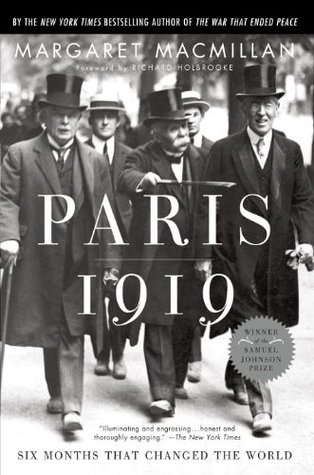
I eventually checked to see what he was doing. He was pulling out a book. I was surprised to see it was Paris 1919 by Margaret MacMillan (…..Canadian!).

26348
Paris 1919: Six Months That Changed the World by Margaret MacMillan

The nerd in me couldn’t help but remove my headphones and tell the man that was my favourite book from all of my undergraduate history studies. As I began a one-way conversation about some of my favourite points, he looked at me almost bewildered.

I instantly recognized that look of surprise, and that’s when it hit me.

He had judged me in the same way I had judged him.

I thought of how I must have looked to him when he first saw me. I was in gym gear, with long hair, a beard, drinking a shake, and with my headphones on.

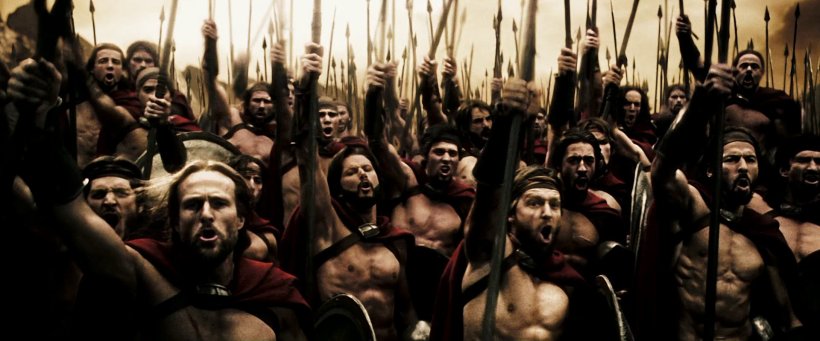
I look at myself sometimes and think I look more like I belong at the battle of Thermopylae than I do in a law classroom. It was comical to imagine how he saw me.

spartans-what-is-your-profession
A scene from the movie 300: “Spartans, what is your profession?”

To him, I was probably just a young punk who knew it all. I was probably listening to hip-hop or whatever “kids these days” find appealing. I was probably off to “do my exercises” so that I could better “chase all the girls.” I probably even smoked those “marijuana cigarettes.”

And who could blame him? With how I looked, it might have been a stretch for him to guess that I was actually listening to a podcast on the third Punic War, heading for a quick workout so I wouldn’t go stir crazy studying for law exams.


We talked about the book and our favourite personalities of the first world war. Our talks on the first world war quickly became talks about the second. We talked about our relatives who lived through it.

He found out I was a Canadian, and told me about his travels to Ottawa and Toronto. We talked about my travels in Australia.

It also turned out he was a professor of History. We compared our favourite Roman generals. We talked of famous victories and disastrous defeats. It may be nerd speak to some, but we were connecting through a mutual passion.

When he got on the bus, I had immediately assumed that this was a man I had nothing in common with. It’s safe to conclude he had assumed the same. Yet here we were, finding common ground at every turn. He reminded me of my grandfathers, and the passion they instilled in me for life.

I almost missed my stop because we were in such deep conversation. I found I was legitimately upset to part with my new friend. We said our goodbyes and I left with a deeper faith in our connectedness as humans.

I say, sir, that you can never make an intelligent judgement without evidence.” – Malcom X, The Playboy Interview.

We say it all the time – not to judge a book by its cover – but this experience took it a step further for me. I don’t think its at all possible to judge a book by its cover.

We really have no idea who a person is until we dive into their world.

We can only judge the mask they show to us. We can judge the trends they support, but we can’t judge them.

We have no idea if it’s Beethoven or Drake playing through those headphones. And, even if we did know, what does that really tell us about a person?

The more obsessed we’ve become over our own appearances, the more judgemental we become of the appearances of others.

The only way of truly knowing anyone or anything, is to get to know them.

Imagine a world the same as ours, except the moment someone felt the need to judge someone they instead took a moment to connect with a fellow human being.

What a world that would be.

Be good to each other,

– MG.