On Death:

What is it about death that actually scares us?

When I was growing up, I always took great delight in the autumn season. I’m not sure if it was because my birthday was coming up, hockey season was around the corner, or simply because of the beauty of the Canadian wilderness in fall.

The ordinarily green landscapes would be stroked orange, red, and yellow by the paint brushes of the gods. Fields full of grass became oceans of amber. Bronze sunsets would tint the city gold and set the sky ablaze.

And yet, everything around me was dying.
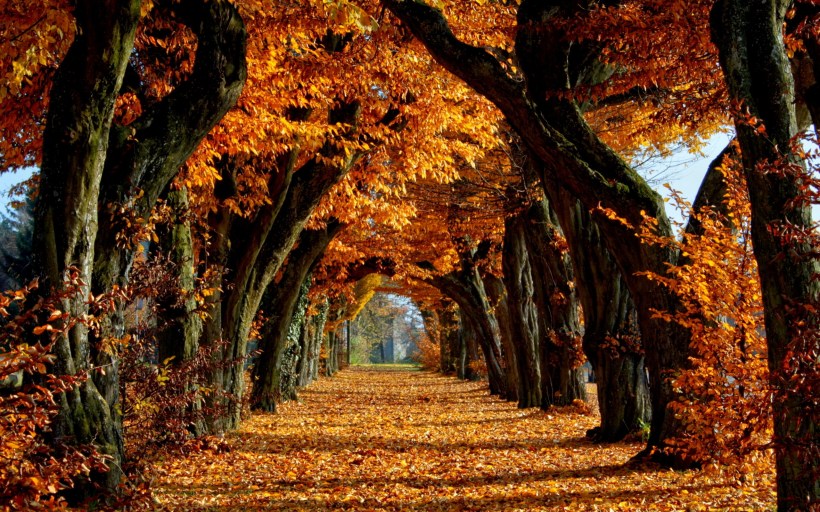
Autumn
A Canadian Autumn [Source: canadianmusichalloffame.ca]

It’s curious to think that I don’t know of a single person who has wept for fallen leaves, or wilting flowers, or dying grass. We innately understand this is the way of things. We know that spring will come, and the cycle of life (and death) will renew itself.


Why then, do we fear death? Why do we see our own death as the end of the straight line we’ve travelled since birth? Why is it so uniformly regarded as something negative?

Whether we’re afraid of what comes next, or dying painfully, or just the thought of our lives ending, it’s the ultimate boogeyman in the human experience.

Even the Romans, as battle hardened and fearless as they were, refrained from uttering the word “death.” By doing this, they gave power to the very word.

Death is certainly a part of life, and is certainly inevitable. It comes for us all. Does this give it power over us?

Of course not. We do not fear sunsets and sunrises, we do not fear the passage of time, we do not fear breathing. Yet these things are all inevitable. Inevitability doesn’t give something strength, but fear does.


The fear of death is death’s only weapon against us. Like the monster under our bed, it grows in ferocity and size as long as it remains the great unknown. In tackling the fears that surround death, we free ourselves from its grasp.
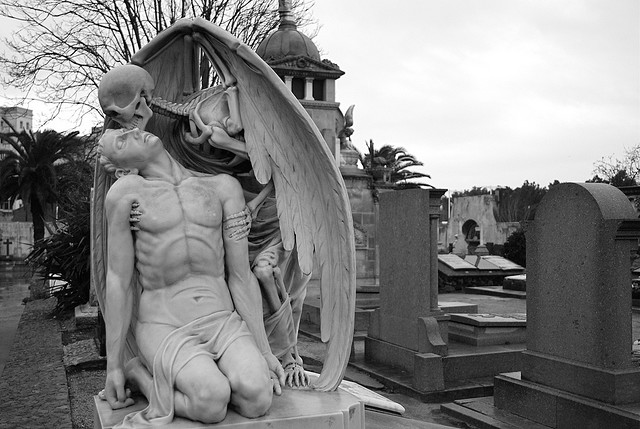
kiss of death poblenou barcelona 3
The Kiss of Death statue in the Graveyard of Poblenou, Barcelona, Spain. [Source: http://www.kuriositas.com]

Why, exactly, do we fear death?

(1) We fear death because we don’t know when it may come.

We fear the idea of dying young. 

I think of Jimi Hendrix, Alexander the Great, Amy Winehouse, Frédéric Chopin, John Keats, Tupac, and Tutankhamun. They all died at extremely young ages. Yet I would be willing to bet they lived lives more rich and full of experience than many of us rotting away in a cubicle.

On the grand scale of time and space, the difference between living 30 years and 80 isn’t even a blip on the map. Whether we die old or young we’re only here for an infinitesimal period of time, a period of time we cannot control.

We only have the power to make those years count.


(2) We fear death because we don’t know what comes next.

If I’m being perfectly honest, I usually have no idea what day of the week it is without ample reminders. Every day is a surprise. I’m at peace with the fact I generally have no idea what’s coming next.

We didn’t know what came next when we escaped the womb and came into this world kicking and screaming. We didn’t know what came next when we shipped off to university.

Sure, there was a little nervous energy, but we were generally excited about that great unknown. It was all new and beautiful.

Life can change in an instant, and that’s exactly what death is – life changing in an instant.

Whether death is the start of a new life or the end of an old cycle, change is never something to be feared.

It is only our concern with what may come in the future, or what happened in the past, that binds us to the wheel of life and death. By remembering that the present moment is the only moment, we free ourselves from that ever spinning wheel.


(3) We fear death might hurt.

I think I can speak for all of us by saying life usually hurts. Breaking bones was a price of playing the sport I loved, for example, and I broke pretty much everything above my waist – twice.

We’re riddled with coughs and colds and aches and pains and pimples and gas. We battle the seasons; we’re freezing in the winters and choking on smog in the summers. The suffering of life is unavoidable.

It seems a bit absurd to worry about the suffering of death, when our suffering is constant and unrelenting in the life we’re living. As far as we know, death is a release from our daily human suffering. Death is the absence of pain.

I’ve seen many people and animals suffer in life – but have never seen one struggle in death.


Nothing can be grievous which occurs but once; is it reasonable to fear for so long a time something which lasts so short a time?” – Michel de Montaigne, How We Weep and Laugh at the Same Thing.


I often wonder if a rose would be as beautiful if it were perpetually in bloom, or if we would cherish the springs if there was no winter. Life isn’t beautiful because it is long, or painless, or safe.

Life is beautiful for the simple fact that we are mortal. Death is what makes life a special gift. Every moment can be our last. For this reason, everything we touch, smell, hear, taste, and see is magical.

Death is our constant reminder to appreciate this life that we’ve been given.

Appreciate the people around us, the things that we have, and the healthy bodies we’ve been given.

Memento mori.

Be good to each other,

– MG.
 

A Letter to my Unborn Child:

What can we truly promise our children in this life?

To my unborn boy or girl:

I’m not sure when we’ll meet. I’m not sure what you’ll look like. I’m not sure what your name will be.

I am almost certain, however, that it will be difficult to find a wife that will let me name you Germanicus, Octavia, Aurelius, Augusta, or any other name of my choosing.

I’m unsure if you’ll take an interest to sport, art, or literature. I’m unsure about your sexual orientation or you skin colour. None of these things are, or will be, a concern to me.

I couldn’t possibly love you any more or any less than I already do. Existence and creation are love, after all, and you will spring from that very same eternal source of life – but I digress.


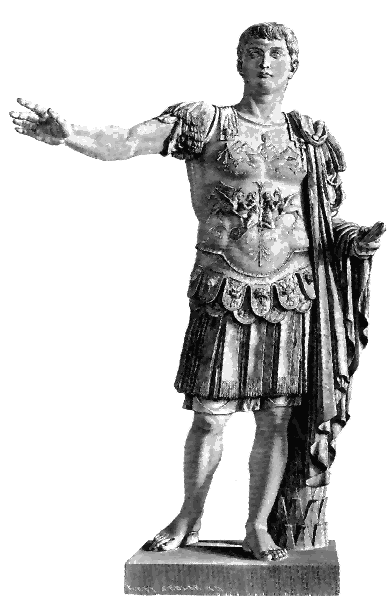
Germanicus
Germanicus Giorgi? [Source: Wikipedia]

You’ll quickly learn that we humans have a cruel obsession with guarantees. We dislike when the world around us isn’t concrete and stable. We constantly fight against the perpetual uncertainty that is life. Guarantees create an illusion of safety for us, and we are content to live our lives in that illusion.

Though I don’t remember mine personally, I’m sure your birth will be a difficult time for you. You are uncertain what to expect, you are completely dependant on others, and you are unable to defend yourself. It is for this reason that I search for guarantees to give you to put your thoughts to rest; to create an illusion of safety for you.

Unfortunately, I’ve noticed there isn’t many I can give you.


I can’t promise you protection. Danger comes hand in hand with stepping outside of your comfort zone and truly experiencing life. I don’t want you to play it safe. I want you to climb mountains and travel the world. To protect you would be to keep you close. To protect you would be to smother you. I want you to come, to see, and to conquer.

I can’t promise you happiness. I can give you comfort. I can give you warmth, bread, and a roof over your head. I can give you private schools or new hockey gear, but nothing I can give you will ever make you happy. You are, and always will be, responsible for your own happiness. I will help you down that path as much as I can, but happiness is your choice.

I can’t promise you I’ll know the answers. I’m a human, just like you. We are fallible; we make mistakes. I want you to never be afraid to fail. It’s okay to make a mistake. Too often do parents play the charade of perfection in front of their children, and reprimand them for not being perfect themselves. I’ll be as new to being a parent as you will be to being a child. We’ll both mess up along the way, but we’re in this together.

I can’t promise you I’ll always be there. I want you to embrace your independence and to realize how efficient you truly are. I’m going to let you figure some things out on your own. I’ll probably find it difficult and will intervene more than I should, but that’s part of my learning experience.

Big picture, we’re all mortal. One day I’ll pass on from this silly dream. When that happens, the more I’ve let you trip and fall along the way the more you’ll be ready to face this world alone. I need you know to how strong and capable you are.

I can’t promise you’ll be popular. Kids can be mean. They grow up in a society that makes them feel extremely uneasy in their own skin. Many of them will project those insecurities onto you. It will hurt.

I’ll take the time to show your true worth. You’ll learn, as a child of the stars, how perfect you are. I can’t promise you’ll be popular, but you’ll be in a place to take pity on insecure bullies rather than being hurt by them.


“We cannot always build the future for our youth, but we can build our youth for the future.” ― Franklin D. Roosevelt, Great Speeches.


In the end, the only thing I can really promise you is that I won’t promise you anything – except for my eternal and undying love.

Your proud dad,

Michael.

On Judgement:

The only way of truly knowing anyone or anything, is to get to know them.

The rain was splattering heavily against the bus window. I couldn’t hear it over the pod cast I was listening to, but the visuals were just as calming.

The bus was unusually crowded for the time of day, and I happened to be one of the few people without a person wedged into the seat beside me.

But alas, my personal freedom was not meant to be.

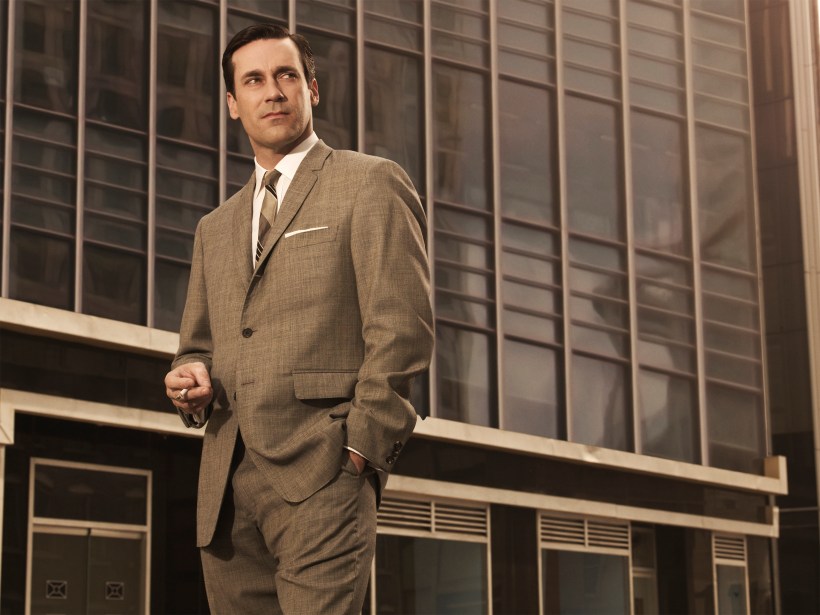
An elderly gentlemen stepped onto the bus, closed his umbrella, and shook it dry. He dusted off the sleeves and fixed the cuffs of his brown suit that he could have stolen from the set of Mad Men.

7-62.jpg
Mad Men: An accurate depiction of the old man’s suit.

He spotted the seat next to me and made his leisurely advance toward it.

As he walked toward me, a million suggestions about him flooded my head before he got to my seat. Out of touch. Senile. Grumpy. Bitter. Lonely.

In short, I believed from the moment I saw him that he had nothing in common with me.

I tried to smile at him when our eyes met, but the scowl on his face appeared to be a permanent fixture. Cranky old man, I thought to myself.

He wiggled in his seat as though he was jostling for position. I tried to show him with my body language that I couldn’t move over any more than I already was. We weren’t off to the best start.

I tried to keep my gaze outside of the window, but the man kept fidgeting. I tried to ignore him, but I couldn’t.


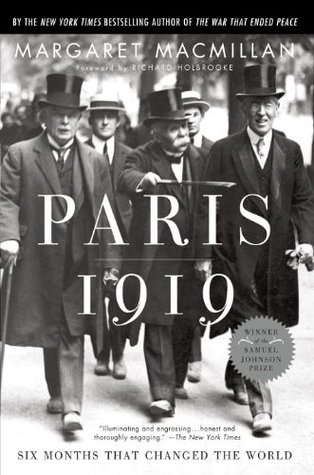
I eventually checked to see what he was doing. He was pulling out a book. I was surprised to see it was Paris 1919 by Margaret MacMillan (…..Canadian!).

26348
Paris 1919: Six Months That Changed the World by Margaret MacMillan

The nerd in me couldn’t help but remove my headphones and tell the man that was my favourite book from all of my undergraduate history studies. As I began a one-way conversation about some of my favourite points, he looked at me almost bewildered.

I instantly recognized that look of surprise, and that’s when it hit me.

He had judged me in the same way I had judged him.

I thought of how I must have looked to him when he first saw me. I was in gym gear, with long hair, a beard, drinking a shake, and with my headphones on.

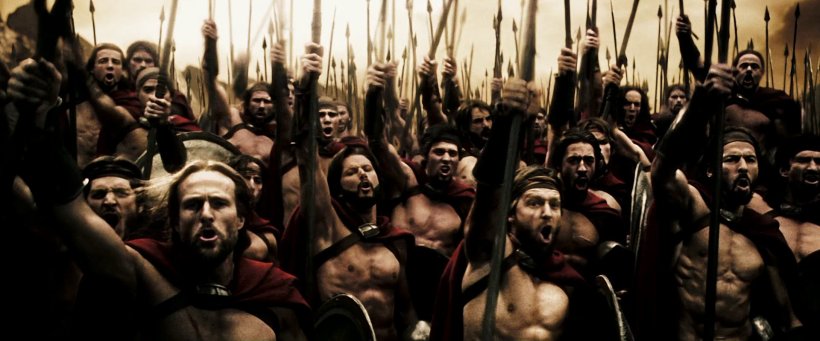
I look at myself sometimes and think I look more like I belong at the battle of Thermopylae than I do in a law classroom. It was comical to imagine how he saw me.

spartans-what-is-your-profession
A scene from the movie 300: “Spartans, what is your profession?”

To him, I was probably just a young punk who knew it all. I was probably listening to hip-hop or whatever “kids these days” find appealing. I was probably off to “do my exercises” so that I could better “chase all the girls.” I probably even smoked those “marijuana cigarettes.”

And who could blame him? With how I looked, it might have been a stretch for him to guess that I was actually listening to a podcast on the third Punic War, heading for a quick workout so I wouldn’t go stir crazy studying for law exams.


We talked about the book and our favourite personalities of the first world war. Our talks on the first world war quickly became talks about the second. We talked about our relatives who lived through it.

He found out I was a Canadian, and told me about his travels to Ottawa and Toronto. We talked about my travels in Australia.

It also turned out he was a professor of History. We compared our favourite Roman generals. We talked of famous victories and disastrous defeats. It may be nerd speak to some, but we were connecting through a mutual passion.

When he got on the bus, I had immediately assumed that this was a man I had nothing in common with. It’s safe to conclude he had assumed the same. Yet here we were, finding common ground at every turn. He reminded me of my grandfathers, and the passion they instilled in me for life.

I almost missed my stop because we were in such deep conversation. I found I was legitimately upset to part with my new friend. We said our goodbyes and I left with a deeper faith in our connectedness as humans.

I say, sir, that you can never make an intelligent judgement without evidence.” – Malcom X, The Playboy Interview.

We say it all the time – not to judge a book by its cover – but this experience took it a step further for me. I don’t think its at all possible to judge a book by its cover.

We really have no idea who a person is until we dive into their world.

We can only judge the mask they show to us. We can judge the trends they support, but we can’t judge them.

We have no idea if it’s Beethoven or Drake playing through those headphones. And, even if we did know, what does that really tell us about a person?

The more obsessed we’ve become over our own appearances, the more judgemental we become of the appearances of others.

The only way of truly knowing anyone or anything, is to get to know them.

Imagine a world the same as ours, except the moment someone felt the need to judge someone they instead took a moment to connect with a fellow human being.

What a world that would be.

Be good to each other,

– MG.

On Remembrance:

Every year during this month, on the eleventh day, at the eleventh hour, we remember.

But what, exactly, are we remembering?

Not one veteran of the first world war is still living. Of the over sixty-five million central and allied soldiers who fired a shot in that war, there is not one of them who still draws breath. Think about that.

There is not a single person alive who experienced the horror of the battlefield first hand. Of the hundreds of millions of bullets and shells exchanged in the first world war, there is no longer anyone who actually remembers pulling a trigger.


Two Canadian Soldiers Share Cigarettes on the Battlefield. [Image Source: stcatharinesstandard.ca]
Two Canadian Soldiers Share Cigarettes on the Battlefield.
[Image Source: stcatharinesstandard.ca]
For our part, we remember statistics, dates, key players, and usually a story or two regarding a distant relative who fought in the war.

Our countries remember glorious victories and heroic deeds. We remember who “won” and “lost”. We remember the names of leaders and generals who led the troops. We remember the rhetoric about our freedom. Men gave up their lives so that we could live free ones.


But are we missing something? Is there something else we should remember?

Too often do we forget it was not statistics fighting the war. It was not the generals and leaders who were up to their stomach in mud, blood and human waste.These were fellow humans, living through terrifying nightmares that our lives of comfort cannot allow us to comprehend.

Historian Dan Carlin refers to it as the “human element” in his fantastic Blueprint for Armageddon series.

These were people like you and I, thrown into the 20th century version of a meat grinder. This was the future generation of an entire world being gambled like poker chips.

In forcing ourselves to face the human element of war, we force ourselves to remember what we have.


Children forced to evacuate their home country of Montenegro as a result of Austrian occupation. [Source: U.S. Army Signal Corps No. 153238.]
Children forced to evacuate their home country of Montenegro as a result of Austrian occupation.
[Source: U.S. Army Signal Corps No. 153238.]
Roughly 18 million people died in the first world war alone. To put that into perspective, take the two biggest cities in North America (Mexico City and New York) and then imagine every single person in both cities being wiped off of the face of the earth. Our minds simply cannot conceive how much life was lost during those four years.

Entire neighbourhoods of men signed up together, and were slaughtered together. Think of a group of your closest friends, people you grew up with and love like family. Brothers from another mother; sisters from another mister. You may think of team-mates, neighbourhood besties, dance-mates, the list goes on. I think of a group of brothers I grew up with in the cold rinks of Canada.

Now picture the group of you, walking miles in a wasteland. Think Mordor, the aftermath of Hiroshima and Dresden, or the Moon. You shiver as the cold spring rain beats down on your group. Bullets whiz past your heads, and shells are exploding all around you.

On the first day, half of your group is killed by a single shell. Their body parts litter your trench but you’re uncertain what leg belongs with what torso, so you don’t bother with the pieces of them.

Your closest friend of the group goes insane within days of your arrival because of the constant pounding of artillery and screaming of machine gun fire. That friend is accused of cowardice by your superiors for his refusal to control himself, and is executed for it. You know he wasn’t a coward, his mind had just been incapable of accepting the horrors all around him.

The rest of you are sent over the top of the trench which, like the last fourteen attempts, ends in complete failure. You fall into a hole carved into the earth by an explosion and hide there, hoping the enemy doesn’t jump into the cavity and gut you with his shiny new Nahkampfmesser made of the finest German steel.

At dusk, you hear one of your last remaining friends screaming in pain and crying for help. He’s bleeding out in no-man’s land. Just as you build up the courage to try to save him, you see another friend you had no idea was still alive dart across the barren waste in your injured friend’s direction. He is immediately cut to pieces from machine gun fire. You lose your nerve.


Meet a Few Members of the 1st Newfoundland Regiment; of the 801 who Arrived at Beaumont-Hamel on July 1, 1916, only 68 Were Able to Fight the Next Day. Among the Dead, 14 Sets of Brothers Died Together in a Single Day. Stories Like This Were More Common Than We Appreciate. [Photo Source: Wikipedia]
Meet a few of the members of the 1st Newfoundland Regiment; of the 801 who arrived at Beaumont-Hamel on July 1, 1916, only 68 were able to fight the next day.
Among the dead, 14 sets of brothers died together in a single day.
Stories like this are more common than we appreciate.
[Photo Source: Wikipedia]
Darkness falls. You rush out into the field while the artillery fireworks light up the night sky. You find the friend who had been crying. He’s dead. His own fist is shoved down his throat. You realise that he had seen one friend die because of his screams, and didn’t want to see another, so he gagged himself with his own hand. You remove the letter he wrote to his fiancée back home, who is pregnant with a baby girl, and you run back to the trenches.

Everyone you arrived with is now dead. It hasn’t been a week.


By the end of the war, this will happen to thousands of people. Some will witness people grasping at their throats, eyes bulging, as they fight for the air that chlorine gas is suffocating out of them.

Some will look into the tear filled eyes of barely eighteen year old boys gasping their final breaths. Some will see men wrapped up in barbed wire and covered in bullet holes. Most will smell the stench of millions of rotting corpses. Many will starve or freeze to death. This is the human element.


Early Gas Masks Were Terrifying, But Not As Terrifying As Everyday Life For Soldiers On The Front. [Source: historyonthenet.com]
Early gas masks were terrifying, but not as terrifying as everyday life for soldiers on the front.
[Source: historyonthenet.com]
And yet, for the most part, these people dug in their heels and kept fighting. The romance of war had long been shattered by the horrific scenes they were forced to endure, and yet these men trudged on. They weren’t stupid, but they felt they had no choice. They were terrified. They  believed they would die.

And yet they showed a resilience that is the truest testament to the strength of the human spirit. Let us remember that these were the people that, after witnessing humanity completely shatter itself, had to pull up their boots after the fighting was done and put the pieces of civilisation back together again.


But I can’t help but ask, how would we have handled it? We in the west have lived in relative peace for a long time. We have no great war to fight, no existential threat to truly fear.

In peace, sons bury their fathers. In war, fathers bury their sons.” Herodotus, The Histories.

We think poor WiFi signal is a problem, or that it’s preposterous when we don’t get a strong cell phone signal in our apartment. We think the weekly grind is a struggle, and our weekend spin class is torture. We think we’re hungry when it’s 6 pm and we haven’t yet had our third meal. Many of us can hardly handle the loss of a dog or a cat, how would we react to witnessing millions of humans being slaughtered in front of us?


So what, exactly, are we supposed to remember?

We remember all that they lost – in the most tragic and sickening of ways – so that we may appreciate all that we have. We remember the darkness they were forced to endure, so that we may embrace the light. We remember the senseless hatred and violence so that we may promote love and laughter.

Let us remember the horror our fellow humans endured, so that we may never again do it to each other.

In putting ourselves, as best as we can, into the shoes of those who walked in the trenches, we’ll realise that we actually have a lot to be thankful for.

And to the soldiers who walked through hell, we thank you and we remember.

Be good to each other,

~ MG.

On Social Media:

Don’t we think it’s a little strange that, in a world of nearly seven and a half billion (7 383 900 000) people, so many of us feel like we’re all alone?

I’ve always found the term “social media” to be a curious one. 

Admittedly, if you break the word down into its respective body parts – “social” and “media” – it’s a word that makes perfect sense. Yet it’s not its pieces that make it a puzzle. 

The term feels like a misnomer. It doesn’t feel right. I look at social media and I fail to see anything social about it.

Media is not an inherently social entity. From newspapers to Fox News, there is no social interaction actually involved. 

We may feel as though we’re socially interacting. Like we’re connecting with that horoscope columnist who just really seems to “get” us, or the newscaster covering our sports team who seems to always agree with our opinion of the new head coach.


Ron Burgundy: One of the Only News Anchors to Truly Understand Us, San Francisco. [Image Credit: Anchorman]
Ron Burgundy: One of the Only News Anchors to Truly Understand Us, San Francisco.
[Image Credit: Anchorman]

But we’re not.

We’re still sitting alone at the kitchen table, keeping our eyes on the newspaper while we hurriedly force down the coffee we burnt before work.

We’re still messily finishing that crossword on the train with the stranger in a brown suit next to us as our only companion. And no, it doesn’t count as social interaction because we asked him for a four-lettered word for a famous son of Chronos.

The media doesn’t want to interact with us. It wants us to read, to listen, and to watch their version of what’s happening all around you. It wants to tell us what perception of reality to accept. 

Social media, in turn, has taken us one slippery step further down this path of human isolation.

Social media has stolen from us our innate love of society; we have never been more antisocial than we are this very moment.

There was a time, before bullet trains and water spraying jet packs (which are pretty awesome for the record), when our nearest neighbours were fifteen kilometres away and the fastest method of travelling was on horseback. Yet we called on each other weekly, if not daily, to fulfil that natural desire to truly interact with other human beings.


Man is by nature a social animal; an individual who is unsocial naturally and not accidentally is either beneath our notice or more than human. Society is something that precedes the individual. Anyone who either cannot lead the common life or is so self-sufficient as not to need to, and therefore does not partake of society, is either a beast or a god.”  – Aristotle, The Politics.


Fast forward to today, and I haven’t called on my neighbour since before the first Jurassic Park movie came out.

Social media has negatively affected every (formerly) social activity.

I see us capturing moments – beautiful sunrises and breathtaking full moons – through Instagram filters instead of capturing them with our eyes and keeping them in our souls.

We write those moments as Snapchat stories instead of writing them across our hearts, as part of our own stories that are constantly unfolding.

We use the check in button on Facebook to let our friends know where we are and what we’re doing, instead of checking in with a call or catching up with a visit.

We’ve mastered messaging with “abreeves” but forgotten how to carry a face-to-face conversation.

We live tweet sports events from our couch instead of taking a road trip to catch a live sporting event with some friends.

We text acquaintances while we sit around a table with our actual friends.

We don’t notice the love of our life next to us in the cafe because our eyes are down on our phone as we try to find love on Tinder. They walk in and out of our lives while we’re swiping right and left.

We’ve exchanged real friends for followers and lovers for “matches.”


And yet, don’t we think it’s a little strange that, in a world of nearly seven and a half billion (7 383 900 000) people, so many of us feel like we’re alone?

It’s because we are alone. Every social media platform offers an additional layer to a wall we’re building between ourselves and those around us. Another filter. More paint on our masks.

We’re given the means to limit and skew the images of ourselves that we put out there, and everyone else is doing the same. It becomes a terrifying idea to show people who we really are, so we don’t. Everyone tries to be like everyone else.

We’re creating a world where no one will truly know anyone.


I think that’s a tragic thing, because the greatest protectors of the beautiful uniqueness and natural individuality we possess as humans should be all of us, together.

Governments and, further back, religions have always feared and denounced the individual; the threat to the status quo. 

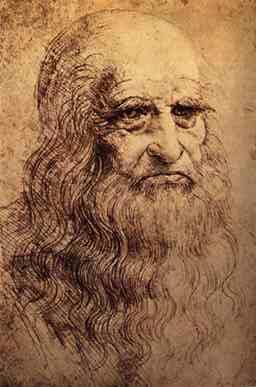
And yet, individuals such as Copernicus, da Vinci, Tesla, Picasso, and Einstein did amazing things by questioning that same status quo, by letting their unique thoughts and feelings be their compass. 

They didn’t follow tradition, and we celebrated them for it.

Self-Portrait (1512) by Leonardo da Vinci.

I’m afraid we’re starting to lose that. We’re falling into line.

Not because of fear or oppression – those things could never break our powerful spirit – but because of distraction.


The irony of it all is that I’m communicating this via an outlet that was only born in the age of social media, and sharing it on multiple social media platforms.

I think our advances in technology and our ability to connect with one another is astounding

I’m thankful for Skype, Instagram, and other means of keeping in touch with all of those that I love and miss at home.

I just think it’s important that in our quest to be more connected, we don’t severe our connection to each other; that we don’t become the snake that eats its own tail.

Recognize each other. Appreciate someone when they do something differently, wear something strange, or embrace their authentic self in any way at all. 

You’ll find people start encouraging you to do the same.

And, my God, that will be a beautiful thing.

Be good to each other,

– MG

On A Moment of Clarity:

Sometimes we’re in the right place, at the right time, with the right book.

I had finally arrived home, just ahead of the sunset. Exhausted, I dropped onto the couch with a sigh.

The rain sputtering on the window reminded me that I was sitting in wet clothes, but I was too tired to care.

Looking around the room, a book on a nearby shelf that was collecting dust caught my eye. I had bought it some time ago, on a whim of no real design, and it had sat there neglected ever since.

As we sometimes do, I flicked absent-mindedly through its pages; I landed on book number two. A certain paragraph seemed to stick out off of the page, a little further than the others.

I ran my fingers along the black lettering. It seemed to be bulging from the paper as though it was braille. I can still remember my eyes actually growing wider with a desperate gluttony as I began to hungrily devour the words presented before me:

Remember how long you have been putting this off, how many times you have been given a period of grace by the Gods and not used it. It is high time now for you to understand the universe of which you are a part, and the governor of that universe of whom you constitute an emanation: and that there is a limited circumscribed to your time – if you do not use it to clear away your clouds, it will be gone, and you will be gone, and the opportunity will not return.” Marcus Aurelius, Meditations.

I had always heard of people having a moment of clarity, which also happens to be my favourite Jay-Z song of all time, but I had never experienced one myself.

You always hear people say that when you’re truly in love, you’ll just “know” it. The same people say if you’re unsure if you’ve ever been in love, then you haven’t.

I believe the same distinguishing factors apply for a moment of clarity. Simple words, usually so easily manipulated in order to shape an idea in your head, suddenly fall short. Clarity is a poetry that is not written or spoken. It is felt with every fibre of your being.


The Black Album by Jay-Z - which features The Black Album by Jay-Z – which features “A Moment of Clarity”

I put down the book in complete disbelief after reading that simple paragraph. I was wordless and shapeless. That simple passage had an unbelievably powerful effect.

This is the point in the story when it ceases to resemble any sort of cliché Hollywood script.

As the protagonist, I didn’t go out that day and achieve greatness. I didn’t compose a masterpiece, save a drowning puppy, or help to end the suffering of one of the millions of children in need. I didn’t change the world, and I certainly wasn’t saving it. Put me in a spandex suit and I still wasn’t Superman.


This is not me. This was not me.

I did, however, experience a moment of clarity that I will carry with me for the rest of my life; I saw things clearly and simply. Three things had suddenly become abundantly clear to me:

The first was that the universe is a system of infinitely complex and interrelated pieces. A clock with trillions of perfectly operating cogs and dials. As children of this universe, we are pieces of this puzzle. We are cogs and wheels in the clock of time and space. Each and every single one of us has a purpose. You and I have true meaning. We are each of us important.

The second was that our notion of time is an illusion. An illusion we’ve created. We’ve fabricated the idea of time as a quantity so we can count it and spend it and sell it and trade it the same way we do money and raw materials. Life is a single, uninterrupted and endless opportunity that we’ve for some reason separated into years, days, hours, minutes and seconds. When it comes to your true purpose, there is no fixed timeline or Monday deadline. It is never too late to pursue it. If we’ve wasted moments or decades, it does not change the opportunity that is our life. You can’t waste what doesn’t exist. Time doesn’t exist, but opportunity does as long as you draw breath.

The third, and most important, realization was that the universe had always been speaking to me, I just hadn’t been listening. It speaks to all of us.

The sun came up the morning you were born, and sunk that same evening. It’s done this every day of your life since.

Each sunrise does not represent the start of another day, a fragment of time the universe has no concept of. Each sunset does not represent another collection of wasted chances. The rising and setting sun is the universe’s constant reminder that nothing has changed while you slept. You fell asleep in a life of opportunity and you’ve woken up in its midst.

We need to stop thinking about the days that have passed. We need to stop thinking about the days that may or may not exist in our future. Think instead about how today, in this very moment, you can pursue your true calling. Today you can make a change, or make a difference. Today you can do anything.


You are part of this magnificently crafted clock. [Source: Nasa.gov] Hubble’s High-Definition Panoramic View of the Andromeda Galaxy: You are a tiny cog in this magnificently crafted clock. [Source: Nasa.gov]

I didn’t receive divine knowledge telling me my life’s purpose or how to pursue it that day. I was simply reminded of something I already knew. Something that, deep down, we all really know.

As miniature pieces of this wonderfully chaotic and perfect universe, we are perfectly designed for something. Every single one of us has a purpose.

We’re not too late or incapable. Those thoughts are just grey clouds in our sky as we’re chasing the sun – grey clouds that we’ve created.

So look up at the sun today. Close your eyes and let it warm your face. Let it remind you that you are basking in a perpetual moment of opportunity.

Think of the thing you’ve always wanted to do. Think of whatever it is that has always called to your soul. Then open your eyes and take that next step, big or small, in pursuing that purpose you were put on this earth for, whatever you feel it may be. You are strong enough. You are capable enough.

And you were born to do it.

Be good to each other,

– MG.

On Money:

In the material world we live in, money is king.
And yet, there is nothing material about it.

It’s been said by many people in various ways that “money makes the world go round.” It goes without saying that it plays a large part in our lives. We see it everyday; we see it swap hands in the coffee shop, we throw it into piggy (or real) banks, and we spend most of our days working for it. We watch as experts trade it and predict its future value. We judge the value of material goods by how much money it costs; in the material world we live in, money is king.

And yet, there is nothing material about it.


So What Is It then?

Yes, money exists in the physical world; it has weight and density; we can feel it. At a point in the not-so-distant past, it was even made up of (materially) valuable resources. But the money we worship, as it is, is of no intrinsic value. It’s what that money becomes that gives it worth. Money is a shape-shifter; it is Mystique, The T-1000, Merlin, Professor Lupin; it can be anything.

The famous shape-shifting wizard, Merlin - as seen in Disney’s Sword in the Stone.
The famous shape-shifting wizard, Merlin – as seen in Disney’s Sword in the Stone.

It can be a night downtown, complete with bottle service and a booth to call your own. It can be a new book, the smell of fresh pages still intoxicating in their strength. It can be a water pump for a thirsty village in Africa. It can be a lady of the night, or a donation to the church. It can be tickets to the show, the game, or to get on the overnight train to visit an old friend. It can be a university education or a down payment on a house. Money, simply put, is a promise of the future.

And that is why it is such a terrifying thought to spend one’s life pursuing it.


There is nothing less material than money, since any coin whatsoever (let us say a coin worth twenty centavos) is, strictly speaking, a repertory of possible futures. Money is abstract, I repeated; money is the future tense.” – Jorge Luis Borges, Labyrinths.


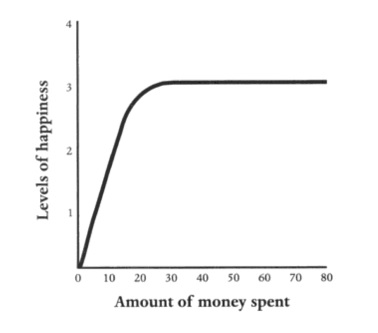
I’m not so naive as to think money isn’t important. It serves its purpose, and can be put to use in some pretty amazing ways. I, like Epicurus, tend to believe money has a limited role to play in our happiness. It can give us the food and shelter we need to survive, or the education we require to follow our dreams. It can cover the cost of rent for your new yoga or art studio.

The Epicurean graph of Money vs Happiness, as found in Consolations of Philosophy by Alain de Botton
The Epicurean graph of Money vs Happiness
, as found in Consolations of Philosophy by Alain de Botton

But it will never make us truly happy.


Why it’s crazy

It seems almost ludicrous to think money will lead to our happiness. Spending one’s life chasing the accumulation of money, or the material items that money can transform into, is perpetually pursuing the future. There is no life, no experiences, no love, or laughter in the future. Those things are found in the present moment; they are found in the here and the now.

It’s been said that the minute we fulfil a fantasy we can not, and will not, want it any longer. This is because it is never the material desire that we want, it is the fantasizing about that desire that we seek. Think of the time you fantasized about being single, getting a puppy, or buying that new car. If I could just obtain “x”, you thought, I`ll be happy – only to find out that happiness doesn’t work that way. Even a small child desires the shiny red ball or those magically rattling car keys, until he or she obtains them. We may get a brief fulfilment out of finding a new (or multiple new) partner(s), playing with the new pup, or wheeling around in the new whip – but that novelty will always fade. It fades because these things only serve to plug a hole inside of ourselves, a void that can only be filled from within.


This is why money – and the pursuance of it – it such a foolish prospect.

If we spend our days accumulating money, we’re spending that which gives money value in the first place – our future. We’ll have many coins that can turn into many things, but with no time left to perform such powerful magic. Our future, much like the money we attain by wasting it, is not something we can bring with us after we pass from this life.

A fulfilled life isn’t measured by the number of fantasies you fulfil or the material objects you obtain. It’s measured by the experiences you have, the people you share it with, and (most importantly) being fully present in those moments. Spend your time in the future, or chasing it, and you’ll miss the collection of moments that fulfil us, the ones that pave our way to happiness.

Don’t spend your life in a constant chase of the next future fantasy. Chase the present moment. Live in it fully, love in it fully, and laugh it in fully. Your happiness is not a fantasy to be fulfilled. It is right in front of you this very moment.

Take it, its yours.

Be good to each other,

– MG.

On James Neal:

The truth isn’t always easy. In a society mainly concerned with comfort, we will often seek convenience over the truth.  Our love of the scapegoat is a perfect example of this. We’ve seen it many times in many realms; we’ve seen scapegoats in politics, in war, and in sports. We do it because its easy. It’s easy to find a singular, simple source of blame than it is to scratch beyond the superficial surface of an issue.

A Flashback:

I remember it was an unseasonably warm Australian afternoon in late June. I had just finished a four hour Corporate Law exam and was waiting in line for a double triple shot of espresso so I could stay awake for the rest of the day. Friends back home were taking part in the Canadian past time of watching the NHL draft and criticizing their favourite team’s picks as couch-ridden, unpaid general managers. I turned my phone on, and it blew up. 

James Neal had been traded to the Nashville Predators. I was shocked. Not because he’s a 40 goal scorer. Not because of his big body presence or his quick release that would make most players envious. Those things can theoretically be replaced. The reason the trade struck me as curious was that I couldn’t for the life of me propose a valid reason as to why it happened.

The (debatable) official reasons for the trade eventually surfaced. Over the next few months a number of additional articles emerged discussing the trade. There was an overwhelming theme that this trade was chemotherapy for the Penguins; that they had eradicated a cancer in removing James Neal. Articles claimed that this trade improved the character and the dressing room environment of the Penguins (without providing any real evidence). Usually, the writer hinted to whispers amongst pundits or equated on-ice discipline with who Neal is as a person and a professional. James Neal – the player and the person – deserved more than that.

The Player’s Player:

James Neal is, and always has been, a great team-mate. He’s loose in the dressing room. His on and off-ice chemistry with Geno was rivalled by few power duos in the league. He’s a professional in every sense of the word. Coaches and players past and present vouch for his relentless work ethic and dedication off the ice and during practice.  

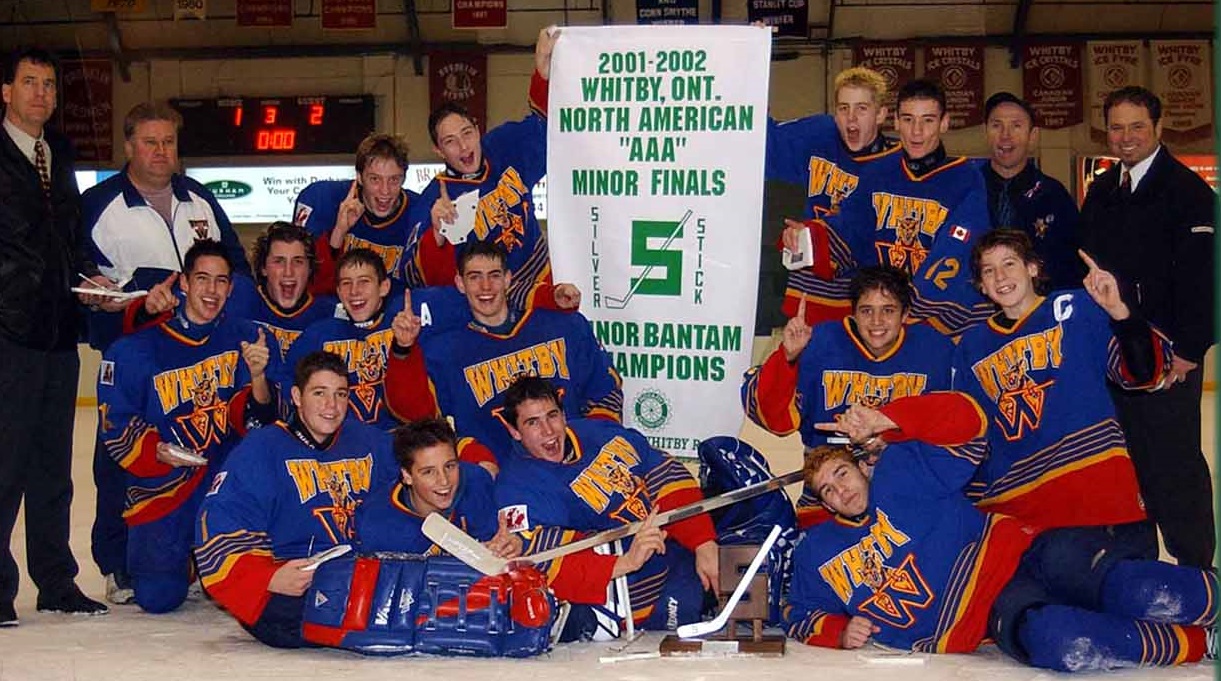
Neal and I playing for Whitby Minor Bantam AAA for the 2001-02 season.

I played for nearly ten years with James Neal. We put on the same jersey for close to 1000 games of hockey. For most of them, he was my captain. He’s a silent yet strong leader who leads the way by example. He’s more dedicated to his body and his craft than anyone I’ve ever met.

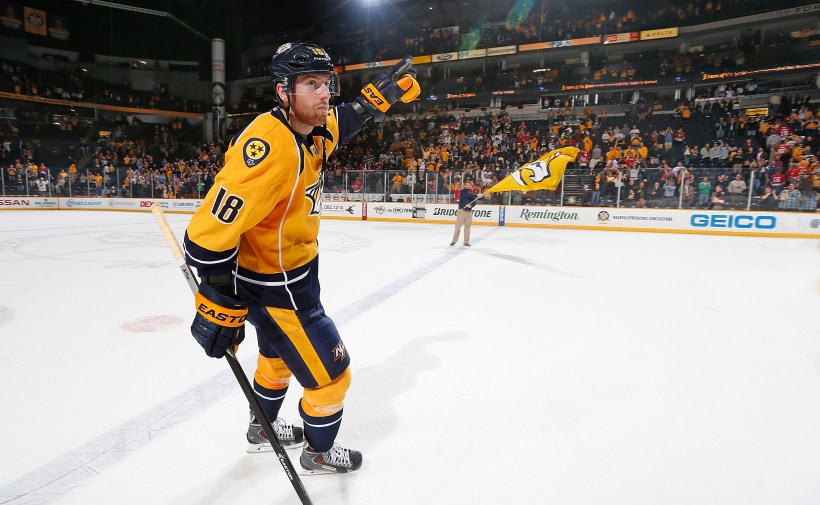
He is selfless and will do whatever is asked of him (just ask Craig Hartsburg, who took Neal to fill a third line checking role with Team Canada on its way to World Junior gold in 2007). He’ll hit hard, he’ll fight if he has to, and he’ll do whatever gives the team the best chance of winning. He wants to win more than anyone in that Nashville dressing room right now. Ingrained deep within him is a sense of integrity that will never allow these things to change. Nashville is extremely lucky to have him, and they know it. Simply put, he’s a player’s player.

James Neal winning the U21 World Juniors in 2007. [Source: Getty Images]
James Neal winning the U21 World Juniors in 2007.
[Source: Getty Images]
He’s shown himself to be a leader since his days in junior, and he’s already taken nicely to the assistant captain role in Nashville – showing that he can not only play on the defensive side of the puck, but also relate to and mentor young superstars who are learning the professional ropes.


It begs the obvious question: If he possessed such a cancerous character, why were at least 15 other teams in the market to acquire him? Why did Nashville commit to the remaining twenty million dollars on his contract, and give him the assistant captaincy?  It doesn’t exactly add up.

James Neal was painted as the villainous cancer in Pittsburgh because it was easier than addressing a massive lack of depth and toughness that the Penguins are suffering from.

Let’s Be Honest:

The trade was a bad one. It was a knee-jerk reaction by a new general manager who felt he needed to make a big splash to show fans that the perennial underachieving of the Penguins was not going to be tolerated. Neal was the biggest name that also doubled as a disposable commodity. Let’s face it, Crosby and Malkin weren’t going on the block. When you look at the trade, at both face value and in greater detail, it requires an additional layer to make it justifiable to fans and experts alike. The James-Neal-is-a-cancer myth served that purpose.

The Real Issue:

The Penguins maintained the core of superstars that won a cup, so why is post season under-performing becoming a theme in Pittsburgh? They lost the character that it takes to win in the play-offs.

Think of game seven against the Red Wings in ’09. Remove Max Talbot, his grit, and his two clutch goals from the Penguins line-up. Does Crosby lift the cup at the end of that game? Probably not. 

Max Talbot scoring what turned out to be the Stanley Cup winning goal in 2007. [Photo Source: USAToday.com]
Max Talbot scoring what turned out to be the Stanley Cup winning goal in 2009. [Photo Source: USAToday.com]
So how did the James Neal trade fix this culture of quitting when the games get tough? Of folding when adversity strikes? How did it help with character?

It didn’t. 

The Pens didn’t add anything in that department, and their play-off woes remained the same. You need sandpaper to win in the play-offs. Neal has that, and I’ve yet to see it in his replacement(s).

James Neal, The Person:

I understand the convenience behind the scapegoat. I understand its logical use in deflecting attention away from under-performing franchise players and in appeasing fan criticism. I understand that Neal was the perfect head to roll and this is a business. It would have been much tougher for Jim Rutherford to roll up his sleeves and go to work on the actual problems plaguing the Penguins. Yet something deep inside of me can never agree with how they turned James Neal into a scapegoat. They did it by attacking his character and his person.

There’s an entire human being the fans and media don’t see. They don’t see the guy who wakes up before sunrise to put long hours into training during his off-season. They don’t see his charity work, in both his home town and in Nashville. They don’t see the guy who takes care of his friends and family, all the people who love him for the man he’s become. 

James Neal supporting Smilezone Foundation at the abilities center in Whitby, Ontario. [Source: James Neal's Official Instagram]
James Neal supporting Smilezone Foundation at the abilities centre in Whitby, Ontario. [Source: James Neal’s Official Instagram]

We’re all entitled to an opinion. If you believe Neal’s departure was the start of a positive change in steel town, I respect that. I only ask that in your endless justification of the trade, do not stoop to taking shots at his character or his integrity.


It’s too easy to criticize a man when he’s out of favour, and to make him shoulder the blame for everybody else’s mistakes.” – Leo Tolstoy, War and Peace.


Big Picture:

These players are human beings just like you and I. It is in recognising them as such – through our human empathy – that we must find the strength to resist the urge to join in the whispers of defamation and gossip. The people we use as scapegoats, in politics or in sports, are certainly not perfect.

But they do their best. They make mistakes, but so do we. They love. They bleed. They sweat. They cry.

Treat them that way.

Be good to each other,

– MG.

On Sincerity:

I’m not talking about the superficial sincerity you try to muster into your facial expression when you tell your friend their dodgy haircut looks great. It’s not in the tone you try to force into your voice when you tell your significant other they didn’t burn the (completely black) steak and that it tastes fine.

Growing up, we all picked our sides; cowboys or indians; ninjas or samurai; the (very talented) blue players or the (slower, less skillful) red players on a foosball table.

As much as I loved those genetically mutated turtles who ate pizza and ran rampant in the sewers, I was never really a ninja kid. Personally, there was something about the samurai class that I was always drawn toward. This affinity for the samurai travelled with me well into adulthood. There was a certain romanticism about them. They were, to me, the very definition of warrior poets.

I studied Bushido (the way of the warrior) which inevitably led me to stumble upon Yamamoto Tsunetomo’s work, Hagakure: The Book of the Samurai. I found that the more I read, the more disappointed I became. The teachings were often elitist, sexist, selfish, ruthless, and sometimes extremely barbaric.

A player from team blue with the foosball, presumably about to score due to poor red defending.

I found myself able to forgive these massive flaws, however, when I put everything into the proper perspective. These men were not by nature the skilled killers they had become famous for. They were born the same as you and I.

These men could be our fathers, our brothers, our husbands, or our boyfriends. These men were capable of love, compassion, mercy, and generosity. I found it fascinating that they were able to completely transcend their humanity in becoming samurai. I felt myself drawn to the teachings that helped these men – who were people just like you and I – rise above the human restrictions they were born with.

Most of us have no desire to transform ourselves into heartless marauding mercenaries, myself included. That doesn’t mean there are no important lessons to take from Hagakure and the legendary code of the Samurai.

I think we’re all looking for a higher version of ourselves. We all have a deep seated desire to become someone that reaches beyond the limitations we’ve all convinced ourselves we have. Yamamoto’s teachings emphasised a single word that, until that point in my life, I had never placed much importance on.


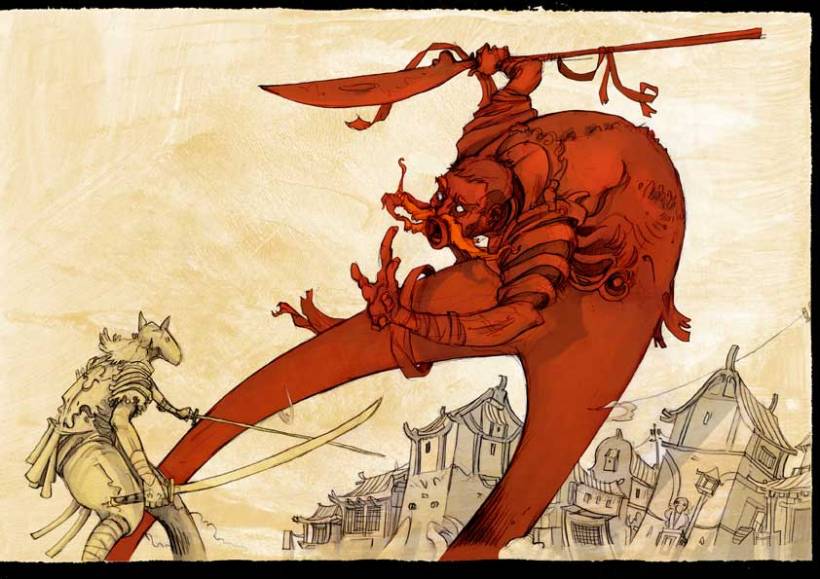
the_little_samurai_by_azertip

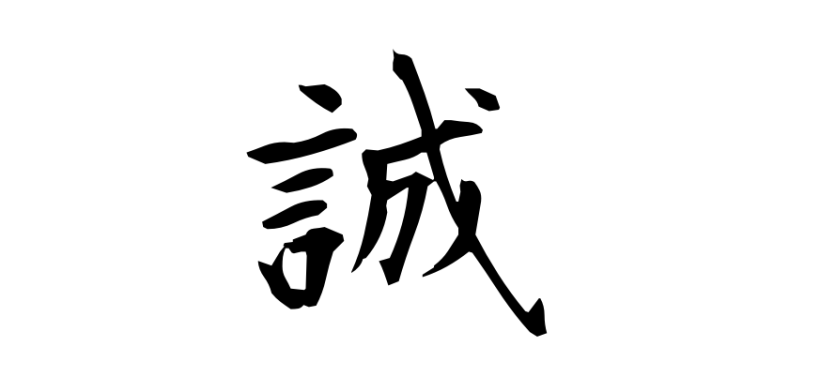
There will be many giants for us to face in this life; we must face them like samurai; we must face them with sincerity.


In the Hagakure, the importance of sincerity is constantly stressed. It emphasises the absolute necessity of sincerity in not only self improvement but in all aspects of our lives.

I’m not talking about the superficial sincerity you try to muster into your facial expression when you tell your friend their dodgy haircut looks great. It’s not in the tone you try to force into your voice when you tell your significant other they didn’t burn the (completely black) steak and that it tastes fine.

I’m talking about true sincerity, the kind that can only flourish inside of you. You can put on a Leonardo DiCaprio-esque performance to the rest of the world, but you can’t fake true sincerity to yourself. There is no such thing as almost sincere, or partially sincere. Whether it’s an action you’re taking, a plan you’re making, or words you’re speaking, you either absolutely mean it with every last fibre of your being, or you don’t.

Sincerity does not only complete the self; it is the means by which all things are completed. As the self is completed, there is human-heartedness; as things are completed, there is wisdom. This is the virtue of one’s character, and the Way of joining the internal and external. Thus, when we use this, everything is correct.” – Yamamoto Tsunetomo, Hagakure: The Book of the Samurai.

It is an extremely simple and logical concept. Sincerity is the distinguishing factor between those who actually want something and those who only claim that they do. Many people wish to lose weight; those who take it upon themselves to research proper nutrition and exercise before implementing what they’ve learned into their everyday life exemplify sincerity. Those who take the option of a gluten free bun for their burger, before adding a large fry and a coke, are those who are demonstrating insincerity. Sincerity will quickly show you results and insincerity will leave you wondering why you’re not achieving your goals.

The samurai, for example, were so sincere about living an honourable life that they would actually disembowel themselves – a practice known as seppuku – rather than shame themselves in battle or die a dishonourable death. This practice is actually one of the things I found barbaric about the samurai, but there is certainly no denying the absolute sincerity by which they lived their lives and by which they honoured their code.

They were willing to sacrifice (literally) everything to obtain and maintain something as intangible and obscure as honour in their lives, while most of us couldn’t even give up chocolate for lent. Through sincerity they were able to completely transform their human selves into automatons of destruction. Sincerity was the power behind their ability to become the fearless, emotionless, masters of death that they were.

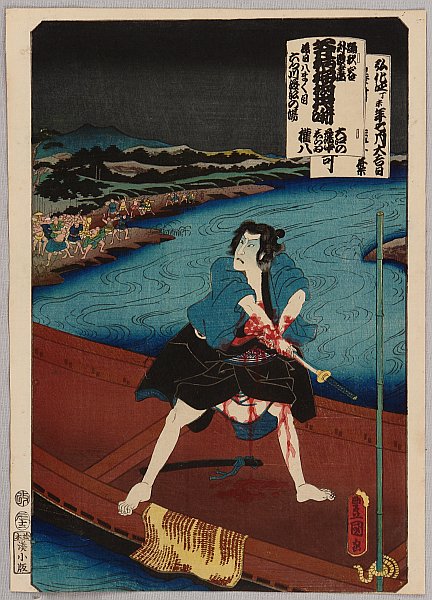
Suicide by River - Kabuki (1856) by Utagawa Kunisada
Suicide by River – Kabuki (1856) by Utagawa Kunisada

Sincerity is present in every aspect of life. In sports, sincerity lives in the child who gets excited for practice, who studies the game. Insincerity lives in the child who’s playing because his parents want it for him, or because it could translate into millions of dollars. Insincerity exemplifies itself in the workplace, in those who switch onto autopilot for forty-plus hours a week in a job they chose because there was a market demand or because it sounded prestigious. Sincerity emits from the ones who jump out of bed in the morning because they’ve chosen to do something they love, regardless of the money they make or the status it brings them.

The more we look for sincerity, the more apparent it becomes. The more we act with sincerity, the more we’ll develop a reciprocal relationship with it. When we act out of sincerity, sincerity acts back. It acts back in the form of noticeable improvements, lessons learned, successes, and (most importantly) failures. These failures tell us we’re on the right path, they tell us we’re going in a sincere direction.

When we speak with sincerity, sincerity responds. It responds in the form of advice from others, grapevine opportunities, offers of help, and real talks with those around us. When we love others with sincerity, with all of our soul, our lives become full of love that is – in turn – sincere.

Life becomes simple when you live it with sincerity. Be sincere with every one of your actions and words. Be sincere with those around you. Most importantly, be sincere with yourself.

And you’ll find the life you attract is sincere to you.

Be good to each other,

– MG.

Photo of giant samurai courtesy of: azertip.deviantart.com

On Romance:

In those days I wasn’t sure what ensued in her bed chambers afterwards, but I knew it represented the climax – no pun intended – of the romance.

The moon showed only a silver sliver of its full self.

Laying in bed, I waited patiently for the Cheshire Cat to open his eyes and reveal himself in the night sky. He never did, of course, but still.

There was something about the moon that cloudless night that inspired a deep feeling of romance inside of me.

Romance, I thought with a bit of a laugh. What is Romance?


Well, Google aptly defines romance as:

romance

rə(ʊ)ˈmans,ˈrəʊmans/

noun

1. a feeling of excitement and mystery associated with love.

I had a thirst for romance”

2. a quality or feeling of mystery, excitement, and remoteness from everyday life.

“the romance of the sea”


When we were growing up, romance was an easy concept to understand. Every recess was made up of a cohort of young Romeos, all chasing the collective Juliet.

It seemed pretty simple to me in those days. The boy bought (or stole from the neighbour’s garden) flowers, and then professed his love from beneath some sort of balcony. If he was a particularly adept romantic, he would do this by means of a sonnet.

The timing was important; it was best to perform the monologue under a full moon, but during a sunset would also suffice. The woman was, for whatever reason, constantly awake, available to listen, and always waiting for young suitors to visit her at strange hours. At the end of the performance, the Juliet decided she was either:

(1) Not into the idea and sent the boy home, or;

(2) Was satisfied with the romantic gesture and let her hair down for the young man to climb up.


Sure, I might have gotten a few different love stories mixed up at that age, but I had the gist of it. In those days, I wasn’t sure what ensued in her bed chambers afterwards, but I knew it represented the climax – pun intended – of the romance.

As I grew older I began to realize that my vision of what was romantic might not exactly capture the essence of romance. For one, my sisters began to give me an inkling that a truck load of chocolate might better serve a romance than any type of flowers – unless they were chocolate covered and edible. For two, I started to wonder what was in that “happily ever after” that always occurred after the curtains were drawn.

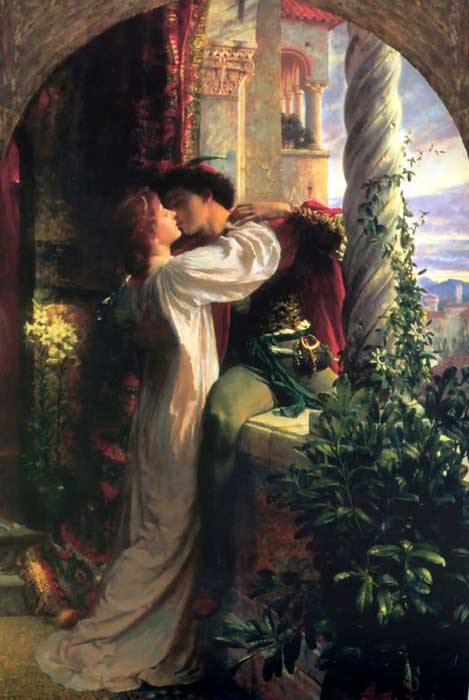
Romeo and Juliet
Romeo and Juliet (1884) by Frank Dicksee

We didn’t realize it then, but everything we watched or read during our youth emphasized the beginning of a love story as what should be considered romantic.

The romance always lay in the chase; it was the pursuit of love that was romantic. It was always about that opening gambit and a few initial speed bumps before both prince and princess were ready for that royal wedding. Then the credits rolled.


Even now I think of the happy couple, rosy-cheeked in their romantic infancy, reciting the story of how they met for an audience of half-interested single people. It often runs along the same lines. Initially, the female wasn’t interested but the male romantically wooed her into changing her mind. We cover our hearts and say “aw” when we hear of the cheesy and “romantic” gestures that helped to sway the odds in this particular Romero’s favour.

There’s not much to say after the “how we met” stories concludes; they are in the middle of their happily ever after. The movie is usually over by now. Babies start coming, fights start happening, and a divorce will probably be the result. The spark has faded. The spark that, we’ve been taught, represents the romance. Of course if we see romance – and by an extension, love – in this way, we’re doomed to a never-ending cycle of needing the hunt. Like freezing Neanderthals in the winter, our lives will be spent focusing on chasing the spark, never enjoying the fire we’ve already set ablaze. Is that really what romance is?


I look around me and I see that isn’t true. I see romance everywhere I look. It floats on the breeze that swirls around the elderly couple walking hand in hand in the park. At the arrivals gate in the airport, it swims in the teary-eyes of two lovers locked in an embrace. When two people are separated by an ocean, romance twinkles in the stars they look upon while thinking about each other. It’s in coming home to that familiar face after a long day’s work. It’s in missing someone, even if you just dropped them off. It’s in the strange way you can be overwhelmed with frustration but still love that person with all of your heart.

Romance lives in forgiveness, and understanding, after arguments both big and small. It’s in the first handful of dirt a widower throws on his wife’s coffin. It’s found in the breast pocket of a dead soldier, in the recently dried ink of a letter home to his high school sweet heart. When we’re a shoulder to cry on, romance is that little wet patch of tears they leave on our sweater. When we’re the ones crying, romance is the familiar smell of perfume or cologne that we inhale as we bury our face in their clothes.

The sorrow of lovers parted before they met, laments over promises betrayed, long lonely nights spent sleepless until dawn, pining thoughts for some far place, a woman left sighing over past love in her tumbledown abode – it is these, surely, that embody the romance of love.” – Yoshida Kenkō, A Cup of Sake Beneath the Cherry Trees.

Not one of us will ever master love, or understand it. That is why everything about love is exciting and mysterious. As such, there is romance in all of it. We just need to move past our Hollywood conception of it and start enjoying the little things. Love isn’t perfect, and neither are we.

Our happiest and most exciting moments with our significant others will lay perilously close to the saddest and most dull ones. It’s all part of it, it’s up to us to appreciate each moment to the very last. There are little Romeos and Juliets in each of us. We are all romantics. We just need to embrace the romance that’s all around us.

Be good to each other,

– MG.