On Remembrance:

Every year during this month, on the eleventh day, at the eleventh hour, we remember.

But what, exactly, are we remembering?

Not one veteran of the first world war is still living. Of the over sixty-five million central and allied soldiers who fired a shot in that war, there is not one of them who still draws breath. Think about that.

There is not a single person alive who experienced the horror of the battlefield first hand. Of the hundreds of millions of bullets and shells exchanged in the first world war, there is no longer anyone who actually remembers pulling a trigger.


Two Canadian Soldiers Share Cigarettes on the Battlefield. [Image Source: stcatharinesstandard.ca]
Two Canadian Soldiers Share Cigarettes on the Battlefield.
[Image Source: stcatharinesstandard.ca]
For our part, we remember statistics, dates, key players, and usually a story or two regarding a distant relative who fought in the war.

Our countries remember glorious victories and heroic deeds. We remember who “won” and “lost”. We remember the names of leaders and generals who led the troops. We remember the rhetoric about our freedom. Men gave up their lives so that we could live free ones.


But are we missing something? Is there something else we should remember?

Too often do we forget it was not statistics fighting the war. It was not the generals and leaders who were up to their stomach in mud, blood and human waste.These were fellow humans, living through terrifying nightmares that our lives of comfort cannot allow us to comprehend.

Historian Dan Carlin refers to it as the “human element” in his fantastic Blueprint for Armageddon series.

These were people like you and I, thrown into the 20th century version of a meat grinder. This was the future generation of an entire world being gambled like poker chips.

In forcing ourselves to face the human element of war, we force ourselves to remember what we have.


Children forced to evacuate their home country of Montenegro as a result of Austrian occupation. [Source: U.S. Army Signal Corps No. 153238.]
Children forced to evacuate their home country of Montenegro as a result of Austrian occupation.
[Source: U.S. Army Signal Corps No. 153238.]
Roughly 18 million people died in the first world war alone. To put that into perspective, take the two biggest cities in North America (Mexico City and New York) and then imagine every single person in both cities being wiped off of the face of the earth. Our minds simply cannot conceive how much life was lost during those four years.

Entire neighbourhoods of men signed up together, and were slaughtered together. Think of a group of your closest friends, people you grew up with and love like family. Brothers from another mother; sisters from another mister. You may think of team-mates, neighbourhood besties, dance-mates, the list goes on. I think of a group of brothers I grew up with in the cold rinks of Canada.

Now picture the group of you, walking miles in a wasteland. Think Mordor, the aftermath of Hiroshima and Dresden, or the Moon. You shiver as the cold spring rain beats down on your group. Bullets whiz past your heads, and shells are exploding all around you.

On the first day, half of your group is killed by a single shell. Their body parts litter your trench but you’re uncertain what leg belongs with what torso, so you don’t bother with the pieces of them.

Your closest friend of the group goes insane within days of your arrival because of the constant pounding of artillery and screaming of machine gun fire. That friend is accused of cowardice by your superiors for his refusal to control himself, and is executed for it. You know he wasn’t a coward, his mind had just been incapable of accepting the horrors all around him.

The rest of you are sent over the top of the trench which, like the last fourteen attempts, ends in complete failure. You fall into a hole carved into the earth by an explosion and hide there, hoping the enemy doesn’t jump into the cavity and gut you with his shiny new Nahkampfmesser made of the finest German steel.

At dusk, you hear one of your last remaining friends screaming in pain and crying for help. He’s bleeding out in no-man’s land. Just as you build up the courage to try to save him, you see another friend you had no idea was still alive dart across the barren waste in your injured friend’s direction. He is immediately cut to pieces from machine gun fire. You lose your nerve.


Meet a Few Members of the 1st Newfoundland Regiment; of the 801 who Arrived at Beaumont-Hamel on July 1, 1916, only 68 Were Able to Fight the Next Day. Among the Dead, 14 Sets of Brothers Died Together in a Single Day. Stories Like This Were More Common Than We Appreciate. [Photo Source: Wikipedia]
Meet a few of the members of the 1st Newfoundland Regiment; of the 801 who arrived at Beaumont-Hamel on July 1, 1916, only 68 were able to fight the next day.
Among the dead, 14 sets of brothers died together in a single day.
Stories like this are more common than we appreciate.
[Photo Source: Wikipedia]
Darkness falls. You rush out into the field while the artillery fireworks light up the night sky. You find the friend who had been crying. He’s dead. His own fist is shoved down his throat. You realise that he had seen one friend die because of his screams, and didn’t want to see another, so he gagged himself with his own hand. You remove the letter he wrote to his fiancée back home, who is pregnant with a baby girl, and you run back to the trenches.

Everyone you arrived with is now dead. It hasn’t been a week.


By the end of the war, this will happen to thousands of people. Some will witness people grasping at their throats, eyes bulging, as they fight for the air that chlorine gas is suffocating out of them.

Some will look into the tear filled eyes of barely eighteen year old boys gasping their final breaths. Some will see men wrapped up in barbed wire and covered in bullet holes. Most will smell the stench of millions of rotting corpses. Many will starve or freeze to death. This is the human element.


Early Gas Masks Were Terrifying, But Not As Terrifying As Everyday Life For Soldiers On The Front. [Source: historyonthenet.com]
Early gas masks were terrifying, but not as terrifying as everyday life for soldiers on the front.
[Source: historyonthenet.com]
And yet, for the most part, these people dug in their heels and kept fighting. The romance of war had long been shattered by the horrific scenes they were forced to endure, and yet these men trudged on. They weren’t stupid, but they felt they had no choice. They were terrified. They  believed they would die.

And yet they showed a resilience that is the truest testament to the strength of the human spirit. Let us remember that these were the people that, after witnessing humanity completely shatter itself, had to pull up their boots after the fighting was done and put the pieces of civilisation back together again.


But I can’t help but ask, how would we have handled it? We in the west have lived in relative peace for a long time. We have no great war to fight, no existential threat to truly fear.

In peace, sons bury their fathers. In war, fathers bury their sons.” Herodotus, The Histories.

We think poor WiFi signal is a problem, or that it’s preposterous when we don’t get a strong cell phone signal in our apartment. We think the weekly grind is a struggle, and our weekend spin class is torture. We think we’re hungry when it’s 6 pm and we haven’t yet had our third meal. Many of us can hardly handle the loss of a dog or a cat, how would we react to witnessing millions of humans being slaughtered in front of us?


So what, exactly, are we supposed to remember?

We remember all that they lost – in the most tragic and sickening of ways – so that we may appreciate all that we have. We remember the darkness they were forced to endure, so that we may embrace the light. We remember the senseless hatred and violence so that we may promote love and laughter.

Let us remember the horror our fellow humans endured, so that we may never again do it to each other.

In putting ourselves, as best as we can, into the shoes of those who walked in the trenches, we’ll realise that we actually have a lot to be thankful for.

And to the soldiers who walked through hell, we thank you and we remember.

Be good to each other,

~ MG.

On Social Media:

Don’t we think it’s a little strange that, in a world of nearly seven and a half billion (7 383 900 000) people, so many of us feel like we’re all alone?

I’ve always found the term “social media” to be a curious one. 

Admittedly, if you break the word down into its respective body parts – “social” and “media” – it’s a word that makes perfect sense. Yet it’s not its pieces that make it a puzzle. 

The term feels like a misnomer. It doesn’t feel right. I look at social media and I fail to see anything social about it.

Media is not an inherently social entity. From newspapers to Fox News, there is no social interaction actually involved. 

We may feel as though we’re socially interacting. Like we’re connecting with that horoscope columnist who just really seems to “get” us, or the newscaster covering our sports team who seems to always agree with our opinion of the new head coach.


Ron Burgundy: One of the Only News Anchors to Truly Understand Us, San Francisco. [Image Credit: Anchorman]
Ron Burgundy: One of the Only News Anchors to Truly Understand Us, San Francisco.
[Image Credit: Anchorman]

But we’re not.

We’re still sitting alone at the kitchen table, keeping our eyes on the newspaper while we hurriedly force down the coffee we burnt before work.

We’re still messily finishing that crossword on the train with the stranger in a brown suit next to us as our only companion. And no, it doesn’t count as social interaction because we asked him for a four-lettered word for a famous son of Chronos.

The media doesn’t want to interact with us. It wants us to read, to listen, and to watch their version of what’s happening all around you. It wants to tell us what perception of reality to accept. 

Social media, in turn, has taken us one slippery step further down this path of human isolation.

Social media has stolen from us our innate love of society; we have never been more antisocial than we are this very moment.

There was a time, before bullet trains and water spraying jet packs (which are pretty awesome for the record), when our nearest neighbours were fifteen kilometres away and the fastest method of travelling was on horseback. Yet we called on each other weekly, if not daily, to fulfil that natural desire to truly interact with other human beings.


Man is by nature a social animal; an individual who is unsocial naturally and not accidentally is either beneath our notice or more than human. Society is something that precedes the individual. Anyone who either cannot lead the common life or is so self-sufficient as not to need to, and therefore does not partake of society, is either a beast or a god.”  – Aristotle, The Politics.


Fast forward to today, and I haven’t called on my neighbour since before the first Jurassic Park movie came out.

Social media has negatively affected every (formerly) social activity.

I see us capturing moments – beautiful sunrises and breathtaking full moons – through Instagram filters instead of capturing them with our eyes and keeping them in our souls.

We write those moments as Snapchat stories instead of writing them across our hearts, as part of our own stories that are constantly unfolding.

We use the check in button on Facebook to let our friends know where we are and what we’re doing, instead of checking in with a call or catching up with a visit.

We’ve mastered messaging with “abreeves” but forgotten how to carry a face-to-face conversation.

We live tweet sports events from our couch instead of taking a road trip to catch a live sporting event with some friends.

We text acquaintances while we sit around a table with our actual friends.

We don’t notice the love of our life next to us in the cafe because our eyes are down on our phone as we try to find love on Tinder. They walk in and out of our lives while we’re swiping right and left.

We’ve exchanged real friends for followers and lovers for “matches.”


And yet, don’t we think it’s a little strange that, in a world of nearly seven and a half billion (7 383 900 000) people, so many of us feel like we’re alone?

It’s because we are alone. Every social media platform offers an additional layer to a wall we’re building between ourselves and those around us. Another filter. More paint on our masks.

We’re given the means to limit and skew the images of ourselves that we put out there, and everyone else is doing the same. It becomes a terrifying idea to show people who we really are, so we don’t. Everyone tries to be like everyone else.

We’re creating a world where no one will truly know anyone.


I think that’s a tragic thing, because the greatest protectors of the beautiful uniqueness and natural individuality we possess as humans should be all of us, together.

Governments and, further back, religions have always feared and denounced the individual; the threat to the status quo. 

And yet, individuals such as Copernicus, da Vinci, Tesla, Picasso, and Einstein did amazing things by questioning that same status quo, by letting their unique thoughts and feelings be their compass. 

They didn’t follow tradition, and we celebrated them for it.

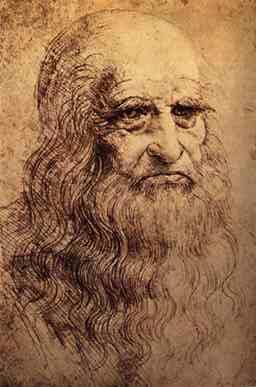
Self-Portrait (1512) by Leonardo da Vinci.

I’m afraid we’re starting to lose that. We’re falling into line.

Not because of fear or oppression – those things could never break our powerful spirit – but because of distraction.


The irony of it all is that I’m communicating this via an outlet that was only born in the age of social media, and sharing it on multiple social media platforms.

I think our advances in technology and our ability to connect with one another is astounding

I’m thankful for Skype, Instagram, and other means of keeping in touch with all of those that I love and miss at home.

I just think it’s important that in our quest to be more connected, we don’t severe our connection to each other; that we don’t become the snake that eats its own tail.

Recognize each other. Appreciate someone when they do something differently, wear something strange, or embrace their authentic self in any way at all. 

You’ll find people start encouraging you to do the same.

And, my God, that will be a beautiful thing.

Be good to each other,

– MG

On Sincerity:

I’m not talking about the superficial sincerity you try to muster into your facial expression when you tell your friend their dodgy haircut looks great. It’s not in the tone you try to force into your voice when you tell your significant other they didn’t burn the (completely black) steak and that it tastes fine.

Growing up, we all picked our sides; cowboys or indians; ninjas or samurai; the (very talented) blue players or the (slower, less skillful) red players on a foosball table.

As much as I loved those genetically mutated turtles who ate pizza and ran rampant in the sewers, I was never really a ninja kid. Personally, there was something about the samurai class that I was always drawn toward. This affinity for the samurai travelled with me well into adulthood. There was a certain romanticism about them. They were, to me, the very definition of warrior poets.

I studied Bushido (the way of the warrior) which inevitably led me to stumble upon Yamamoto Tsunetomo’s work, Hagakure: The Book of the Samurai. I found that the more I read, the more disappointed I became. The teachings were often elitist, sexist, selfish, ruthless, and sometimes extremely barbaric.

A player from team blue with the foosball, presumably about to score due to poor red defending.

I found myself able to forgive these massive flaws, however, when I put everything into the proper perspective. These men were not by nature the skilled killers they had become famous for. They were born the same as you and I.

These men could be our fathers, our brothers, our husbands, or our boyfriends. These men were capable of love, compassion, mercy, and generosity. I found it fascinating that they were able to completely transcend their humanity in becoming samurai. I felt myself drawn to the teachings that helped these men – who were people just like you and I – rise above the human restrictions they were born with.

Most of us have no desire to transform ourselves into heartless marauding mercenaries, myself included. That doesn’t mean there are no important lessons to take from Hagakure and the legendary code of the Samurai.

I think we’re all looking for a higher version of ourselves. We all have a deep seated desire to become someone that reaches beyond the limitations we’ve all convinced ourselves we have. Yamamoto’s teachings emphasised a single word that, until that point in my life, I had never placed much importance on.


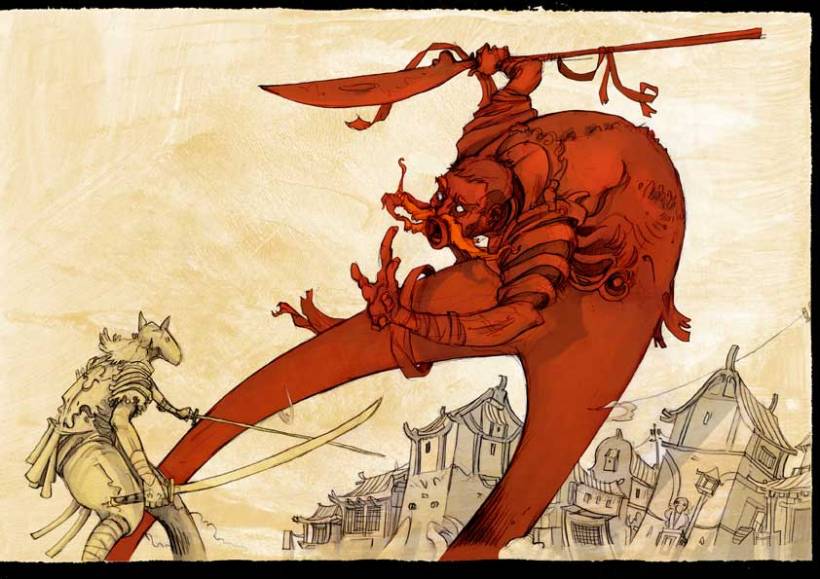
the_little_samurai_by_azertip

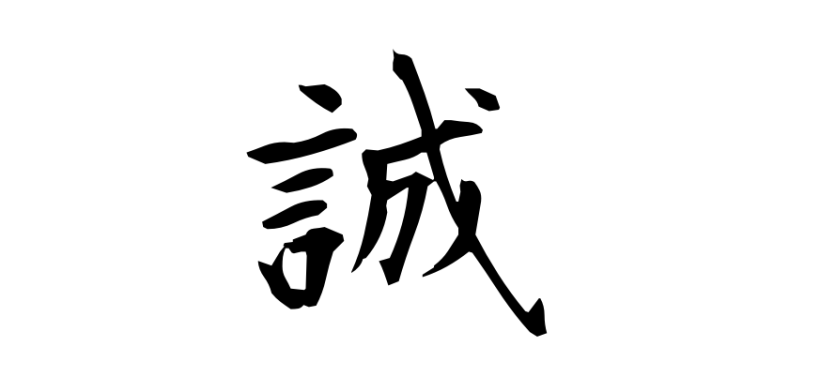
There will be many giants for us to face in this life; we must face them like samurai; we must face them with sincerity.


In the Hagakure, the importance of sincerity is constantly stressed. It emphasises the absolute necessity of sincerity in not only self improvement but in all aspects of our lives.

I’m not talking about the superficial sincerity you try to muster into your facial expression when you tell your friend their dodgy haircut looks great. It’s not in the tone you try to force into your voice when you tell your significant other they didn’t burn the (completely black) steak and that it tastes fine.

I’m talking about true sincerity, the kind that can only flourish inside of you. You can put on a Leonardo DiCaprio-esque performance to the rest of the world, but you can’t fake true sincerity to yourself. There is no such thing as almost sincere, or partially sincere. Whether it’s an action you’re taking, a plan you’re making, or words you’re speaking, you either absolutely mean it with every last fibre of your being, or you don’t.

Sincerity does not only complete the self; it is the means by which all things are completed. As the self is completed, there is human-heartedness; as things are completed, there is wisdom. This is the virtue of one’s character, and the Way of joining the internal and external. Thus, when we use this, everything is correct.” – Yamamoto Tsunetomo, Hagakure: The Book of the Samurai.

It is an extremely simple and logical concept. Sincerity is the distinguishing factor between those who actually want something and those who only claim that they do. Many people wish to lose weight; those who take it upon themselves to research proper nutrition and exercise before implementing what they’ve learned into their everyday life exemplify sincerity. Those who take the option of a gluten free bun for their burger, before adding a large fry and a coke, are those who are demonstrating insincerity. Sincerity will quickly show you results and insincerity will leave you wondering why you’re not achieving your goals.

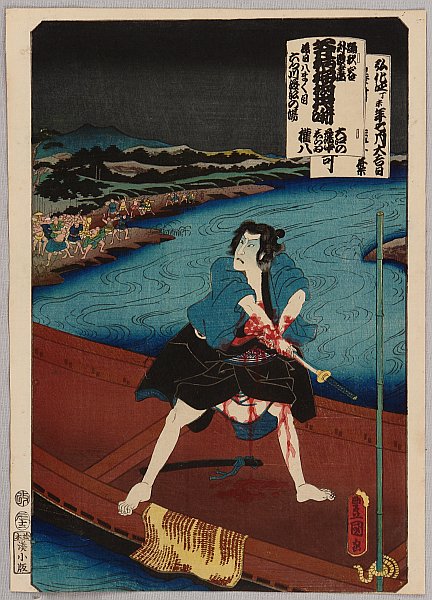
The samurai, for example, were so sincere about living an honourable life that they would actually disembowel themselves – a practice known as seppuku – rather than shame themselves in battle or die a dishonourable death. This practice is actually one of the things I found barbaric about the samurai, but there is certainly no denying the absolute sincerity by which they lived their lives and by which they honoured their code.

They were willing to sacrifice (literally) everything to obtain and maintain something as intangible and obscure as honour in their lives, while most of us couldn’t even give up chocolate for lent. Through sincerity they were able to completely transform their human selves into automatons of destruction. Sincerity was the power behind their ability to become the fearless, emotionless, masters of death that they were.

Suicide by River - Kabuki (1856) by Utagawa Kunisada
Suicide by River – Kabuki (1856) by Utagawa Kunisada

Sincerity is present in every aspect of life. In sports, sincerity lives in the child who gets excited for practice, who studies the game. Insincerity lives in the child who’s playing because his parents want it for him, or because it could translate into millions of dollars. Insincerity exemplifies itself in the workplace, in those who switch onto autopilot for forty-plus hours a week in a job they chose because there was a market demand or because it sounded prestigious. Sincerity emits from the ones who jump out of bed in the morning because they’ve chosen to do something they love, regardless of the money they make or the status it brings them.

The more we look for sincerity, the more apparent it becomes. The more we act with sincerity, the more we’ll develop a reciprocal relationship with it. When we act out of sincerity, sincerity acts back. It acts back in the form of noticeable improvements, lessons learned, successes, and (most importantly) failures. These failures tell us we’re on the right path, they tell us we’re going in a sincere direction.

When we speak with sincerity, sincerity responds. It responds in the form of advice from others, grapevine opportunities, offers of help, and real talks with those around us. When we love others with sincerity, with all of our soul, our lives become full of love that is – in turn – sincere.

Life becomes simple when you live it with sincerity. Be sincere with every one of your actions and words. Be sincere with those around you. Most importantly, be sincere with yourself.

And you’ll find the life you attract is sincere to you.

Be good to each other,

– MG.

Photo of giant samurai courtesy of: azertip.deviantart.com

On Pain:

What if pleasure and displeasure were so tied together that whoever wanted to have as much as possible of one must also have as much as possible of the other — that whoever wanted to learn to “jubilate up to the heavens” would also have to be prepared for “depression unto death”?” – Friedrich Nietzsche, The Gay Science.

The buzzing of the planet is a daily reminder of our mind-bending advances in technology. Our satellites glimmer amongst the stars in the evening sky, a sky that plays host to thousands of soaring planes during the daylight hours. Our technological prowess has vastly increased the comfort of our daily lives. Like most things, however, our technology comes with a cost. Everything from iPhones to automobiles cost us money, which puts a price tag on the comfort and convenience they provide us. Comfort has thus become a thing of value. It has become important to us.

The importance placed on comfort by our society has inspired in us a ruthless seeking of it. We centre our lives around obtaining things that will aid us in avoiding discomfort, pain, and suffering. Yet I’m beginning to wonder if this spread of a certain Epicureanism throughout the western world has actually bettered our lives, or if it’s part of the reason we live such unfulfilled and relatively unhappy lives.

Flashback nearly two years ago, to my life of comfort. I was the Dionysus of an eastern Toronto suburb and my basement apartment man-cave served as my Olympus. I lived at home rent free, had no university debt, and was earning a full-time wage I could have saved to buy a house and a car with. I had nearly a dozen close friends close by, whom I had grown up with on the ice rinks and considered them more like brothers than friends. I had the best all-you-can-eat sushi joint just around the corner from my house. I had a gym buddy who was actually a ninja. I possessed the disposable income to do and purchase essentially whatever I pleased. I was a tree of comfort, and my roots were strong and deep. Life was painfully easy.

But I was unhappy. I was stagnant. I was unfulfilled.

An artist's rendition of my training partner. [Source: Hokusai Manga (1817) by Hokusai.]
An artist’s rendition of my gym buddy.
[Source: Hokusai Manga (1817) by Hokusai.]
Fast-forward to the present. I have long since left my job, friends, and family. I have vacated my Mount Olympus throne to travel across the Pacific ocean. I traded a life of comfort for the pursuance of something more. As of now, I’m uncomfortable, but I’m happy and feeling more fulfilled every day. I wouldn’t disillusion anyone and say anything about this has been easy, comfortable, or painless. Law school is a grind. Money is tight. I’m homesick. I miss my sisters, my mom and dad, my band of brothers/thieves/merry men. And I haven’t seen a single ninja since I landed here.

Yet is that pain and suffering not the price we pay for fulfilment, for happiness? Isn’t that our inherent agreement with the universe we are a part of? I look around myself and see that we naturally understand this contract.

I’ve seen “No Pain, No Gain” on gym singlets and “Pain is Temporary, Glory lasts Forever.” splattered on dressing room walls. I see all of us – the warriors of love – seeking out a significant other regardless of the pain relationships have caused us in the past, or the heartbreak we could be forced to endure in the future. We take the tests regardless of the chance of failure, or the immense effort required to study and learn. We play our various sports, knowing we’ll be bumped, bruised, and judged. We train our bodies to be strong through toil, trouble, and tears, even though they will eventually wither under the taxes of time. We paint, write, and dance, undeterred by the visions of the starving artist. We love our families and friends to the fullest, knowing the pain we’ll feel when they are inevitably taken from us. We do these things because we innately understand the nature of fulfilment.

What if pleasure and displeasure were so tied together that whoever wanted to have as much as possible of one must also have as much as possible of the other — that whoever wanted to learn to “jubilate up to the heavens” would also have to be prepared for “depression unto death”?” – Friedrich Nietzsche, The Gay Science.

We know that the treasure of fulfilment is closely guarded by pain, suffering, and discomfort; the three heads of a hellhound protecting the gateway to happiness. We know that the most uncomfortable places are the classrooms where we learn and grow the most. We know that catching that perfect wave is worth the endless paddling, the hours of waiting, and the salt we get in our hair. We understand that the discomfort of rising in the early morning is the price of watching a stunning saffron sunrise. We know that trading the uninspiring view from base camp for the breathtaking scenery of the summit requires hours of treacherous hiking up the side of the mountain.

I think it’s entirely possible to live your whole life in comfort, confronted by minimal pain and suffering. I think this very moment there are many people who are dying in their retirement home beds who managed to accomplish this. I also believe that those same people would be willing to trade all of the days they lived in comfort for one chance to go back to their youth. They would go back and put themselves directly in the path of that same pain, suffering, and discomfort they have avoided all these years. For in doing so, they would also risk a life of happiness and fulfilment.

Don’t settle for comfort. Take the risk. Catch that perfect wave. Watch the sunrise. Fall in love. Climb that mountain.

…..I do miss that sushi joint though.

Be good to each other,

– MG.

On Romance:

In those days I wasn’t sure what ensued in her bed chambers afterwards, but I knew it represented the climax – no pun intended – of the romance.

The moon showed only a silver sliver of its full self.

Laying in bed, I waited patiently for the Cheshire Cat to open his eyes and reveal himself in the night sky. He never did, of course, but still.

There was something about the moon that cloudless night that inspired a deep feeling of romance inside of me.

Romance, I thought with a bit of a laugh. What is Romance?


Well, Google aptly defines romance as:

romance

rə(ʊ)ˈmans,ˈrəʊmans/

noun

1. a feeling of excitement and mystery associated with love.

I had a thirst for romance”

2. a quality or feeling of mystery, excitement, and remoteness from everyday life.

“the romance of the sea”


When we were growing up, romance was an easy concept to understand. Every recess was made up of a cohort of young Romeos, all chasing the collective Juliet.

It seemed pretty simple to me in those days. The boy bought (or stole from the neighbour’s garden) flowers, and then professed his love from beneath some sort of balcony. If he was a particularly adept romantic, he would do this by means of a sonnet.

The timing was important; it was best to perform the monologue under a full moon, but during a sunset would also suffice. The woman was, for whatever reason, constantly awake, available to listen, and always waiting for young suitors to visit her at strange hours. At the end of the performance, the Juliet decided she was either:

(1) Not into the idea and sent the boy home, or;

(2) Was satisfied with the romantic gesture and let her hair down for the young man to climb up.


Sure, I might have gotten a few different love stories mixed up at that age, but I had the gist of it. In those days, I wasn’t sure what ensued in her bed chambers afterwards, but I knew it represented the climax – pun intended – of the romance.

As I grew older I began to realize that my vision of what was romantic might not exactly capture the essence of romance. For one, my sisters began to give me an inkling that a truck load of chocolate might better serve a romance than any type of flowers – unless they were chocolate covered and edible. For two, I started to wonder what was in that “happily ever after” that always occurred after the curtains were drawn.

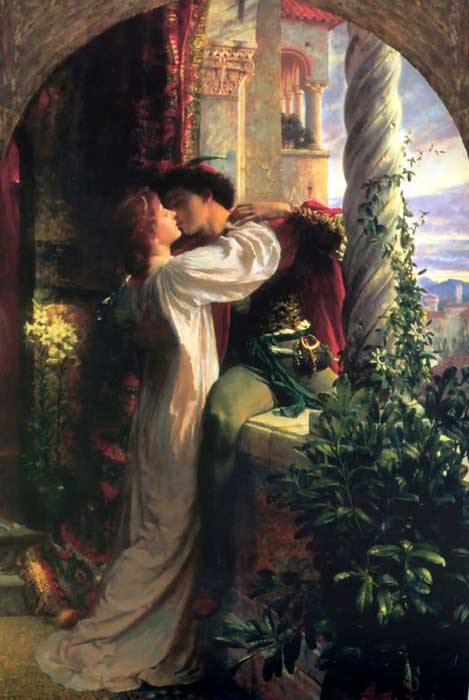
Romeo and Juliet
Romeo and Juliet (1884) by Frank Dicksee

We didn’t realize it then, but everything we watched or read during our youth emphasized the beginning of a love story as what should be considered romantic.

The romance always lay in the chase; it was the pursuit of love that was romantic. It was always about that opening gambit and a few initial speed bumps before both prince and princess were ready for that royal wedding. Then the credits rolled.


Even now I think of the happy couple, rosy-cheeked in their romantic infancy, reciting the story of how they met for an audience of half-interested single people. It often runs along the same lines. Initially, the female wasn’t interested but the male romantically wooed her into changing her mind. We cover our hearts and say “aw” when we hear of the cheesy and “romantic” gestures that helped to sway the odds in this particular Romero’s favour.

There’s not much to say after the “how we met” stories concludes; they are in the middle of their happily ever after. The movie is usually over by now. Babies start coming, fights start happening, and a divorce will probably be the result. The spark has faded. The spark that, we’ve been taught, represents the romance. Of course if we see romance – and by an extension, love – in this way, we’re doomed to a never-ending cycle of needing the hunt. Like freezing Neanderthals in the winter, our lives will be spent focusing on chasing the spark, never enjoying the fire we’ve already set ablaze. Is that really what romance is?


I look around me and I see that isn’t true. I see romance everywhere I look. It floats on the breeze that swirls around the elderly couple walking hand in hand in the park. At the arrivals gate in the airport, it swims in the teary-eyes of two lovers locked in an embrace. When two people are separated by an ocean, romance twinkles in the stars they look upon while thinking about each other. It’s in coming home to that familiar face after a long day’s work. It’s in missing someone, even if you just dropped them off. It’s in the strange way you can be overwhelmed with frustration but still love that person with all of your heart.

Romance lives in forgiveness, and understanding, after arguments both big and small. It’s in the first handful of dirt a widower throws on his wife’s coffin. It’s found in the breast pocket of a dead soldier, in the recently dried ink of a letter home to his high school sweet heart. When we’re a shoulder to cry on, romance is that little wet patch of tears they leave on our sweater. When we’re the ones crying, romance is the familiar smell of perfume or cologne that we inhale as we bury our face in their clothes.

The sorrow of lovers parted before they met, laments over promises betrayed, long lonely nights spent sleepless until dawn, pining thoughts for some far place, a woman left sighing over past love in her tumbledown abode – it is these, surely, that embody the romance of love.” – Yoshida Kenkō, A Cup of Sake Beneath the Cherry Trees.

Not one of us will ever master love, or understand it. That is why everything about love is exciting and mysterious. As such, there is romance in all of it. We just need to move past our Hollywood conception of it and start enjoying the little things. Love isn’t perfect, and neither are we.

Our happiest and most exciting moments with our significant others will lay perilously close to the saddest and most dull ones. It’s all part of it, it’s up to us to appreciate each moment to the very last. There are little Romeos and Juliets in each of us. We are all romantics. We just need to embrace the romance that’s all around us.

Be good to each other,

– MG.

On Relationships:

From the time we’re children, we’re taught by society that we aren’t good enough. By the time we reach young adulthood, we try to paint over the people we are with the brushes society suggests for us. We ignore who we’re meant to be by wearing the hats of the people we believe we’re supposed to be. We eventually forget who we are.


The modern culture of romance, or “dating culture”, is the result of the complete lack of importance placed on the vast substance inherent in our own humanity. We spend our days painting beautiful masks of ourselves and spend our nights wearing them out to down town masquerades.

Every weekend is our carnival, every club is our Venice. With all of us dressed in the height of fashion and wearing the dreamiest of disguises, we’re content to dance our youthful years away.

We paint our masks with the simple stripes of the surface. We think of ourselves, and others, as white or black, male or female, gay or straight, Christian or Muslim. We continue to identify with our surface and mistake it for who we are, when the two are not exclusively connected.

We’ve traded complexity for simplicity. With all of us exchanging our identity for identical illusions, we have slowly rendered ourselves interchangeable. All of our masks look the same.


We build sand castles in the path of crashing waves. We find beautiful partners and we dance the nights away. Sometimes our dance partners stay the night and maybe even for breakfast. Sometimes, we share a second dance. On extremely rare occasions, we find their outer shells so shiny and sparkly that they capture our attention for an entire handful of dances.

These dances last long enough to facilitate relationship status changes on our Facebook and inspire overwhelmingly cute Instagram photos of our morning snuggle and romantic gestures. We do everything and go everywhere with this person. We’ve found the one we want to save our last dance for. We’re totally and completely in love.

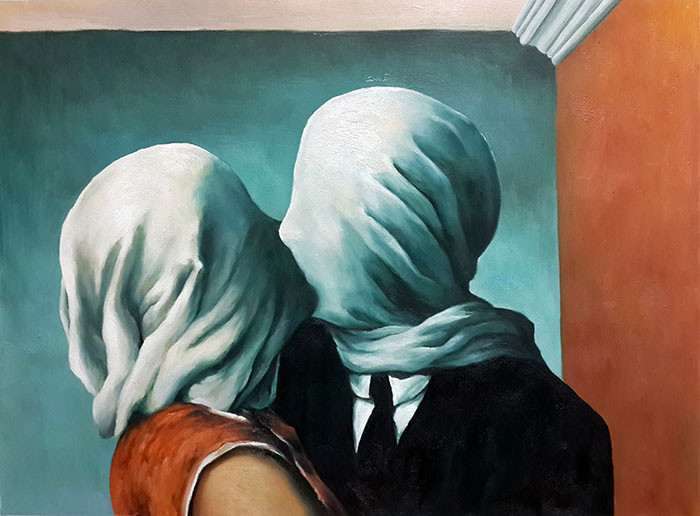
The Lovers I (1928) by Rene Magritte

And then our surfaces begin to erode. They become difficult to maintain. We struggle to keep up the act. Our polished smiles and filtered personalities begin to crack. The weeds from our overgrown interiors begin to force their way through those cracks. We’re confused, and so are they.

We thought we had already shown one another our true selves when we let them see us in sweat pants or without make-up on. They smelled our morning breath. They caught us with food stuck in our teeth. One time, we even farted in front of them.

Our own shallow notions of ourselves had us equating who we are as people with what our natural surfaces used to look like, before we painted them with water colours and doused them in exotic smelling oils.


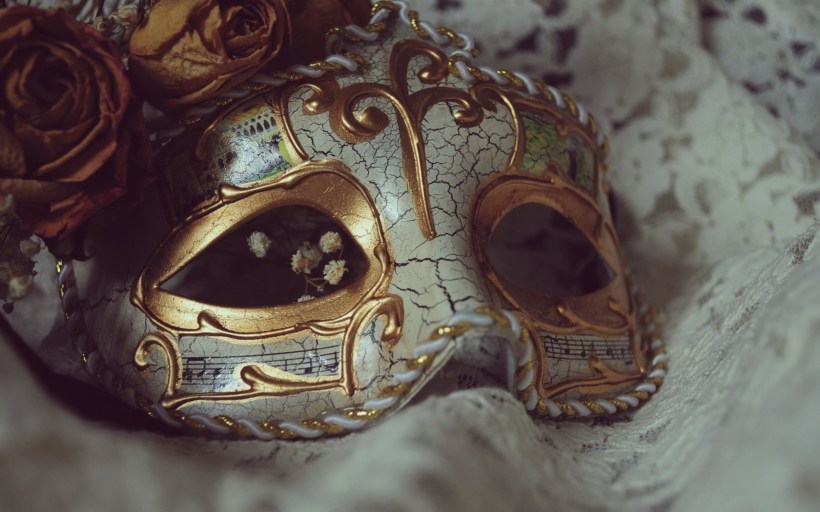
6901650-carnival-mask-wallpaper
Are the cracks starting to show in your mask?

But there’s an entire other world inside of us. It’s full of scars, dreams, mistakes, passions, light, and darkness. It’s a place we’ve ignored while we focused on our appearance, on the character we’re acting as. That place of substance deep inside of us – that place which makes us different and beautiful – provides a journey that would never truly end if our loved ones were to explore it.

But that place scares us. It scares us because we’ve never explored it ourselves. It scares us because we have no idea who we are.

It becomes a terrifying prospect to open this place up to the person we think we love. It’s our own little house of horrors. Even if we did muster the courage to ask them to come inside, how can we expect someone to want to see us for who we are when we can’t even stand the thought of it ourselves? The fact that our significant other is also probably feeling the same personal insecurities only exasperates the situation. The situation becomes unstable because both partners have awoken a deep-seeded self-hatred.


We begin to miss someone loving us for the surface appearance that we’ve spent so much time perfecting. We long to feel that superficial attention and shallow admiration again. We return to the masquerades.

We prefer to spend our time there, hiding behind our masks and having them admired by similarly veiled strangers. We begin to look a little too long at new potential dance partners, with shiny new faces that haven’t eroded like those belonging to our significant others.

We’re bored with what we have at home, because surfaces are simple. There is no journey for us to go on.

That’s what real love amounts to – letting a person be what he really is. Most people love you for who you pretend to be. To keep their love, you keep pretending – performing. You get to love your pretence….the sad thing is, people get so used to their image, they grow attached to their masks. They love their chains. They forget all about who they really are.”― Jim Morrison, 1981 Creem Magazine interview with Lizzie James.

Eventually one (or both) of the partners will realize how difficult it will be to excavate our identities with the appropriate teams of spiritual archaeologists. The road toward self-love has become long and treacherous. We decide a quick reset is much easier.

Being with another person is no place to hide from ourselves, after all. It becomes a race to see who can come up with the perfect wording for whatever arbitrary excuse we’ll use to break up. We’ll call it “losing our spark”, “growing apart”, or “not being happy”.

We’ll break up, get a gym membership, and work on painting over the tiny cracks left from the waltz that lasted a tad too long. We’ll return to the carnival and, thus, the cycle is born anew. We’ll swear off the opposite sex, and then love itself – as though they were the core issues rather than our festering self-loathing.

Eventually that human desire to share ourselves with another will overwhelm us again, at which point we’ll put on our glass slippers, head to the ball, and once again spiral out of control toward midnight.


I’m not saying to ignore your surface, or that it’s not important. I believe the maintenance and development of your body is just as important as your mind and your soul. I believe in balance. Try to indulge in an ignored inner passion.

It makes no difference if that includes cooking, playing an instrument you suck at, or listening to old Led Zeppelin records, as long as it fuels your soul. Read a chapter or two of an old, classic novel while you’re on the stationary bike doing fasted cardio instead of reading your texts. Work a little bit every day on that part of you that we can’t see, that part of you we’ll never be capable of fully exploring. Work on remembering who you really are.

Show me your beautiful and meticulous surface, and I’ll admire it. It might even lure me close enough to share a dance. But if that’s all you have to offer, it’s a dead end. It’s boring, and I’m out. Show me that endless inner garden that you’ve grown, maintained, and explored for yourself, and I’m in.

Take me by the hand and let’s explore one other. Like two children on a magical adventure, I don’t care how much time we spend in there. You’ll have my interest and wonderment forever.

Be good to each other,

– MG.

Photos Courtesy of:

Venetian Mask: 7-themes.com

On Substance:

When I think of the word substance, I think of weight. I think of density. A bowling ball, a newborn baby, a dying sun. I think of what actually makes up the matter of someone or something, beyond the mask or façade on display.

tumblr_static_8uyuewxv7o4ckwsgs048w00c
Disclaimer: I have no way of measuring the density of this artistic rendition of a star. But, to me, it looks dense.

We attach varied levels of importance to things tangible and intangible according to the meaning and value they have to our individual experience. Yet the word always carries the same meaning for all of us.

When we say something is of substance we are vouching that it possesses a depth beyond that which can be recognized on the surface, and that depth is essential to its meaning or existence. Substance is the existence of something beyond what we see and, more often than not, it is something of value.


Humans are the perfect example of what it means to have substance. We are much more than the surfaces we allow each other to see.

We are never skin deep. Each one of us is the result of the hundreds of thousands of intricate internal and external relationships and experiences. We appear to be made up of seamless and simple skin on the outside, yet internally we are a patchwork of a million personal pieces unique to ourselves.

It is this chaos inside of us, and not the calm surface, that makes us human. It is what separates us from one another; it is what differentiates us from the similar skin we’re all sharing.

Your internal substance is the part of you that isn’t easy to read or boring to learn about. The vivid and unique oils of your internal landscape are a personal portrait. Consistently being altered by the paintbrush of life, each stroke of colour adds to an already endless wonderland of adventure and intrigue.

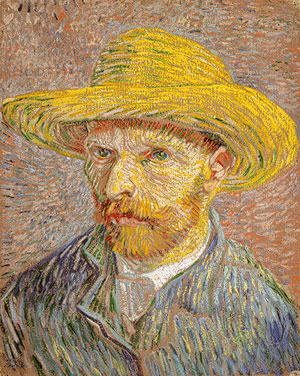
Self-Portrait with a Straw Hat (1887) by Vincent van Gogh.

So why then, are we so obsessed with hiding our complexity?


We meticulously maintain and groom our shallow surfaces. We carefully polish our vast array of smiles and we rehearse our jokes – for those are the weapons we’ll arm ourselves with during this weekend’s social campaign.

We place an unhealthy importance on the mastery of crafted emotions; our gasps of shock and fits of laughter must be believable and emphatic. We carefully iron out our faces after our trousers and we use the same mirror to apply our emotions in the same way we do our lipstick. We spray on our personality with our fragrances. We wear around our necks the persona we want others to see and then we hang Tiffany pendants and wooden crosses from them.

Our outward expressions, no longer useful tools in demonstrating the inward feelings we ignore, have become gadgets we use to accentuate our surface appearances. They serve the same purpose as our Marc by Marc Jacob clutch that matches our new Prada pumps or our Burberry tie that creates that must-have contrast with our Armani suit.


We’ve somehow began equating our surface with our substance. We’re only as beautiful as our most recent Facebook profile picture, the filter we choose for it, and how many likes it receives.

Our experiences are summed up in small collages and uploaded to Instagram, its value judged by how many people stamp their approval with little digital hearts.

We’re only as healthy as our body-fat percentage tells us we are, or the amount of gluten we avoid. Our spirituality is defined by the colour of our Lulu yoga mat.

We’ve forgotten that there is an entire world inside of us. It is a world full of experiences, memories, ideas, ambitions, and beliefs. It is a place that would take a lifetime for us to completely explore.


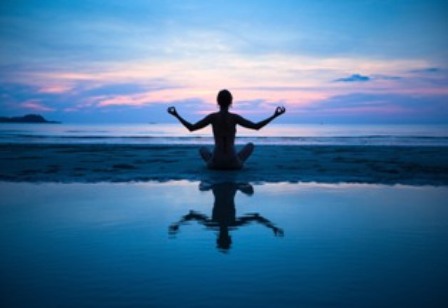
MEDITATION2
There is a magnificent kingdom inside all of us. When will you find yours?

Yet we’ve never cared to examine or maintain this inner kingdom. Our inner selves have become, like Dr. Frankenstein’s monster, crudely sewn and stitched together with ideas scavenged from the surface. Surface-deep ideas of what the superficial world insists makes us a whole person.

Instead of planting the seeds of wisdom, acceptance, confidence and self respect in our endless internal garden, we’ve left the weeds of ignorance, denial, doubt, and loathing to grow in their place until they strangle us.

The demons who feed off of these negative plants – such as fear, jealously, sadness, and paranoia – have grown strong and have multiplied. They prowl unchecked in the shadows of ourselves, and have become the tyrant kings of our domains while we have become strangers in the only place we can truly call our own.

Look well into thyself; there is a source of strength which will always spring up if thou wilt always look there.” – Marcus Aurelius, Meditations.

So maybe skip the hair /nails /tanning appointment or the gym today (unless its leg day – don’t skip that). Find a patch of grass and sit in silence. Watch your endless thoughts drift slowly by like the calming stream that they are. Trade in your typical Saturday night debauchery for something that inspires real growth. Instead, sit around a table with a few close friends – turn off your phones – and really connect with one another in real, human conversation.

Whatever you feel inclined to do, take some personal time and trim the rabid weeds strangling your soul. Plant the positive seeds of wisdom, acceptance, confidence and self respect that will grow into the beautiful garden you can be. Take back your kingdom, even if it’s inch by inch.

Do a little bit every day. Like Rome, you won’t be built in a day. In fact, you’ll never stop planting, cultivating, and exploring yourself. As a child of the stars, you are as limitless and as endless as the beautiful universe from which you came.

You are dense. You are full of substance. You are perfect.

Be good to each other,

~ MG.

Photos Courtesy of:

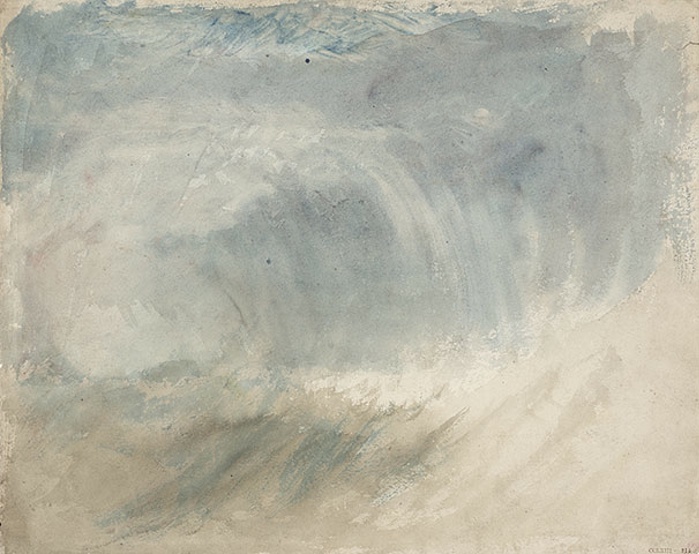
Cover Art: Storm At Sea (1820-1830) by J.M.W Turner
Star: zodiac-compatibility.tumblr.com
Meditating woman: odishasuntimes.com

On Motion:

It occurred to me that everything around me was in motion. A fleet of clouds sailed across an ocean of burning suns. Finely manicured blades of grass wiggled playfully like toes in the evening breeze. The flames of the camp fire danced a crimson cha-cha.

The voices of a few people close to me bounced around my ears. Their musical consonance provided a soothing background symphony as I lay in the grass looking up at the night sky. Despite being stranded somewhere in suburbia, the stars had managed to sear through the light pollution and were sparkling brightly in the heavens above me. The crackling of the fire was calming. I was still. I felt at peace.

In my perceived stillness it occurred to me that everything around me was in motion. A fleet of clouds sailed across an ocean of burning suns. Finely manicured blades of grass wiggled playfully like toes in the evening breeze. The flames of the camp fire danced a crimson cha-cha. The Aurai ran their kind hands softly through my hair and down my neck, inspiring goosebumps with every gentle gust they granted me. As still as I was, I couldn’t help but notice my chest expand and collapse with the huffing and puffing of my breathing bellows. I started to run with the idea.


Nothing about us, or the milky way we’re swirling in, is meant to be still. Motion is in our very genetic make-up. From head to toe we are wired with veins, interior aqueducts dispersing and directing the life force that flows down from our mountain heart. The large part of us that is made up of water yearns to ebb and flow with the tides, our distant cousins that crash upon the ocean cliffs. Our legs are powerful propellers designed to run, jump, and swim. Our feet are designed to absorb the impact of that motion, doubling as fins when we flap them underwater.

The music of our heart is a constant drumming, the unique resonating rhythm our body constantly dances to. Our breath is constantly flowing through us, winds that whisper new life into the deepest, darkest depths of us. Our minds are magnificent machines, master of our endless mental motions.

clarity
Everything I could see was in motion.

Nature is no different. Everything around us is revolving in a cycle of motion. The sun and the moon chase each other endlessly. Rivers restlessly flow into lakes that are never truly still and silent. Fields giggle with the gossips of grasshoppers. The swaying trees of the forest shelter the busy bees, beetles, and bugs. Even mountains move ever so slightly, their rocks forming slowly over hundreds of years.

Our nature consists in motion; complete rest is death.” Blaise Pascal, Pensées.

Then I take a look at our society. I reflect on the values and norms we’ve convinced ourselves are correct. I look at all of us, in a constant war with our desire to move, twist, and flow. I see us slouching over computers in blank cubicles that are as small as prison cells. Chained to our desks, our legs bounce with the defiant motion desperate to escape its confinement. I see us slave away in factories, separated from our constantly moving world around us by thick cement walls.

We flip through magazines as we sit for hours in airports before seeking solace in the rigidity of our neck pillows during long-haul flights. I see hyper-active children incapable of sitting still being sent to the principle’s office before doctors recommend a plethora of medications to cure them of their perpetually-moving disease. We’re stuck in libraries for hours sweating over the books we’ll be tested on for finals.

The gluttonous goblins of mindless media – such as Netflix, reality TV, Fox News, and Hollywood productions – share in the spoils of mental warfare as they gobble up entire years of our lives. Even meditation has been misconstrued as something that seeks to silence the mind, rather than allowing ourselves to slowly drift down our river of the thought, observing it without judgement.


The entire journey of life is a constant motion. We are meant to consistently learn, grow, and evolve. And we’re meant to do it together.

I’m tired of being chained to a library desk. I’m tired of seeing the people I love being confined to professional prisons. I’m tired of seeing my fellow humans drowning in socially constructed quicksand. I’m sick of sitting still. I want to use my arms and legs for the propulsion they were designed to provide me. I want to be cured of this sitting sickness. I want us all to remember the freedom and peace we feel when we keep ourselves in motion. I want us all to fly, together.

Be good to each other,

– MG.