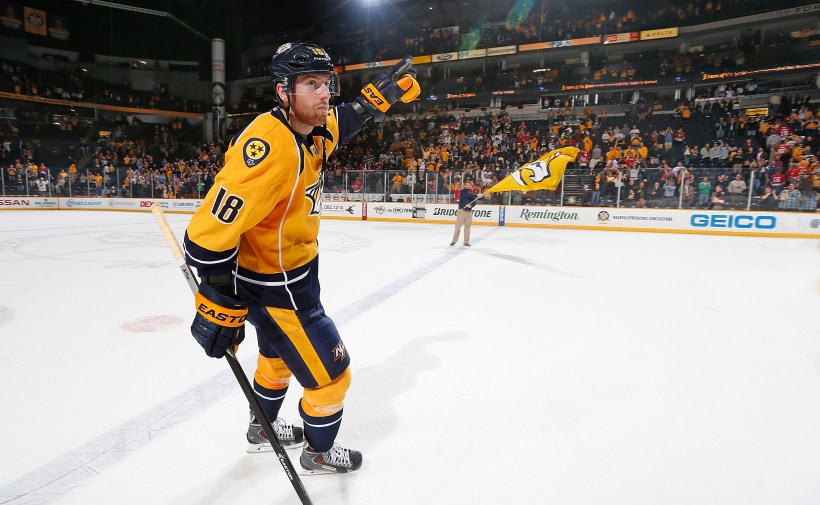
On James Neal:

The truth isn’t always easy. In a society mainly concerned with comfort, we will often seek convenience over the truth.  Our love of the scapegoat is a perfect example of this. We’ve seen it many times in many realms; we’ve seen scapegoats in politics, in war, and in sports. We do it because its easy. It’s easy to find a singular, simple source of blame than it is to scratch beyond the superficial surface of an issue.

A Flashback:

I remember it was an unseasonably warm Australian afternoon in late June. I had just finished a four hour Corporate Law exam and was waiting in line for a double triple shot of espresso so I could stay awake for the rest of the day. Friends back home were taking part in the Canadian past time of watching the NHL draft and criticizing their favourite team’s picks as couch-ridden, unpaid general managers. I turned my phone on, and it blew up. 

James Neal had been traded to the Nashville Predators. I was shocked. Not because he’s a 40 goal scorer. Not because of his big body presence or his quick release that would make most players envious. Those things can theoretically be replaced. The reason the trade struck me as curious was that I couldn’t for the life of me propose a valid reason as to why it happened.

The (debatable) official reasons for the trade eventually surfaced. Over the next few months a number of additional articles emerged discussing the trade. There was an overwhelming theme that this trade was chemotherapy for the Penguins; that they had eradicated a cancer in removing James Neal. Articles claimed that this trade improved the character and the dressing room environment of the Penguins (without providing any real evidence). Usually, the writer hinted to whispers amongst pundits or equated on-ice discipline with who Neal is as a person and a professional. James Neal – the player and the person – deserved more than that.

The Player’s Player:

James Neal is, and always has been, a great team-mate. He’s loose in the dressing room. His on and off-ice chemistry with Geno was rivalled by few power duos in the league. He’s a professional in every sense of the word. Coaches and players past and present vouch for his relentless work ethic and dedication off the ice and during practice.  
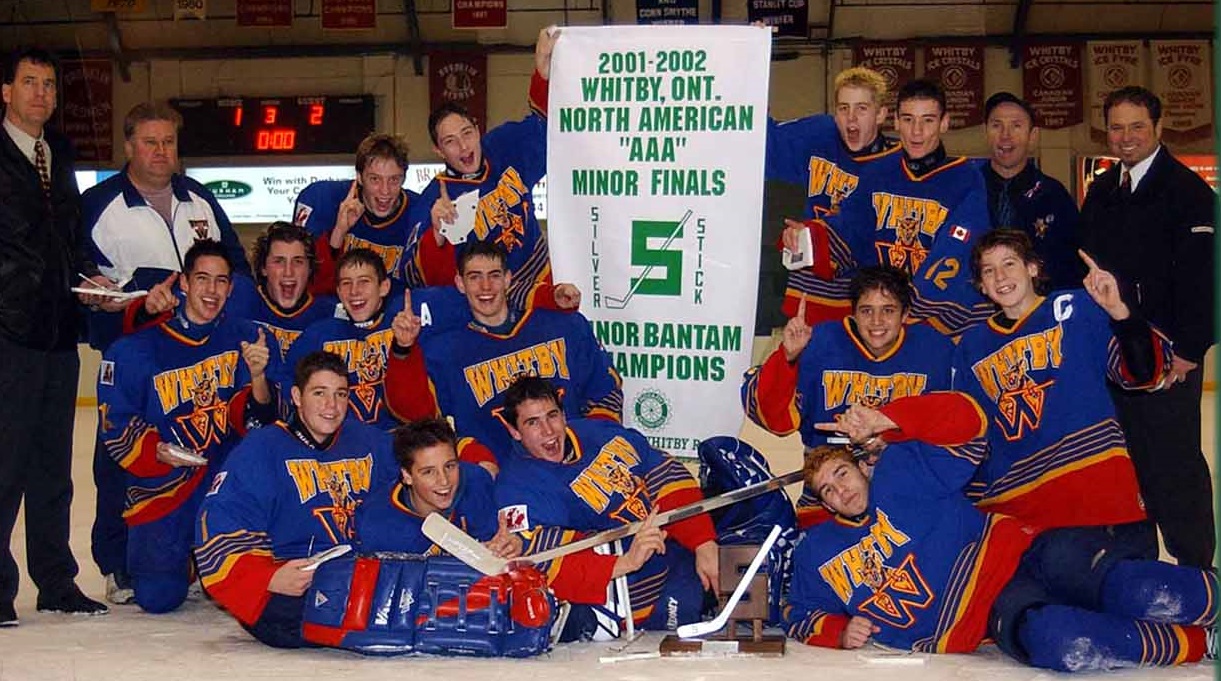
Neal and I playing for Whitby Minor Bantam AAA for the 2001-02 season.

I played for nearly ten years with James Neal. We put on the same jersey for close to 1000 games of hockey. For most of them, he was my captain. He’s a silent yet strong leader who leads the way by example. He’s more dedicated to his body and his craft than anyone I’ve ever met.

He is selfless and will do whatever is asked of him (just ask Craig Hartsburg, who took Neal to fill a third line checking role with Team Canada on its way to World Junior gold in 2007). He’ll hit hard, he’ll fight if he has to, and he’ll do whatever gives the team the best chance of winning. He wants to win more than anyone in that Nashville dressing room right now. Ingrained deep within him is a sense of integrity that will never allow these things to change. Nashville is extremely lucky to have him, and they know it. Simply put, he’s a player’s player.

James Neal winning the U21 World Juniors in 2007. [Source: Getty Images]
James Neal winning the U21 World Juniors in 2007.
[Source: Getty Images]
He’s shown himself to be a leader since his days in junior, and he’s already taken nicely to the assistant captain role in Nashville – showing that he can not only play on the defensive side of the puck, but also relate to and mentor young superstars who are learning the professional ropes.


It begs the obvious question: If he possessed such a cancerous character, why were at least 15 other teams in the market to acquire him? Why did Nashville commit to the remaining twenty million dollars on his contract, and give him the assistant captaincy?  It doesn’t exactly add up.

James Neal was painted as the villainous cancer in Pittsburgh because it was easier than addressing a massive lack of depth and toughness that the Penguins are suffering from.

Let’s Be Honest:

The trade was a bad one. It was a knee-jerk reaction by a new general manager who felt he needed to make a big splash to show fans that the perennial underachieving of the Penguins was not going to be tolerated. Neal was the biggest name that also doubled as a disposable commodity. Let’s face it, Crosby and Malkin weren’t going on the block. When you look at the trade, at both face value and in greater detail, it requires an additional layer to make it justifiable to fans and experts alike. The James-Neal-is-a-cancer myth served that purpose.

The Real Issue:

The Penguins maintained the core of superstars that won a cup, so why is post season under-performing becoming a theme in Pittsburgh? They lost the character that it takes to win in the play-offs.

Think of game seven against the Red Wings in ’09. Remove Max Talbot, his grit, and his two clutch goals from the Penguins line-up. Does Crosby lift the cup at the end of that game? Probably not. 

Max Talbot scoring what turned out to be the Stanley Cup winning goal in 2007. [Photo Source: USAToday.com]
Max Talbot scoring what turned out to be the Stanley Cup winning goal in 2009. [Photo Source: USAToday.com]
So how did the James Neal trade fix this culture of quitting when the games get tough? Of folding when adversity strikes? How did it help with character?

It didn’t. 

The Pens didn’t add anything in that department, and their play-off woes remained the same. You need sandpaper to win in the play-offs. Neal has that, and I’ve yet to see it in his replacement(s).

James Neal, The Person:

I understand the convenience behind the scapegoat. I understand its logical use in deflecting attention away from under-performing franchise players and in appeasing fan criticism. I understand that Neal was the perfect head to roll and this is a business. It would have been much tougher for Jim Rutherford to roll up his sleeves and go to work on the actual problems plaguing the Penguins. Yet something deep inside of me can never agree with how they turned James Neal into a scapegoat. They did it by attacking his character and his person.

There’s an entire human being the fans and media don’t see. They don’t see the guy who wakes up before sunrise to put long hours into training during his off-season. They don’t see his charity work, in both his home town and in Nashville. They don’t see the guy who takes care of his friends and family, all the people who love him for the man he’s become. 

James Neal supporting Smilezone Foundation at the abilities center in Whitby, Ontario. [Source: James Neal's Official Instagram]
James Neal supporting Smilezone Foundation at the abilities centre in Whitby, Ontario. [Source: James Neal’s Official Instagram]

We’re all entitled to an opinion. If you believe Neal’s departure was the start of a positive change in steel town, I respect that. I only ask that in your endless justification of the trade, do not stoop to taking shots at his character or his integrity.


It’s too easy to criticize a man when he’s out of favour, and to make him shoulder the blame for everybody else’s mistakes.” – Leo Tolstoy, War and Peace.


Big Picture:

These players are human beings just like you and I. It is in recognising them as such – through our human empathy – that we must find the strength to resist the urge to join in the whispers of defamation and gossip. The people we use as scapegoats, in politics or in sports, are certainly not perfect.

But they do their best. They make mistakes, but so do we. They love. They bleed. They sweat. They cry.

Treat them that way.

Be good to each other,
– MG.

On Substance:

When I think of the word substance, I think of weight. I think of density. A bowling ball, a newborn baby, a dying sun. I think of what actually makes up the matter of someone or something, beyond the mask or façade on display.

tumblr_static_8uyuewxv7o4ckwsgs048w00c
Disclaimer: I have no way of measuring the density of this artistic rendition of a star. But, to me, it looks dense.

We attach varied levels of importance to things tangible and intangible according to the meaning and value they have to our individual experience. Yet the word always carries the same meaning for all of us.

When we say something is of substance we are vouching that it possesses a depth beyond that which can be recognized on the surface, and that depth is essential to its meaning or existence. Substance is the existence of something beyond what we see and, more often than not, it is something of value.


Humans are the perfect example of what it means to have substance. We are much more than the surfaces we allow each other to see.

We are never skin deep. Each one of us is the result of the hundreds of thousands of intricate internal and external relationships and experiences. We appear to be made up of seamless and simple skin on the outside, yet internally we are a patchwork of a million personal pieces unique to ourselves.

It is this chaos inside of us, and not the calm surface, that makes us human. It is what separates us from one another; it is what differentiates us from the similar skin we’re all sharing.

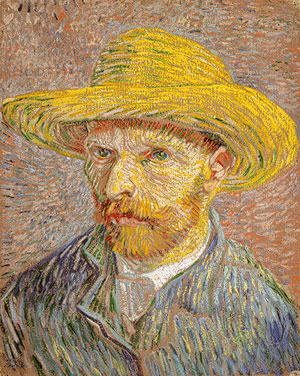
Your internal substance is the part of you that isn’t easy to read or boring to learn about. The vivid and unique oils of your internal landscape are a personal portrait. Consistently being altered by the paintbrush of life, each stroke of colour adds to an already endless wonderland of adventure and intrigue.

Self-Portrait with a Straw Hat (1887) by Vincent van Gogh.

So why then, are we so obsessed with hiding our complexity?


We meticulously maintain and groom our shallow surfaces. We carefully polish our vast array of smiles and we rehearse our jokes – for those are the weapons we’ll arm ourselves with during this weekend’s social campaign.

We place an unhealthy importance on the mastery of crafted emotions; our gasps of shock and fits of laughter must be believable and emphatic. We carefully iron out our faces after our trousers and we use the same mirror to apply our emotions in the same way we do our lipstick. We spray on our personality with our fragrances. We wear around our necks the persona we want others to see and then we hang Tiffany pendants and wooden crosses from them.

Our outward expressions, no longer useful tools in demonstrating the inward feelings we ignore, have become gadgets we use to accentuate our surface appearances. They serve the same purpose as our Marc by Marc Jacob clutch that matches our new Prada pumps or our Burberry tie that creates that must-have contrast with our Armani suit.


We’ve somehow began equating our surface with our substance. We’re only as beautiful as our most recent Facebook profile picture, the filter we choose for it, and how many likes it receives.

Our experiences are summed up in small collages and uploaded to Instagram, its value judged by how many people stamp their approval with little digital hearts.

We’re only as healthy as our body-fat percentage tells us we are, or the amount of gluten we avoid. Our spirituality is defined by the colour of our Lulu yoga mat.

We’ve forgotten that there is an entire world inside of us. It is a world full of experiences, memories, ideas, ambitions, and beliefs. It is a place that would take a lifetime for us to completely explore.


MEDITATION2
There is a magnificent kingdom inside all of us. When will you find yours?

Yet we’ve never cared to examine or maintain this inner kingdom. Our inner selves have become, like Dr. Frankenstein’s monster, crudely sewn and stitched together with ideas scavenged from the surface. Surface-deep ideas of what the superficial world insists makes us a whole person.

Instead of planting the seeds of wisdom, acceptance, confidence and self respect in our endless internal garden, we’ve left the weeds of ignorance, denial, doubt, and loathing to grow in their place until they strangle us.

The demons who feed off of these negative plants – such as fear, jealously, sadness, and paranoia – have grown strong and have multiplied. They prowl unchecked in the shadows of ourselves, and have become the tyrant kings of our domains while we have become strangers in the only place we can truly call our own.

Look well into thyself; there is a source of strength which will always spring up if thou wilt always look there.” – Marcus Aurelius, Meditations.

So maybe skip the hair /nails /tanning appointment or the gym today (unless its leg day – don’t skip that). Find a patch of grass and sit in silence. Watch your endless thoughts drift slowly by like the calming stream that they are. Trade in your typical Saturday night debauchery for something that inspires real growth. Instead, sit around a table with a few close friends – turn off your phones – and really connect with one another in real, human conversation.

Whatever you feel inclined to do, take some personal time and trim the rabid weeds strangling your soul. Plant the positive seeds of wisdom, acceptance, confidence and self respect that will grow into the beautiful garden you can be. Take back your kingdom, even if it’s inch by inch.

Do a little bit every day. Like Rome, you won’t be built in a day. In fact, you’ll never stop planting, cultivating, and exploring yourself. As a child of the stars, you are as limitless and as endless as the beautiful universe from which you came.

You are dense. You are full of substance. You are perfect.

Be good to each other,

~ MG.

Photos Courtesy of:

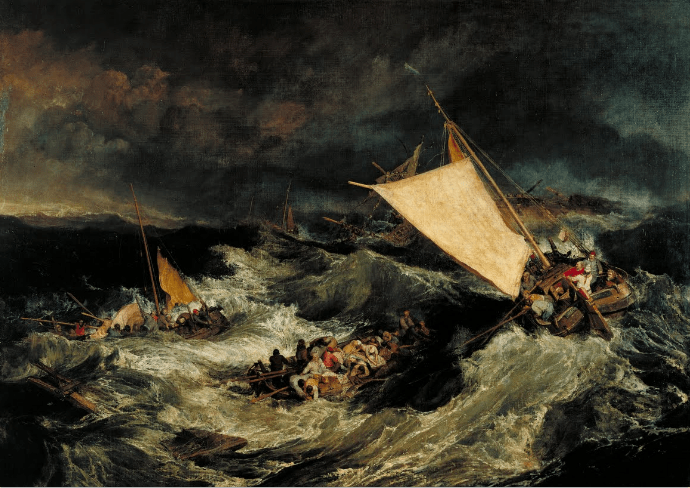
Cover Art: Storm At Sea (1820-1830) by J.M.W Turner
Star: zodiac-compatibility.tumblr.com
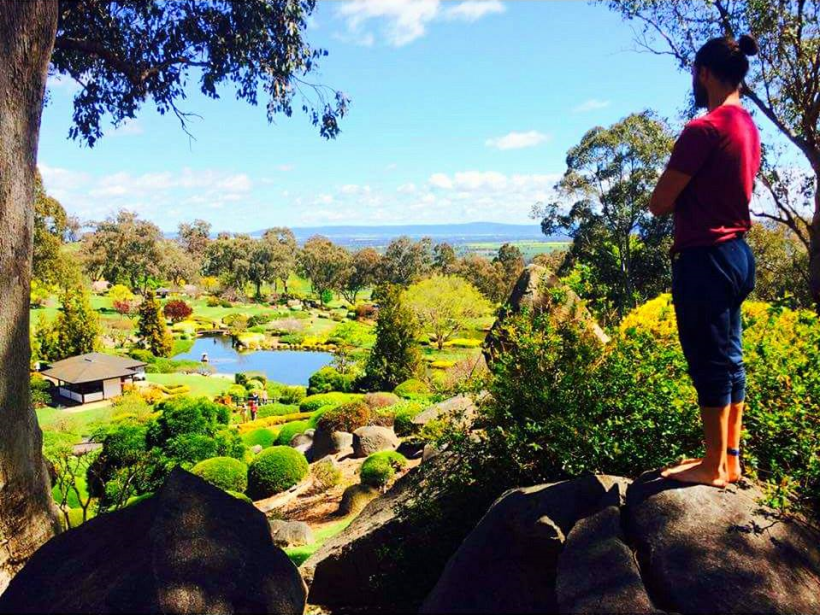
Meditating woman: odishasuntimes.com

On Motion:

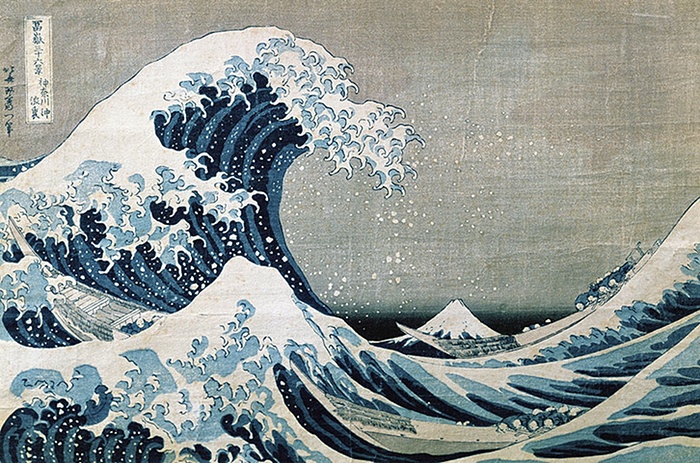
It occurred to me that everything around me was in motion. A fleet of clouds sailed across an ocean of burning suns. Finely manicured blades of grass wiggled playfully like toes in the evening breeze. The flames of the camp fire danced a crimson cha-cha.

The voices of a few people close to me bounced around my ears. Their musical consonance provided a soothing background symphony as I lay in the grass looking up at the night sky. Despite being stranded somewhere in suburbia, the stars had managed to sear through the light pollution and were sparkling brightly in the heavens above me. The crackling of the fire was calming. I was still. I felt at peace.

In my perceived stillness it occurred to me that everything around me was in motion. A fleet of clouds sailed across an ocean of burning suns. Finely manicured blades of grass wiggled playfully like toes in the evening breeze. The flames of the camp fire danced a crimson cha-cha. The Aurai ran their kind hands softly through my hair and down my neck, inspiring goosebumps with every gentle gust they granted me. As still as I was, I couldn’t help but notice my chest expand and collapse with the huffing and puffing of my breathing bellows. I started to run with the idea.


Nothing about us, or the milky way we’re swirling in, is meant to be still. Motion is in our very genetic make-up. From head to toe we are wired with veins, interior aqueducts dispersing and directing the life force that flows down from our mountain heart. The large part of us that is made up of water yearns to ebb and flow with the tides, our distant cousins that crash upon the ocean cliffs. Our legs are powerful propellers designed to run, jump, and swim. Our feet are designed to absorb the impact of that motion, doubling as fins when we flap them underwater.

The music of our heart is a constant drumming, the unique resonating rhythm our body constantly dances to. Our breath is constantly flowing through us, winds that whisper new life into the deepest, darkest depths of us. Our minds are magnificent machines, master of our endless mental motions.

clarity
Everything I could see was in motion.

Nature is no different. Everything around us is revolving in a cycle of motion. The sun and the moon chase each other endlessly. Rivers restlessly flow into lakes that are never truly still and silent. Fields giggle with the gossips of grasshoppers. The swaying trees of the forest shelter the busy bees, beetles, and bugs. Even mountains move ever so slightly, their rocks forming slowly over hundreds of years.

Our nature consists in motion; complete rest is death.” Blaise Pascal, Pensées.

Then I take a look at our society. I reflect on the values and norms we’ve convinced ourselves are correct. I look at all of us, in a constant war with our desire to move, twist, and flow. I see us slouching over computers in blank cubicles that are as small as prison cells. Chained to our desks, our legs bounce with the defiant motion desperate to escape its confinement. I see us slave away in factories, separated from our constantly moving world around us by thick cement walls.

We flip through magazines as we sit for hours in airports before seeking solace in the rigidity of our neck pillows during long-haul flights. I see hyper-active children incapable of sitting still being sent to the principle’s office before doctors recommend a plethora of medications to cure them of their perpetually-moving disease. We’re stuck in libraries for hours sweating over the books we’ll be tested on for finals.

The gluttonous goblins of mindless media – such as Netflix, reality TV, Fox News, and Hollywood productions – share in the spoils of mental warfare as they gobble up entire years of our lives. Even meditation has been misconstrued as something that seeks to silence the mind, rather than allowing ourselves to slowly drift down our river of the thought, observing it without judgement.


The entire journey of life is a constant motion. We are meant to consistently learn, grow, and evolve. And we’re meant to do it together.

I’m tired of being chained to a library desk. I’m tired of seeing the people I love being confined to professional prisons. I’m tired of seeing my fellow humans drowning in socially constructed quicksand. I’m sick of sitting still. I want to use my arms and legs for the propulsion they were designed to provide me. I want to be cured of this sitting sickness. I want us all to remember the freedom and peace we feel when we keep ourselves in motion. I want us all to fly, together.

Be good to each other,

– MG.

On Bravery:

It is in these darkest of moments that we, as humans, possess the inner strength to find a way. We pick up an oar and we paddle. We crawl across the blackness centimetre by centimetre, with every stroke bringing us deeper into that haunting abyss. Surrounded by fear, with no light to guide us, we find the flicker of a flame within ourselves.

As a little boy I was afraid of the dark. I’m not even sure what it was about the dark that terrified me as much as it did. Finding myself in darkness, a wave of dread would wash over me. I drowned in that great unknown which floods any heart engulfed by its greatest fear. Paddling furiously, with nothing but dread and panic to swim toward, I would try desperately not to choke on the violent waves of darkness crashing against me.

I often found myself envying those friends of mine that seemed unaffected by darkness. Some of them were even bold enough to sleep in their dark rooms without a night light. Those boys were legends. I thought I was a coward and they were the bravest souls I had ever met, because I confused their lack of fear with bravery. Life, however, has funny ways of teaching us lessons about what it means to be brave.

brave-child
Clearly one of the children who were not afraid of the dark.

Those of us who were lucky enough to survive the voyage through the arduous seas of adolescence, too often found ourselves in dark and stormy waters that shook our soulful ships down to their very core. Yet no matter how violent the gale, we sailed on with our tattered banners until they were glowing in the light of the dawn and the storm had finally passed. We came to realize we are so much more than masts of bone and sails of skin. We are durable. We are bendy. We possess a power somewhere deep in our hulls that cannot be measured by stress tests or feats of strength.


I believe it is the greatest storms which teach us the most important lessons. The greatest struggles sire the smoothest sailors. It will be such a storm which will teach us the true meaning of bravery. Life has its ways of forcing us to face our deepest fears. It has its way of sitting us in that dark room.

Though I recall my great storm well, I do not remember exactly when my ship changed its course. I do not remember the sun dipping beyond the horizon. I can only remember the darkness of the night. Life had put me on a ship that was empty with no wind in its sails. My breath would have been visible in the icy night sky, had there been enough light to see it. I was stranded in the deepest darkest waters of the mind and, like those heroic friends from childhood, had no light in the night to guide me.


I think, in some form or another, we all experience this moment in our lives. A desperate moment in time, void of hope and happiness, that threatens to completely shatter our resolve. We find ourselves lost and afraid to move. With our ship sinking, we feel it is our duty to go down with it. It could be something as little as cramming the night before an exam, or as monumental as hearing the cancer has returned. Regardless of the depth of the dark waters we’re thrown into, staying the course – whatever that may be – becomes the portrait of insanity and we begin to paint the thought of surrender with the most beautiful and exotic of oils. Nothing seems as simple as lying on the deck and closing our eyes, waiting to welcome the black waves as they devour captain and craft.

It is in these darkest of moments that we, as humans, possess the inner strength to find a way. We pick up an oar and we paddle. We crawl across the blackness centimetre by centimetre, with every stroke bringing us deeper into that haunting abyss. Surrounded by fear, with no light to guide us, we find the flicker of a flame within ourselves. We trust in that feeble fire because it comes from a place that no darkness can breach. It comes from a place we don’t understand, but that we have an unwavering faith in.

If we take the generally accepted definition of bravery as a quality which knows no fear, I have never seen a brave man. All men are frightened.General George S. Patton, Drive to Victory – General Patton’s Third United States Army.

Those who walk into darkness without a fear of the dark are fighting a battle they have already won. They may be bold and courageous, but they are not brave. The brave are not without fear. On the contrary, it is only when we are overwhelmed with fear that it is possible to truly demonstrate bravery.

The brave, when sinking into the terror of the deep, find a way to paddle through. The brave, when consumed and surrounded by darkness, find a light within themselves. It is those who trudge undeterred through the darkest parts of themselves that are the true champions of bravery.


The fact that you’re reading this is enough to tell me you’ve made it through your share of storms. Maybe you’ve even survived your great hurricane, your grand and defining moment. Our life, however, is a single voyage comprised of many storms and there will always be another on the horizon. It’s part of being human. Before you die, you will face many more storms in all aspects of your life. Some of them will terrify you. Always remember that fear doesn’t define you; we cannot choose the things which strike terror into our hearts.

But we can choose to paddle on. We can choose to be brave, because bravery is within each and every single one of us. You just have to know it’s inside of you. I promise you that it is. You are not a coward. You are unwavering and unbreakable. You are strong. You are brave.

Be good to each other,

– MG.

Photo of the boy in a costume is courtesy of funderlandpark.com